
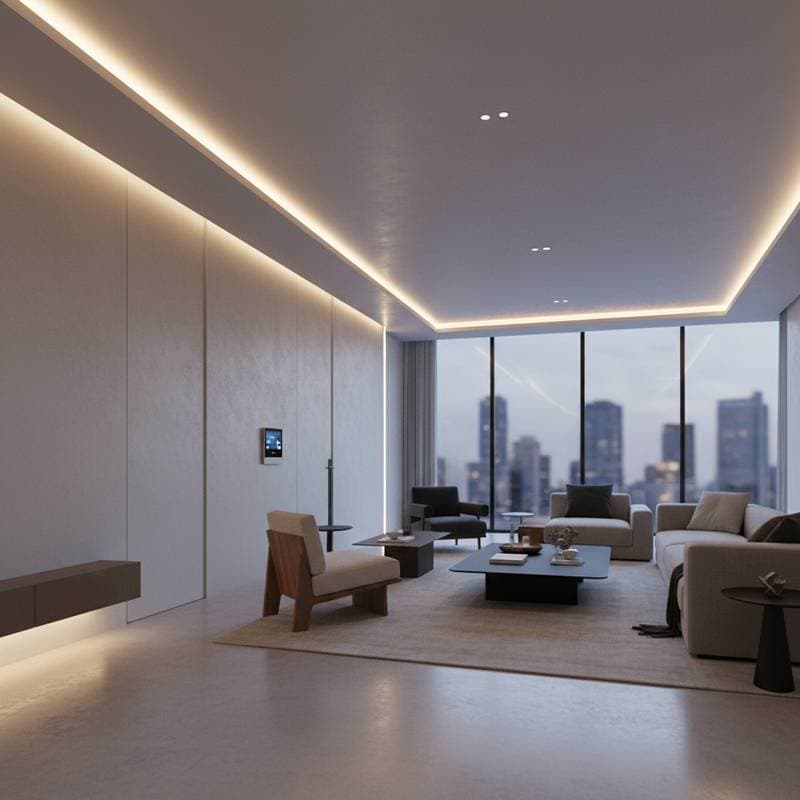
Smart LED Trim: Integrating Light into Modern Architecture
Smart LED trim redefines home illumination by embedding light sources into structural edges such as walls, ceilings, and baseboards. This method eliminates the need for visible fixtures and lamps, producing a subtle glow that blends with the built environment. The result guides natural movement, delineates room zones, and fosters an ambient atmosphere suited to contemporary spaces.
Thoughtful installation extends beyond aesthetics to influence spatial perception and flow. Paired with smart technology, these systems allow adjustments to intensity, hue, and warmth via mobile applications or voice activation. This article details the essentials of smart LED trim, its operational principles, and strategies employed by professional designers to elevate residential environments.
Readers will gain insights into optimal placement, essential planning elements, and techniques for achieving a flush, integrated appearance that unifies room aesthetics.
At a Glance
Category: Architectural lighting and integrated trim
Applications: Ceilings, baseboards, crown molding, cabinets, stair risers, under-shelf edges
Smart Features: App or voice control, adjustable color temperature, motion sensors, dimming presets
Ideal For: Modern homes, minimalist interiors, compact areas requiring multilayered lighting
Key Benefit: Merges illumination, precise design, and intelligent operation within a single, unobtrusive setup
Why It Matters Now
Contemporary homeowners seek solutions that promote tranquility and flexibility in living areas. Open-concept layouts demand lighting adaptable to tasks ranging from productivity to leisure. Smart LED trim provides such adaptability without introducing visual clutter, as a single linear channel can deliver focused task light, general ambient coverage, or decorative accents through varied configurations.
Energy conservation remains a priority, with LEDs consuming minimal electricity and enduring far beyond conventional bulbs. Directed diffusion enables operation at reduced intensities while preserving clarity, further optimizing efficiency.
In current design practices, lighting shapes mood alongside palette and furnishings. Integrated LED trim affords precise atmospheric control while preserving clean, unbroken surfaces.
Case Study: Achieving Seamless Illumination and Control
In a recent residential project, designers incorporated smart LED trim along ceiling perimeters and within baseboard profiles. Channels aligned flush with surrounding drywall, emitting only a narrow band of soft light. Integration with a central smart hub enabled responses to verbal instructions or programmed scenarios.
The living space transitions from crisp daylight tones during daytime activities to soothing golden hues for evenings. Hallway motion detectors activate gentle illumination after dark. Kitchen under-cabinet strips serve dual purposes, providing precise work light or subtle highlights.
This approach yields a composed, purposeful ambiance. Architectural lines remain sharp, yet spaces benefit from uniform radiance. The underlying technology recedes, emphasizing the luminous outcome.
Key Applications
1. Baseboard Lighting
Position low-profile trim along baseboards to produce a levitating floor illusion. This accentuates surface materials and bolsters evening navigation. Professionals recommend continuous runs, omitting thresholds at doorways, to maintain a cohesive boundary glow.
2. Ceiling Perimeter Wash
Install recessed LED channels adjacent to ceiling edges to reflect light upward. Such placement simulates expanded height and distributes even illumination. It suits living rooms or bedrooms, where indirect sources promote relaxation.
3. Stair Risers and Steps
Incorporate LED trim beneath stair treads to introduce visual interest and enhance security. Illumination traces step outlines and fills shadowy intervals. Select warmer shades to align with home comfort levels.
4. Cabinet and Shelf Edges
Apply smart LED trim below shelves or within enclosed cabinetry to increase perceived volume and access. Temperature adjustments synchronize with natural or artificial light cycles, adapting to time of day.
5. Bathroom Niches
Use moisture-resistant LED trim in shower recesses or around mirrors for gentle, shadow-minimizing light. The even diffusion imparts a serene, wellness-oriented feel.
Material and Finish Considerations
Aluminum profiles effectively manage thermal output and offer stable support. Powder-coated options withstand environmental wear and coordinate with adjacent colors. Frosted covers conceal individual LEDs, ensuring uniform distribution.
For wooden integrations, mill channels into custom joinery using prefinished extrusions. In humid zones like bathrooms, opt for IP-rated LED strips with waterproof junctions. Dry interior applications tolerate standard tapes, provided they avoid splash-prone locations.
Smart LED trim harmonizes across diverse substrates. It tempers the roughness of concrete or stucco, accentuates wood grain patterns, and amplifies luminosity in high-gloss settings through reflective interplay.
Maintenance and Longevity
LED components typically operate beyond 50,000 hours, equating to decades of routine service with basic care. Effective thermal dissipation proves essential; secure strips to aluminum extrusions rather than directly onto drywall or timber.
Clean diffusers periodically using a soft cloth to remove particulates. Steer clear of abrasive agents that might etch lens materials. Update smart system software via applications to sustain network integration.
Trade-Offs to Consider
The polished finish demands upfront collaboration among contractors, particularly for recessed setups. Modifying established structures proves more demanding than incorporating during initial builds. Surface-applied profiles simplify retrofits, though they introduce minor visible seams.
Intelligent features rely on consistent wireless connectivity and software harmony. Incorporate wired overrides or physical controllers for redundancy. Account for ancillary components like power supplies and fittings, which elevate expenses but guarantee durability.
Experiencing Integrated Lighting Daily
Installed systems integrate into routines seamlessly, offering unobtrusive guidance during nocturnal hours or balanced radiance free from harsh overhead beams. Surfaces appear more airy, and structural elements gain definition.
As one resident observed, the home anticipates needs without deliberate intervention. This intuitive quality underscores the forward-thinking appeal of smart LED trim. It advances aesthetic goals while simplifying operations, presenting woodworkers and constructors with avenues to fuse innovation and traditional skills. For inhabitants, it supplies adaptable, serene lighting attuned to real-life patterns.