
Common materials: Durable plastic, lightweight aluminum, and resilient spring steel
Best applications: Modern kitchens, functional workshops, and sleek office storage
These specifications highlight the accessibility of push-latches for various projects. Professionals often select higher-end models for demanding environments, while DIY users opt for cost-effective options that deliver reliable performance.
How Invisible Push-Latches Function
Invisible push-latches operate through a combination of mechanical and magnetic components. A typical unit includes a spring, a piston or rod, and a catch mechanism. When pressure applies to the cabinet front, the spring compresses, disengaging the latch and propelling the door open by about one-half inch. The door then pulls fully open by hand, and closing it resets the spring for the next cycle.
Two primary variants exist to suit different needs:
-
Magnetic push-latches incorporate a magnet paired with a metal strike plate. This design proves simple and budget-friendly, making it suitable for lightweight doors such as those in pantries or utility cabinets. Installation requires minimal adjustment, and the soft release prevents slamming.
-
Mechanical push-latches employ a piston or lever system for greater force. These models excel with heavier solid wood or composite panels, offering a firm engagement that users describe as satisfying. Adjustable tension settings allow customization for varying door weights.
Quality push-latches endure at least 80,000 cycles of operation, as verified by industry testing protocols. Superior constructions feature stainless steel or anodized aluminum casings that withstand moisture, impacts, and repeated use without degrading. In humid kitchen settings, corrosion-resistant materials extend the lifespan significantly.
Action step: Select a latch matched to your door's specifications. For fronts exceeding three pounds, such as oak or maple slabs, choose a mechanical variant with an adjustable strike plate to ensure smooth operation over time.
Installation Options: DIY Versus Professional
Installing invisible push-latches demands accuracy to achieve flawless functionality. Even slight offsets in placement lead to binding or incomplete releases, compromising the design intent. Skilled individuals can complete the task themselves, but preparation proves essential.
Assessing DIY Feasibility
Evaluate your capabilities with this checklist:
- Ability to drill precise pilot holes measuring 2 to 3 millimeters in depth without wandering.
- Access to a drill press or a right-angle attachment for consistent angles.
- Proficiency in measuring uniform gaps of 2 to 3 millimeters between adjacent doors and frames.
If these skills align with your experience, proceed with confidence. The process yields clean results and a sense of accomplishment. Always employ a depth stop on your drill bit to prevent damage to the cabinet's interior surface.
For added precision, consider using manufacturer-provided templates. These guides position the latch housing and strike plate accurately, reducing trial and error. Test each installation by pressing the door multiple times to verify consistent release.
Scenarios Requiring Professional Expertise
Engage a qualified cabinetmaker or installer for complex situations, including:
- Delicate veneered surfaces or high-gloss finishes prone to chipping during drilling.
- Frameless European-style cabinets that demand millimeter-perfect alignment for seamless operation.
- Custom configurations involving aluminum extrusions, glass panels, or integrated appliances.
Experts utilize specialized jigs that secure both the latch and strike in a single alignment step, minimizing errors. Labor charges range from $25 to $45 per door, influenced by local rates and project complexity. In urban areas, costs trend higher due to demand for specialized skills.
Vet your installer carefully: Request examples of prior handleless installations and verify familiarity with both magnetic and mechanical systems. A portfolio of completed projects provides insight into their attention to detail and problem-solving approach.
Daily Use and Design Integration
After installation, invisible push-latches alter interactions with cabinetry in subtle yet profound ways. Users open doors effortlessly with an elbow during meal preparation or with a hip while transporting tools in a workshop. The absence of handles eliminates crevices where grime accumulates, streamlining cleaning routines to a quick wipe-down.
Maintenance remains straightforward to preserve performance. Quarterly inspections involve dusting the latch areas with a soft, dry cloth. Should the action feel resistant, introduce a single drop of silicone-based lubricant to the spring mechanism. Steer clear of petroleum products, as they draw in particles and accelerate wear.
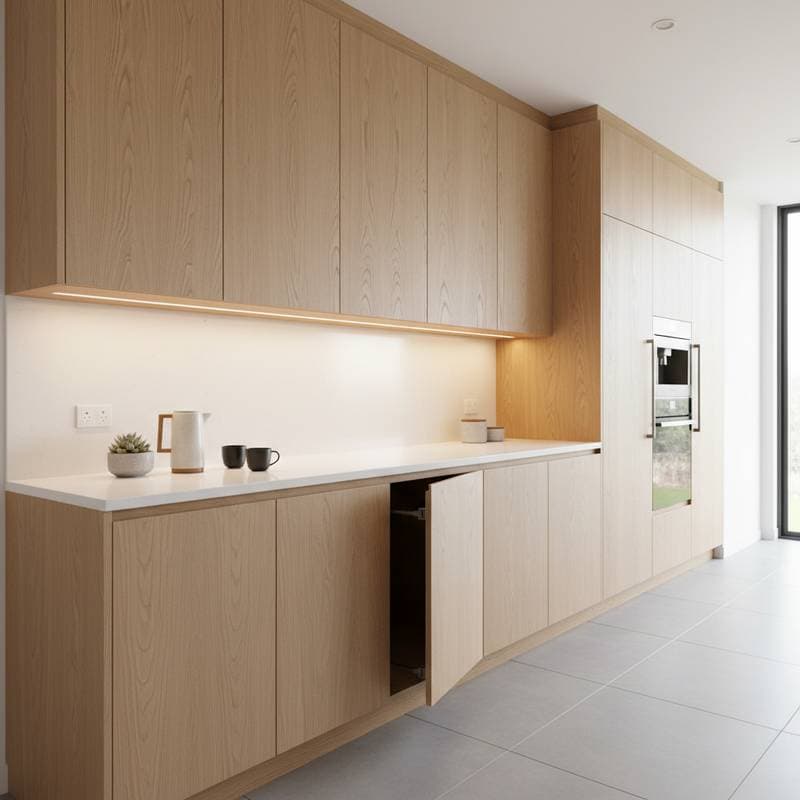
From a design perspective, handleless cabinets enhance visual flow and illumination. Under-cabinet LED strips cast uniform glows across uninterrupted surfaces, creating a serene ambiance. Architects emphasize that this setup amplifies the perceived spaciousness in compact kitchens or cluttered shops.
Practical tip: Coordinate lighting selections with your push-latch project from the outset. Continuous linear LEDs or recessed shelf fixtures complement the streamlined lines, elevating the overall aesthetic without overwhelming the space.
Ensuring Long-Term Performance
Sustaining the integrity of your push-latch system requires periodic attention. Biannual reviews of door alignments detect subtle shifts from settling or humidity changes. Adjust strike plates as needed to maintain even gaps and prevent strain on the mechanisms.
Stockpile replacement latches in compatible finishes to address any failures promptly. When refreshing cabinet faces, prioritize models with telescoping or adjustable housings that adapt to new dimensions, allowing reuse of existing mounting points.
Invisible push-latches represent an evolution in cabinetry that merges innovation with traditional woodworking. They deliver a tactile, unobtrusive experience ideal for diverse settings, from bustling home kitchens to organized professional workshops. Begin with a pilot installation on a single cabinet to evaluate performance, then scale up with confidence in the enhanced functionality and enduring style.
This approach not only modernizes spaces but also invests in practical durability that withstands daily demands.