
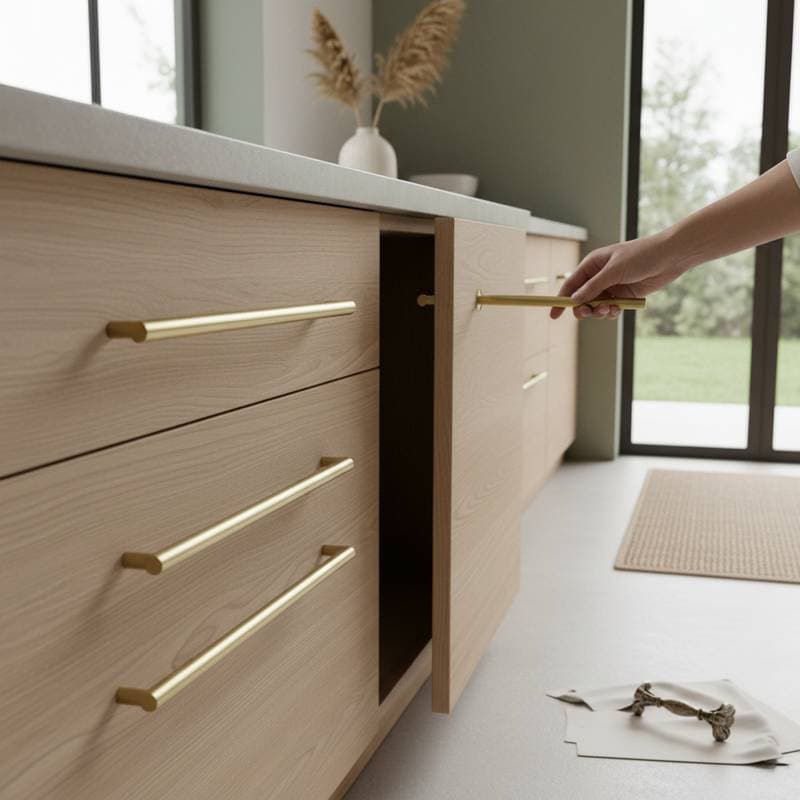
Japandi Cabinet Pulls: The Minimalist Upgrade Replacing Ornate Hardware in 2025
Cabinet hardware reveals much about overall design intent. Japandi pulls, which blend Japanese minimalism with Scandinavian functionality, emerge as a leading choice for kitchens and furniture in 2025. These pieces feature clean lines, subtle finishes, and natural materials, supplanting elaborate metal handles to create serene, integrated aesthetics in both contemporary and classic settings.
At a Glance
Style focus: Japandi minimalism
Average cost per pull: $8 to $22 retail
Materials: Oak, ash, walnut, matte brass, brushed nickel
Skill level: Beginner to intermediate installation
Ideal use: Kitchens, vanities, built-ins, furniture
Why Japandi Hardware Aligns with Current Design Shifts
Japandi hardware merges the gentle warmth of Scandinavian aesthetics with the precise forms of Japanese interiors. This combination yields a deliberate yet understated style. As open layouts and organic finishes gain prominence, elements such as cabinet pulls unify the composition.
Key characteristics of minimalist Japandi pulls include:
- Rounded edges and narrow profiles that minimize visual noise
- Neutral, matte or satin tones rather than glossy surfaces
- Sustainable hardwoods or recycled metals appealing to environmentally aware consumers
Professionals note that this equilibrium of ease and structure appeals to those desiring tranquility. Woodshop operators and cabinet fabricators observe that these pulls complement oak, birch, and maple surfaces without dominating the wood's texture.
Characteristics of Form and Texture
Japandi pulls typically span 3 to 6 inches, ensuring balanced proportions on drawer faces. Thickness remains below half an inch for a streamlined, ergonomic grip. Wooden variants receive oil treatments instead of lacquer, facilitating sanding and refinishing as needed. Metallic options employ gentle brushing to conceal smudges and minor abrasions.
Texture plays a central role. An ideal Japandi pull offers a smooth, softly contoured surface that rests comfortably in the palm. Designs avoid abrupt angles or prominent extensions, allowing seamless integration with the cabinet front. This restraint ensures longevity and subtlety.
For upkeep, wipe with a damp cloth and mild soap. Steer clear of harsh chemicals that could erode finishes or alter wood grain.
Pricing and Financial Planning
Budget $8 to $22 per pull, varying by material and treatment. Wooden pulls occupy the lower range, whereas solid brass or specialized powder-coated metals command premiums. For a typical kitchen requiring 30 to 40 pulls, hardware expenses range from $240 to $880.
Influencing factors encompass:
- Material selection: Solid hardwoods and metals exceed composites or platings in price
- Finish application: Manual brushing or oiling increases production effort
- Attachment method: Recessed or concealed mounts demand additional preparation
On limited funds, blend materials strategically. Apply wood to upper cabinets and metal to base drawers for resilience. Stock spares to match finishes during later repairs.
Installation: Self-Guided or Expert Assistance
Japandi pull installation proves accessible, though precision proves essential. Off-kilter holes disrupt the sleek harmony. Self-installers benefit from a hardware jig, a drill fitted with a 3/16-inch bit, and a spirit level.
Opt for self-installation if:
- Existing holes align with new hardware
- Surfaces consist of softwoods or medium-density fiberboard
- The scope involves under 20 pulls
Engage professionals for:
- Custom hardwood or veneered cabinets
- Hidden or inset mounting systems
- Extensive projects spanning built-ins or multiple furniture items
Expert rates run $3 to $6 per pull, adding $120 to $240 for a complete kitchen. Such accuracy justifies the investment in premium setups.
Pitfalls to Sidestep in Implementation
Homeowners often err in measuring intervals or positioning. A slight deviation of millimeters fractures the geometric purity. Unfinished wood pulls may discolor or warp without proper sealing.
Prevent these issues by:
- Employing a template or jig for all drilling tasks
- Matching screws and finishes throughout connected spaces
- Securing screws gently into dense hardwoods
- Applying protective oils to untreated wood surfaces
Test arrangements with painter's tape prior to committing holes. This step verifies layout at no expense.
Integrating Japandi Pulls into Daily Spaces
Japandi pulls embody disciplined simplicity. They encourage streamlined environments and highlight artisanal details in understated ways. When combined with low-sheen cabinets, diffused illumination, and organic flooring, the outcome transcends fleeting fashions.
For a cabinet renewal, initiate in a single area. Swap out select handles, assess their integration over a week, and proceed with broader application once alignment with personal style confirms.
Sourcing and Imagery Suggestions
Recommended visual: Comparative display of wooden and metallic Japandi pulls
Alt text: Sleek Japandi cabinet pulls in oiled wood and brushed metal on minimalist flat-panel doors.