
Why Milk Paint Outshines Low-VOC Finishes in 2026
Understanding Milk Paint and Low-VOC Alternatives
Milk paint represents a time-honored finishing option for woodworkers. This natural coating derives from simple ingredients: milk protein, known as casein, combined with lime and earth-based pigments. Unlike synthetic low-VOC finishes, which rely on chemical binders to minimize volatile organic compounds, milk paint forms through a natural chemical reaction. The result yields a breathable surface that allows wood to expand and contract without cracking.
Low-VOC finishes emerged as a response to environmental concerns in the late 20th century. These products reduce harmful emissions during application, appealing to health-conscious users. However, they often incorporate acrylics or urethanes that can yellow over time or trap moisture beneath the surface. In 2026, as regulations tighten on chemical use, milk paint gains prominence for its zero-compound profile and historical authenticity.
Woodworkers appreciate milk paint for its matte, velvety finish that evokes antique furniture. This aesthetic proves difficult to replicate with low-VOC options, which tend toward glossy or semi-gloss sheens. The natural bonding process of milk paint ensures adhesion without primers, simplifying preparation for projects ranging from cabinets to heirloom pieces.
Environmental and Health Advantages
Sustainability drives the woodworking industry forward in 2026. Milk paint aligns perfectly with this shift, utilizing renewable resources like skim milk and agricultural lime. Production requires minimal energy, and the formula biodegrades harmlessly if discarded. Low-VOC finishes, while improved, still depend on petroleum-derived components that contribute to long-term environmental impact.
Health considerations further favor milk paint. Application releases no fumes, eliminating the need for extensive ventilation or protective gear. Families with children or pets benefit from this non-toxic approach, especially in home settings. Studies from recent years highlight how low-VOC products can off-gas subtly over months, whereas milk paint dries clean and odor-free within hours.
Regulatory bodies in 2026 emphasize natural materials in certifications like GreenGuard or Cradle to Cradle. Milk paint easily meets these standards, often exceeding them due to its organic composition. Woodshops adopting milk paint report reduced waste and lower disposal costs, as unused portions mix readily with water for safe cleanup.
Durability and Performance on Wood
Durability defines a finish's value in practical applications. Milk paint excels here, forming a hard shell that resists wear from daily use. Once cured, it withstands scratches and moisture better than many low-VOC alternatives, which may soften under heat or humidity. This resilience stems from the lime's hardening properties, creating a barrier that integrates with the wood grain.
Breathability remains a key differentiator. Wood breathes naturally, releasing moisture to prevent warping. Milk paint permits this exchange, reducing the risk of mold or rot in humid climates. Low-VOC films, by contrast, can seal the surface too tightly, leading to issues in outdoor or high-moisture environments like kitchens or bathrooms.
Testing in 2026 reveals milk paint's longevity: pieces finished decades ago retain vibrancy without peeling. Woodworkers restore old furniture with fresh coats that blend seamlessly, a feat low-VOC finishes struggle to match without stripping. For structural elements like beams or tabletops, this enduring quality ensures investment in quality lasts generations.
Application Techniques for Optimal Results
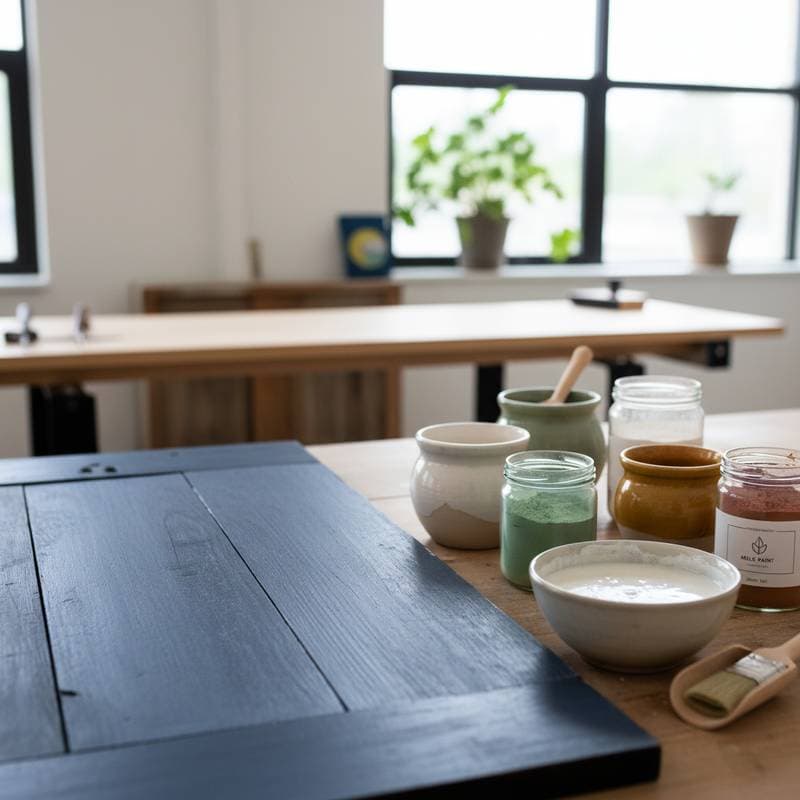
Ease of use draws professionals and hobbyists to milk paint. Preparation involves mixing the powdered base with water, a process that takes minutes. Stir until smooth, then apply with a brush or spray for even coverage. Unlike low-VOC finishes requiring multiple coats and sanding between layers, milk paint adheres in one or two applications.
-
Surface Preparation: Clean wood thoroughly to remove oils or residues. Sand lightly for smoothness, but avoid over-sanding to preserve the grain.
-
Mixing: Combine one part powder to one part water. Let sit for ten minutes, then stir to eliminate lumps. Add pigment for custom colors.
-
Application: Brush on in thin layers. The first coat soaks in; the second provides opacity. Distress with steel wool for an aged look if desired.
-
Sealing: Top with wax or oil for added protection, though optional for indoor pieces.
This straightforward method suits busy workshops. Cleanup requires only soap and water, contrasting with solvent-based low-VOC cleanups that demand special handling.
Color versatility enhances milk paint's appeal. Traditional hues like barn red or mustard yellow offer authentic patina, while modern mixes allow contemporary palettes. Low-VOC options provide broader ranges but lack the depth and translucency that reveal wood undertones.
Cost-Effectiveness and Accessibility
Budget-conscious creators find milk paint economical. A quart covers up to 50 square feet, often at half the price of premium low-VOC brands. Bulk purchasing from suppliers reduces costs further, making it viable for large-scale projects.
Availability improves in 2026, with online retailers and specialty stores stocking ready-to-mix kits. DIY enthusiasts mix from scratch using household ingredients, though commercial versions ensure consistency. This accessibility democratizes high-quality finishing, empowering small operations to compete with industrial standards.
Training resources abound, from workshops to video tutorials, accelerating adoption. Woodworkers transition from low-VOC systems with minimal learning curve, often preferring the tactile satisfaction of natural application.
Embracing Milk Paint for Future Woodworking
Milk paint reshapes woodworking practices in 2026 by prioritizing authenticity, safety, and sustainability. Crafters achieve professional results without compromising health or the planet. Projects gain character that synthetic finishes cannot duplicate, fostering a connection to craftsmanship's roots.
Consider integrating milk paint into your next build: restore a vintage chair or craft custom shelving. The benefits extend beyond aesthetics to practical longevity and ease. As the industry evolves, milk paint stands as the superior choice for discerning woodworkers seeking enduring beauty.