
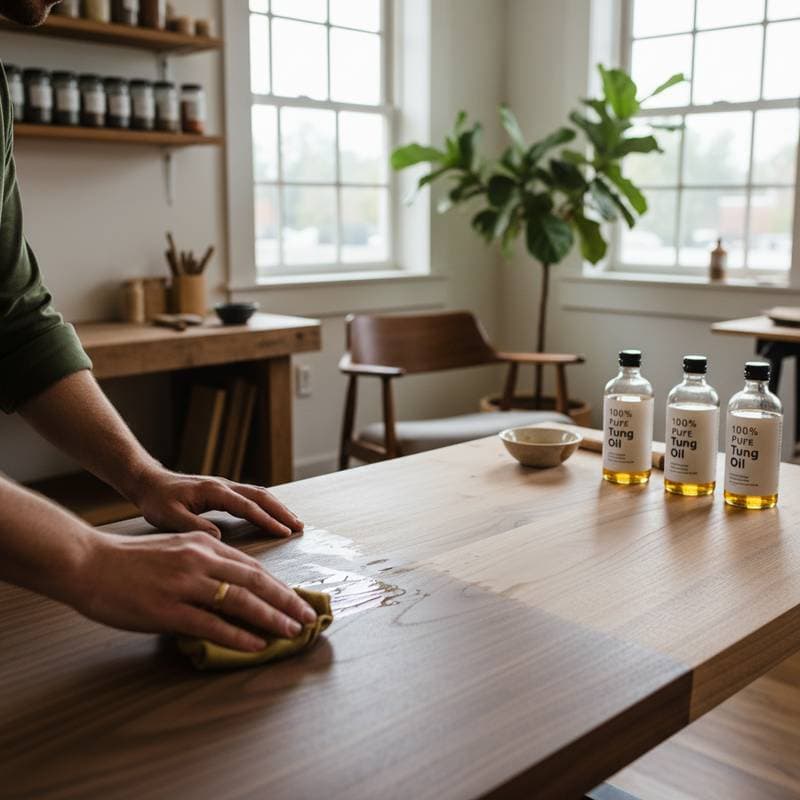
Tung Oil's Ascendancy: Outshining Polyurethane for Raw Wood in 2026
A subtle movement toward natural finishes positions tung oil as the preferred option for woodworkers seeking the essence of untreated timber free from artificial layers. Makers, furniture producers, and homeowners pursue this tactile richness and subdued luster, where tung oil excels over polyurethane in visual appeal and practical benefits. This evolution stems from superior performance, ease of upkeep, and genuine surface expression.
At a Glance
Project type: Finish trend and material review
Focus: Pure tung oil and contemporary formulations for untreated wood
Use cases: Furniture, cabinetry, flooring, millwork
Key comparison: Tung oil versus polyurethane
Design influence: Organic texture, low-luster depth, eco-friendly methods
Photographer: Studio Woodlight
The Polyurethane Era
Polyurethane held sway in finishing operations for years, delivering toughness, water resistance, and efficient application. Shops adopted it for its reliability. However, the glossy plastic layer often isolated the wood, diminishing its vitality. Gradually, this appearance seemed stark and artificial.
Furniture designer Erin Blake noted, “I used to default to poly for durability. Then I realized it made every surface feel the same. The grain disappeared under the shine.”
The standard polyurethane process introduced complexities. Sanding between applications, managing vapors, and extended drying periods hindered efficiency. In compact workshops lacking spray facilities, residue removal posed constant challenges.
The Tung Oil Transition
Woodworkers turned to tung oil to foster a deeper bond with the material. This oil seeps into the wood rather than forming a surface layer. It solidifies inside the fibers, creating an elastic defense that adapts to wood movement. The result allows vapor exchange, preventing splits or delamination from moisture shifts.
Visual comparisons reveal stark contrasts. Tung oil-treated panels exhibit a gentle glow that traces the grain patterns. Edges remain crisp, unencased. Light on a tung oil tabletop scatters softly, echoing the rubbed-in finish.
Cabinetmaker Luis Moreno observed, “My clients started asking for a finish that looked unfinished. Tung oil became the answer. It feels like real wood, not plastic.”
Drivers of the Shift
Sustainability, maintenance ease, and stylistic preferences propel tung oil's popularity. These elements address modern woodworking demands.
Sustainability and Air Purity
Extracted from tung tree seeds, pure tung oil serves as a renewable material devoid of artificial additives or harsh thinners. Paired with citrus-derived diluents, it complies with minimal volatile organic compound regulations. This setup ensures cleaner workshop environments and simpler waste handling.
Awareness of emissions from chemical finishes grows among users. A cured tung oil surface releases negligible scents. For food preparation areas and youth-oriented pieces, this trait enhances market appeal.
Maintenance Without Overhaul
Scratches on polyurethane demand panel-wide abrasion for fixes. Tung oil supports localized renewal. Buff a marred spot and reapply oil seamlessly, avoiding patch marks. The surface develops a subtle aging rather than evident flaws.
Woodworker Jae Kim shared, “Every year I refresh my tung-oiled countertops with one light coat. It takes an hour and they look brand new. With poly, I would be stripping and spraying again.”
Preference for Organic Feel
Professionals in home and business design favor subdued, touchable exteriors. Neutral palettes and exposed grains define current spaces. Tung oil aligns perfectly, deepening hues while minimizing glare.
In images, it conveys truthfulness. Craft details emerge without distraction. Brands leverage this to project genuineness and green practices.
Penetration Mechanics
Tung oil differs from topical barriers by integrating into the wood matrix. It reacts with fiber components, establishing a networked structure that repels liquids yet permits airflow. This integration avoids internal pressure buildup, reducing distortion risks.
Initial application covers 100 to 125 square feet per pint, or 9.3 to 11.6 square meters. Later coats extend to 200 square feet, or 18.6 square meters. Curing relies on atmospheric reaction, favoring sparse, uniform spreads.
Such properties ensure endurance. The oil integrates structurally, not superficially.
Contemporary Formulations and Combinations
Full-strength tung oil requires extended drying, prompting innovations for practicality. Pre-oxidized variants speed setup through thermal processing. Select mixes incorporate trace resins for added strength, preserving the organic aesthetic.
Evaluate formulations by active ingredient levels and carrier choices. Options exceeding 70 percent tung retain the signature rubbed texture. Opt for plant-based thinners to prioritize air quality.
Lines from Tried & True, Real Milk Paint, and Waterlox cater to experts and novices alike. Variations occur in gloss, tone enhancement, and setup speed, yet all emphasize internal fortification.
Essential Application Methods
Tung oil demands care and method. Follow these steps for optimal results.
Surface Readiness
Progress to 220 grit sanding for furnishings or 180 grit for floors. Remove particles thoroughly with a vacuum. Clean residues using odorless spirits or a pH-neutral solution.
Initial Layer
Spread sparingly with a non-fibrous rag or applicator. Allow 15 to 20 minutes absorption, then eliminate surplus. Excess leads to tacky residues and prolonged setup.
Additional Layers
Interval of 24 hours separates applications. Each must infiltrate without accumulation. Aim for two to four passes for adequate shielding. Exterior pieces benefit from six or more, scaled to conditions.
Final Polishing and Setting
Post-last coat, abrade lightly with extra-fine steel wool or a clean pad. Permit seven days minimum for ambient hardening before demanding use. Strengthening persists for weeks.
This sequence yields a supple, sturdy exterior. Fingers sense the grain elevation, unlike overlaid alternatives.
Finish Specifications
- Base: Undiluted tung oil or treated derivative
- Luster: Satin through flat, adjustable via polishing
- Strength: Strong moisture barrier post-cure
- Spread: Up to 200 square feet per pint on follow-ups
- Upkeep: Annual reapplication on trafficked areas
- Surfaces: Hardwoods, softwoods, bamboo compatible
- Residue Removal: Plant solvents or light petroleum distillates
- Essentials: Fiber-free fabrics, polishing tools, protective gloves
Tung Oil Versus Polyurethane Breakdown
| Feature | Tung Oil | Polyurethane |
|---|---|---|
| Appearance | Organic, low-sheen, grain accentuating | Shiny or mid-sheen, overlaying film |
| Upkeep | Targeted fixes | Complete strip and reapply |
| Emissions | Minimal to none | Medium to elevated |
| Touch | Inviting, natural | Rigid, synthetic |
| Method | Manual thin films | Brush or atomize, layered builds |
| Origin | Plant-derived | Fossil fuel compounds |
This overview highlights tung oil's flexible, user-aligned strengths.
Shop Implementation Insights
Adoption in trade settings hinges on process fit. Extended setup times once deterred use, but adaptable timelines and dedicated zones now accommodate it.
Interior cabinetry avoids spray demands. Furniture production gains from photogenic qualities. Floor installers trial quick-dry tung for matte home settings.
Finish specialist Dana Ruiz stated, “We switched half our line to tung oil last season. The clients love the color depth, and our crew likes the cleanup. It fits into the rhythm of hand finishing instead of fighting it.”
Incorporating Tung Oil Into Projects
Furniture Applications
Sample on offcuts to gauge tone saturation.
Build three sparse layers, curing fully between.
Conclude with mild abrasion for even silkiness.
Flooring Projects
Select accelerated tung for prompt readiness.
Control ambient moisture near 50 percent to aid reaction.
Rejuvenate worn paths annually with one pass.
Cabinetry Integration
Combine internal tung with exterior waxes or clear coats for balance.
Employ foam applicators for crevices, followed by uniform wiping.
Cure completely prior to fittings to avert impressions.
These approaches ensure unified aesthetics and reliable performance across elements.
Pitfalls and Prevention
Excessive thickness hinders solidification.
Omit surplus removal at peril of adhesion issues.
Steer clear of adulterated products with binders.
Avoid damp or chilly environments that impede reactions.
Anticipate no brilliance; natural subtlety defines it.
Missteps arise from equating it to film-forming rivals. Treat as a distinct system.
Expense and Long-Term Worth
Pure tung oil quarts range from 20 to 30 dollars, yielding 400 square feet total coverage, or 37.2 square meters. Though unit costs exceed mass polyurethane, efficiencies in prep and spot fixes offset this. Durability minimizes repeat efforts, enhancing overall value.
Core Benefits
Tung oil elevates grain visibility and sensory appeal.
It provides a green, emission-light choice.
Repairs occur simply, sans broad disruption.
Subdued richness complements evolving tastes.
Manual processes suit boutique and bespoke operations.
These attributes position tung oil as a principled selection, honoring skill and stewardship.
Sustaining the Finish
Cured tung oil demands minimal attention. Address spills swiftly and cleanse with gentle detergent solutions. Renew with a thin layer every one to two years.
For minor abrasions, abrade softly at 400 grit and restore oil. Full renewal proves unnecessary. The exterior evolves gracefully with use.