
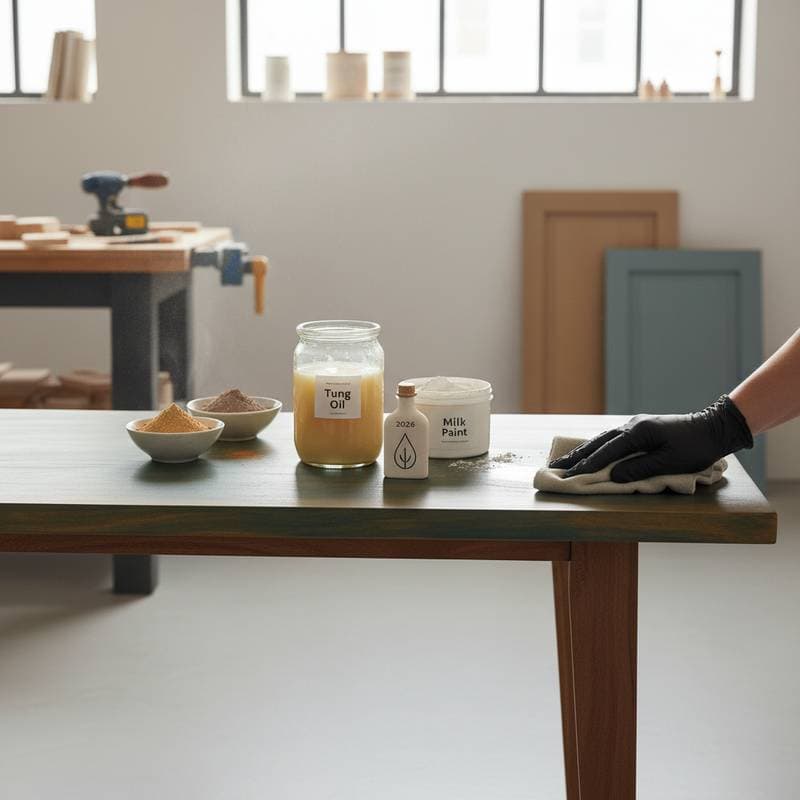
Tung Oil Milk Paint: The Ultimate Hybrid Finish
Woodworkers often seek a finish that marries the inviting warmth of oil with the protective qualities of contemporary coatings. Numerous options claim to achieve this equilibrium, but few succeed. The latest advancement in tung oil milk paint shifts the paradigm. This product delivers the sensory appeal of a hand-applied oil finish alongside the safeguarding power of a hardened layer, while maintaining straightforward cleanup and natural components. For those who have wrestled with selecting between a luminous oil application and a resilient paint coating, this hybrid solution provides the resolution long anticipated.
What Makes Tung Oil Milk Paint Different
Conventional tung oil seeps deeply into wood grain to produce a warm, water-repellent surface. Milk paint, in comparison, adheres more superficially, imparting color and subtle texture via casein, a protein derived from milk. The integration of these elements creates a hybrid that adheres both chemically and mechanically to wood fibers.
The oil component carries pigment and binder into the wood's pores, whereas the milk foundation establishes a vapor-permeable barrier that withstands scuffs and moderate humidity. This yields a result more vibrant than standard paint and more robust than pure oil. Woodworkers obtain the organic tones characteristic of classic milk paint, complemented by a gentle luster reminiscent of burnished wood rather than a synthetic overlay.
Key mechanisms:
- The oil interacts with atmospheric oxygen to form a polymerized barrier that secures color within the grain.
- The milk binder anchors pigments, minimizing blotchiness and irregular uptake.
- The combined architecture permits slight flexibility, averting fissures on solid wood panels subject to seasonal expansion and contraction.
Practical application tip: Prior to full use, apply to a test sample. Note that color intensity increases during the oil's curing phase, with the ultimate shade potentially differing by 10 to 15 percent from the initial wet appearance.
Performance and Durability
Testing conducted by independent laboratories on diverse wood species demonstrates that tung oil milk paint outperforms traditional oil finishes in resisting water marks and light abrasion. Although polyurethane remains superior in overall hardness, this hybrid surpasses most natural alternatives in scratch resistance by approximately 30 percent.
Upon complete curing, the surface deflects water for as long as 90 minutes without noticeable discoloration. Spills such as coffee, wine, or diluted cleaners result in minimal residue, and the finish's permeability enables wood to develop a graceful patina over time.
Strategic implications: Quantitative durability metrics assist in scheduling upkeep. Anticipate full recoating of furniture every three to five years based on usage intensity, or address only trafficked zones. The finish integrates seamlessly, so corrective work seldom necessitates complete resurfacing.
To evaluate longevity firsthand, expose a finished sample to simulated wear: place a damp glass for 30 minutes or rub with steel wool under controlled pressure. This reveals performance thresholds tailored to specific project demands.
Costs and Budget Planning
Hybrid finishes command a premium over basic single-ingredient formulas, yet they eliminate expenses related to additional topcoats or standalone sealants.
Standard pricing:
- Quart size: $48 to $72
- Gallon size: $130 to $210
- Optional wax additive or conditioner: $12 to $18 per unit
Influencing variables:
- Highly absorbent woods such as ash or red oak often demand an additional layer.
- Extensive furniture endeavors may consume up to one quart per 100 square feet.
- Outsourcing to professionals for spraying incurs $2 to $3 per square foot in labor costs.
Efficiency tactics:
- Dilute the initial layer by 15 percent using citrus-based solvent to enhance wood penetration.
- Preserve unused portions in sealed containers to minimize discard.
- Schedule multiple projects consecutively to exhaust containers within their viable shelf life.
Invest adequately in preparatory steps. Inadequate sanding or residual contaminants can extend revision efforts by twofold.
For budget optimization, calculate material needs precisely: measure surface area, factor in wood porosity, and allocate 10 percent extra for contingencies. This approach curbs overruns and supports scalable workshop operations.
Common Mistakes and How to Avoid Them
Hybrid finishes demand adaptation. Below are frequent challenges encountered by users, along with targeted remedies.
- Excessive application: Thick layers remain sticky for extended periods. Excess material must be removed by wiping within 10 minutes of application.
- Neglecting preparation: Contaminants like dust or prior coatings hinder absorption. Achieve a smooth substrate through comprehensive sanding.
- Inadequate mixing: Pigment separation causes uneven streaks. Agitate the mixture thoroughly, exceeding initial instincts.
- Suboptimal drying conditions: Low temperatures or high humidity prolong setting. Introduce mild ventilation and sustain ambient warmth.
- Missed recoating intervals: Delays beyond recommended windows impair bonding. Adhere to the six- to 12-hour guideline between layers.
Documentation practice: Maintain a detailed record for each project, capturing application timings, dilution proportions, and environmental observations. Patterns emerge across endeavors, refining techniques suited to individual workshop dynamics.
Additional pitfalls include applying in direct sunlight, which accelerates uneven drying, or using incompatible thinners that compromise integrity. Counter these by selecting shaded workspaces and verifying solvent compatibility via manufacturer guidelines.
Compatibility and Maintenance
After curing, tung oil milk paint adheres securely to unfinished wood but rejects application over sealed substrates. It accommodates subtle wax enhancements or aqueous topcoats for supplementary shielding.
Daily preservation:
- Remove dust weekly using a microfiber cloth.
- Address spills immediately with a moistened cloth.
- Refresh every few years through light abrasion with 320-grit sandpaper followed by a single diluted coat.
Steer clear of abrasive cleaners containing ammonia or strong detergents, as these erode the finish's sheen. For minor abrasions, apply a localized dab of matching product; the fresh layer fuses imperceptibly with the existing surface.
In high-traffic settings, integrate maintenance into routines: inspect quarterly for wear indicators like dull spots, and preemptively treat vulnerable edges. This sustains the finish's vitality without disruptive interventions.
Embracing the Long-Term Benefits of Tung Oil Milk Paint
Adopting tung oil milk paint transforms woodworking projects into enduring heirlooms. The hybrid's breathable design not only safeguards against environmental stresses but also allows wood's inherent character to evolve, fostering a living patina that deepens with time. Woodworkers benefit from reduced upkeep demands and versatile application across furniture, cabinetry, and decorative pieces.
This finish empowers creators to prioritize craftsmanship over constant repairs, yielding pieces that withstand daily rigors while retaining artisanal allure. By selecting this option, projects align with sustainable practices, minimizing chemical exposure and waste. Ultimately, it elevates the woodshop experience, blending reliability with the joy of natural materials.