
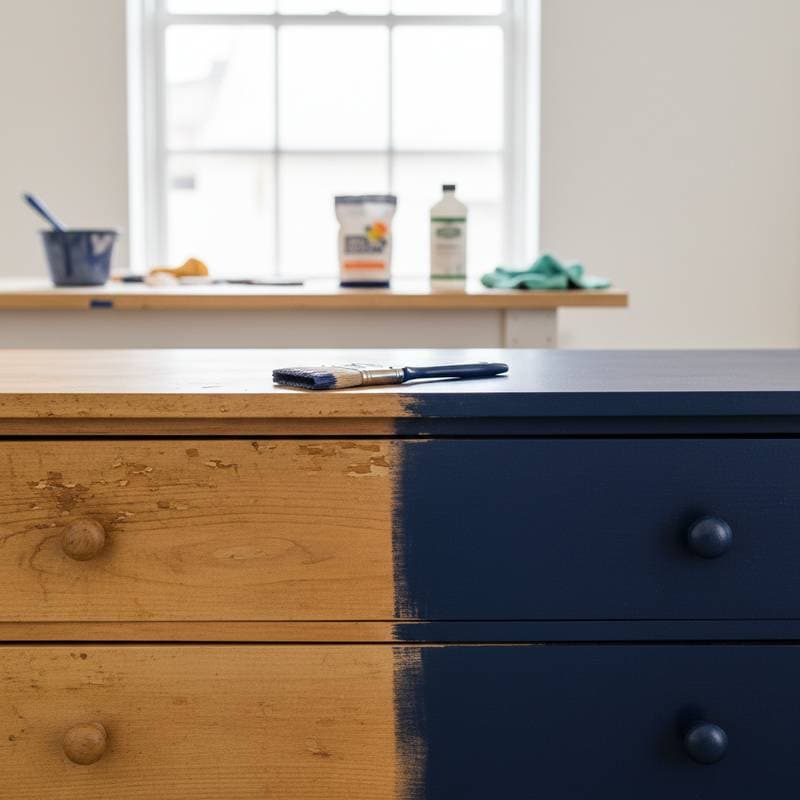
Applying Milk Paint Over Polyurethane: A Stripping-Free Approach
Consider a dresser finished with yellowed polyurethane that retains structural integrity. The prospect of stripping involves harsh fumes, extensive mess, and prolonged sanding, which often deters restoration efforts. Fortunately, milk paint adheres directly to polyurethane with appropriate preparation, delivering a velvety matte finish, vibrant color, and secure bond while preserving the original coating.
At a Glance
- Difficulty: Moderate
- Time: 1 to 2 days, including cure time
- Cost: $45 to $90 for a medium-sized dresser
- Tools: Deglosser, synthetic brush, 220-grit sandpaper, clean cloths
The Science Behind Milk Paint Adhesion to Polyurethane
Milk paint derives its bonding strength from casein, a protein extracted from milk that firmly anchors pigments upon curing. When combined with a specialized bonding agent, this formula adheres to smooth, non-porous surfaces such as polyurethane, preventing delamination. This method eliminates the need for complete stripping, which typically requires 4 to 6 hours of intensive labor per project.
The paint cures rapidly and self-levels for a uniform application. Its mineral-based pigments produce saturated, organic hues that surpass the vibrancy of conventional latex paints. The outcome yields an authentic texture with subtle chalkiness, ideal for enhancing vintage or contemporary furniture pieces.
For optimal adhesion, prepare the surface by ensuring it remains clean, deglossed, and devoid of waxes or contaminants. The existing polyurethane serves as a stable substrate, while the bonding agent forms the essential intermediary layer for milk paint attachment.
Action Step: Select a water-based bonding agent formulated specifically for milk paint. Reputable brands such as General Finishes or Old Fashioned Milk Paint provide products that integrate seamlessly at a 1:1 ratio with the initial coat.
Detailed Step-by-Step Process for Direct Application
This procedure maintains simplicity and minimizes cleanup throughout the refinishing.
-
Clean the Surface Thoroughly. Apply a degreaser or a solution of diluted white vinegar to the furniture, then wipe with a clean cloth to eliminate oils, dust, and residues. Allow the piece to air dry completely before proceeding.
-
Scuff Sand Lightly. Use 220-grit sandpaper to gently abrade the polyurethane finish, creating a matte texture without penetrating the layer. This step enhances mechanical grip for the bonding agent; avoid aggressive sanding to prevent uneven spots.
-
Prepare the Milk Paint Mixture. Dissolve milk paint powder in warm water according to package ratios, stirring vigorously for 5 to 10 minutes until fully hydrated and lump-free. Incorporate the bonding agent into the first coat mixture at the recommended proportion.
-
Apply the Paint Evenly. Employ a synthetic bristle brush or foam applicator to spread thin, consistent layers. Work in sections, feathering edges to avoid lap marks, and inspect for drips on profiled areas like moldings.
-
Allow Proper Curing Between Coats. Permit each layer to dry for a minimum of 4 hours in a dust-free environment. Typically, two to three coats suffice for full opacity over polyurethane, with additional layers building color depth if desired.
-
Apply a Protective Topcoat. After the final paint coat cures for 24 hours, seal the surface with a water-based polyurethane for sheen or a natural wax for matte protection. Buff lightly for enhanced smoothness.
Subsequent coats develop richer tones and texture. Initial applications may appear uneven due to the paint's settling process, but full curing reveals a cohesive finish.
Cost Analysis and Budgeting Essentials
Refinishing a small table or dresser using milk paint generally ranges from $45 to $90. The following outlines primary expenses:
- Milk Paint Powder: $25 to $35 for sufficient quantity to cover a medium piece
- Bonding Agent: $10 to $20 for a standard bottle
- Brushes and Sandpaper: $10 to $15 for quality disposables
- Topcoat or Wax: $15 to $25 depending on finish type
Bypassing stripping chemicals reduces costs by $20 to $40 and eliminates needs for additional cleanup materials. Furthermore, it avoids potential disposal fees for hazardous solvents, which may reach $10 in certain regions.
Professional services for a medium dresser or nightstand command $150 to $250, encompassing labor, preparation, and materials. This investment suits complex projects requiring precision.
Money-Saving Tip: Purchase milk paint powder in concentrated bulk form. It maintains shelf stability for extended periods, allowing custom mixing for future minor repairs.
Deciding Between DIY and Professional Assistance
Painting milk paint over polyurethane proves accessible for DIY enthusiasts possessing basic skills and attention to detail. Essential requirements include standard tools and a ventilated workspace. The primary hurdle involves achieving uniform coverage on inherently glossy substrates.
Opt for DIY If:
- You possess confidence in meticulous sanding and cleaning techniques.
- You can allocate two days for application and drying phases.
- You appreciate hands-on exploration of finishes and surface effects.
Engage a Professional If:
- The furniture exhibits significant damage, such as cracks or delaminating veneer.
- You seek advanced techniques like layering or intentional distressing.
- The item holds heirloom status warranting expert handling.
When consulting professionals, inquire about their familiarity with milk paint applications. Request a test sample on scrap material to confirm compatibility before full commitment.
Avoiding Pitfalls in the Application Process
Rushed preparation or omitted bonding often leads to suboptimal results, even among seasoned applicators. Key challenges include:
-
Paint Peeling: This occurs on surfaces contaminated with wax or grease. Prioritize thorough degreasing as the foundational step.
-
Inconsistent Coloration: Inadequate mixing causes streaks. Vigorously stir the paint before each brush load to ensure homogeneity.
-
Excessive Sanding: Over-abrasion exposes underlying wood inconsistently. Limit to a superficial scuff for traction without alteration.
-
Omitting Topcoat Protection: Exposed milk paint remains vulnerable to moisture and wear. Always apply a sealant to extend durability.
Ensuring Longevity and Care for Refinished Pieces
To preserve the renewed finish, dust surfaces weekly with a soft cloth and avoid direct sunlight exposure, which can fade pigments over time. For waxed topcoats, reapply a thin layer every six months; water-based poly requires annual inspection for wear. Store in moderate humidity environments to prevent cracking.
This approach not only revitalizes furniture efficiently but also promotes sustainable practices by reusing existing finishes. The matte elegance and eco-conscious profile make milk paint a superior choice for enduring transformations.
Resources and Visual Aids
- Figure: Sample color swatches demonstrating milk paint over sealed finishes.
- Caption: Illustrates coverage progression from one coat to three coats.
- Alt Text: Visual comparison of milk paint adhesion on polyurethane surfaces.