
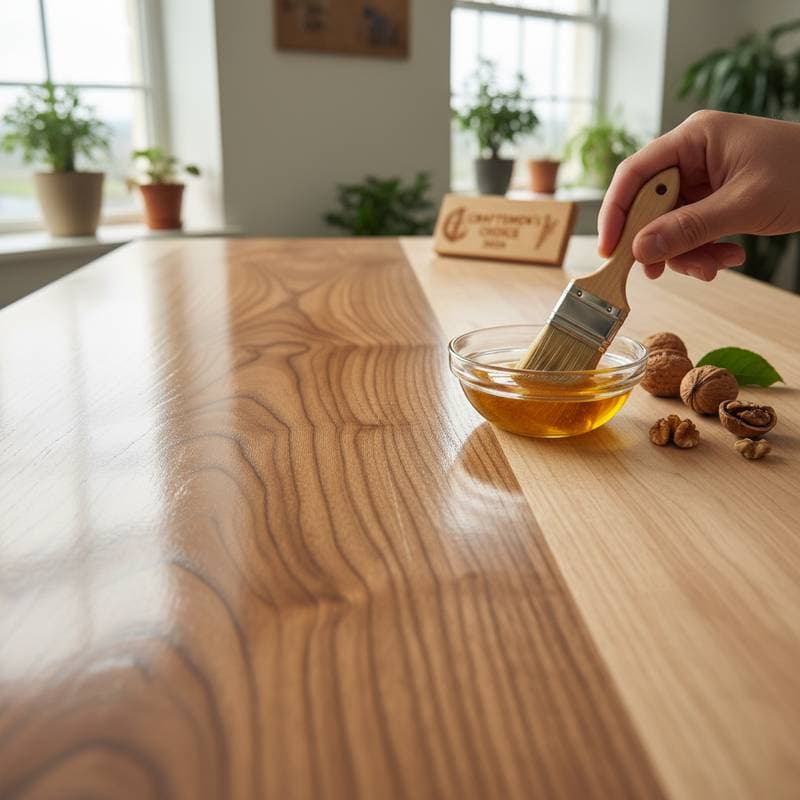
Why Walnut Oil Tops Polyurethane for Wood in 2025
Woodworkers have long debated the best finish for lasting beauty and protection. Polyurethane promised armor-like durability, but the shift toward natural materials and healthier practices has changed the conversation. Walnut oil, once a quiet choice for cutting boards and hand-turned bowls, has become the preferred finish for furniture makers and home shops focused on tactile warmth, repairability, and safe indoor air.
At a Glance
Who uses it: Furniture makers, hobbyist woodworkers, and homeowners seeking safe, low-maintenance finishes
Where it works: Kitchens, dining rooms, studios, and anywhere natural wood is exposed to touch and light
Finish type: Cold-pressed walnut oil, often polymerized for faster curing
Compared to: Polyurethane, both oil-based and water-based varieties
Photographer: Studio Woodgrain
Before
Polyurethane built its reputation on toughness. It sealed wood beneath a glossy coat that resisted scratches and water rings. For decades, that protection defined finished furniture.
Yet many craftspeople found its plastic-like film disconnected from the feel of real wood. Repairs required sanding back to bare material, and any mistake meant starting over.
"I loved the shine, but it felt like I was losing the soul of the wood," said cabinetmaker Laura Chen, who switched finishes in her studio after years of using polyurethane. "When clients run their hands over walnut now, they can feel the grain, not a coating."
The growing awareness of indoor air quality and the move toward renewable materials pushed many to rethink what protection truly means.
After
Walnut oil finishes keep wood tactile and alive. Instead of sealing it under plastic, the oil seeps into the fibers and hardens naturally, bonding with the grain rather than sitting on top. The result is a subtle sheen that deepens color without glare.
On a walnut tabletop, the surface glows like polished leather. Designers also appreciate its repairability. Small scratches can be rubbed out with a fresh coat, no sanding needed.
The finish blends seamlessly, even years later. For kitchens and dining tables, where wear happens daily, that ease of renewal matters more than laboratory abrasion tests.
Lighting plays a quiet role too. Natural oil finishes absorb and reflect light differently than polyurethane. In photos, walnut oil creates a soft luster that mirrors daylight across the grain, while polyurethane bounces light sharply.
That difference influences how users perceive depth and warmth in a room. "The surface reads quieter," said designer Mateo Ruiz, whose studio specializes in solid wood kitchen cabinetry. "People respond to that calm, matte glow. It feels honest."
Design Details
Material composition
- Pure walnut oil, often food-grade and cold-pressed
- Optional natural dryers or heat-treated polymerization for faster curing
- No synthetic resins or volatile solvents
Application
- Three thin coats, hand-rubbed with lint-free cloths
- Light buffing between coats using 400-grit abrasive or fine steel wool
- Typical coverage: 200 to 300 square feet (18.6 to 27.9 square meters) per quart
Finish profile
- Low gloss, satin to matte
- Penetrating seal that highlights grain figure
- Warm, touchable texture
Maintenance
- Recoat as needed every few months for high-use surfaces
- Clean with mild soap and water, then dry thoroughly
- Small scratches repaired with spot application
Why Walnut Oil Works
Natural Penetration and Polymerization
Walnut oil contains linolenic and linoleic acids that polymerize when exposed to air. This slow curing process creates a breathable yet protective bond within the wood. Unlike polyurethane, which forms a film, walnut oil integrates with the structure of the cell walls.
That difference affects both durability and feel. The cured film of polyurethane sits between user and wood. It prevents moisture but also prevents natural aging.
Over time, polyurethane yellows, especially under warm light. Walnut oil, by contrast, deepens with age, building character instead of covering it.
Health and Safety
Food-safe finishes matter when wood comes into contact with food or skin. Walnut oil ranks high because it contains no harmful solvents or VOCs. This makes it suitable for cutting boards, countertops, and children's furniture.
Polyurethane, even low-VOC versions, releases compounds during curing that require ventilation. Homeowners increasingly ask for finishes that do not off-gas or require respirators. For small workshops or apartment projects, walnut oil fits that need.
Repair and Longevity
Maintenance is not a drawback when it feels satisfying. Re-oiling becomes part of the relationship with a piece. A quick wipe restores sheen and color.
Polyurethane resists wear until it fails, then demands full stripping. Walnut oil encourages gradual care, keeping surfaces consistent over time.
Ruiz said, "It rewards attention. You see the wood respond when you reapply oil. That interaction keeps furniture alive."
Visual Warmth
Photographs of walnut treated with oil reveal why designers prefer it. The grain lines appear almost three-dimensional. The finish darkens heartwood and clarifies sapwood, creating natural contrast.
Under soft lighting, the surface reflects a diffuse glow, enhancing texture instead of hiding it. Polyurethane tends to level that variation. Its uniform gloss can appear synthetic under daylight.
For interiors aiming for calm, tactile realism, walnut oil produces a more grounded look.
Practical Comparison
| Feature | Walnut Oil | Polyurethane |
|---|---|---|
| Composition | Natural drying oil | Synthetic resin with solvents |
| Finish Type | Penetrating, matte to satin | Surface film, glossy or satin |
| Application | Wipe-on, easy to blend | Brush or spray, requires even coats |
| Repair | Simple spot recoat | Full sanding and refinish |
| Safety | Food-safe, low VOC | Requires ventilation |
| Appearance | Warm, natural | Hard, reflective |
| Maintenance | Periodic re-oiling | Long-term but difficult repair |
| Environmental fit | Renewable resource | Petrochemical-based |
How to Apply Walnut Oil
Step 1: Prepare the Surface
Sand the wood smoothly to 220 grit, then remove dust with a tack cloth. Walnut oil accentuates whatever surface you create, so even sanding lines will show.
Step 2: First Coat
Warm the oil slightly in a water bath to improve penetration. Apply with a lint-free cloth, working along the grain. Let it soak for 20 to 30 minutes, then wipe excess until the surface feels dry.
Step 3: Second and Third Coats
After 24 hours, repeat the process. Lightly buff between coats to open the pores. For tabletops or countertops, three coats provide a balanced seal.
Step 4: Buff and Cure
After the final coat, buff with a clean cotton cloth. Allow full curing in a ventilated space. The surface will feel dry within two days and continue hardening over several more.
Step 5: Maintain
Reapply as needed, depending on use. A dining table may need oil every few months, while decorative pieces can go longer. The process takes minutes and keeps the surface rich.
Smart Storage Moves for Oil Finishes
- Seal containers tightly after each use to prevent oxidation.
- Store rags safely, spread flat to dry before disposal to avoid spontaneous combustion.
- Label oil types clearly if using multiple finishes, since mixing can affect curing.
Cost and Accessibility
Pure walnut oil costs roughly 35 to 45 dollars per gallon (3.8 liters), depending on source and polymerization. That price is comparable to mid-grade polyurethane when factoring in minimal equipment and easy touch-up. Since it applies by hand, you avoid brush lines and spray gear.
A single quart covers about 250 square feet (23.2 square meters), enough for several large furniture pieces. Over time, the recurring need for light recoating adds minimal expense but consistent satisfaction.
Trade Offs to Consider
- Curing Time: Walnut oil dries slower than polyurethane. In humid climates, plan extra time before heavy use.
- Water Resistance: It repels spills but not standing water. Use coasters and wipe surfaces promptly.
- Allergies: Rare nut allergies may require alternative plant-based oils like tung or mineral oil blends.
For most users, these trade offs are worth the sensory and environmental advantages.
Key Takeaways
- Connection over coating. Walnut oil preserves the tactile link between hand and wood.
- Ease of repair. Scratches disappear with simple reapplication.
- Health and safety. No fumes or synthetic compounds.
- Visual calm. Light diffuses softly, enriching the grain.
- Sustainability. Derived from a renewable crop rather than petroleum.
When combined, these qualities explain the steady movement away from plasticized protection toward authentic finishes that age gracefully.
Living with Your Finish
Once you experience the feel of walnut oil under your fingertips, switching back to polyurethane feels unnecessary. The surface invites touch, ages with grace, and rewards care.
The shift in finishing philosophy mirrors larger design values: connection, repairability, and respect for natural materials. Walnut oil does not just protect wood, it deepens the bond between maker, material, and daily use.
Sources or Credits
Design teams and contributors:
- Laura Chen Studio, cabinetry and furniture design
- Mateo Ruiz Workshop, kitchen and interior woodwork
Photography: Studio Woodgrain.