
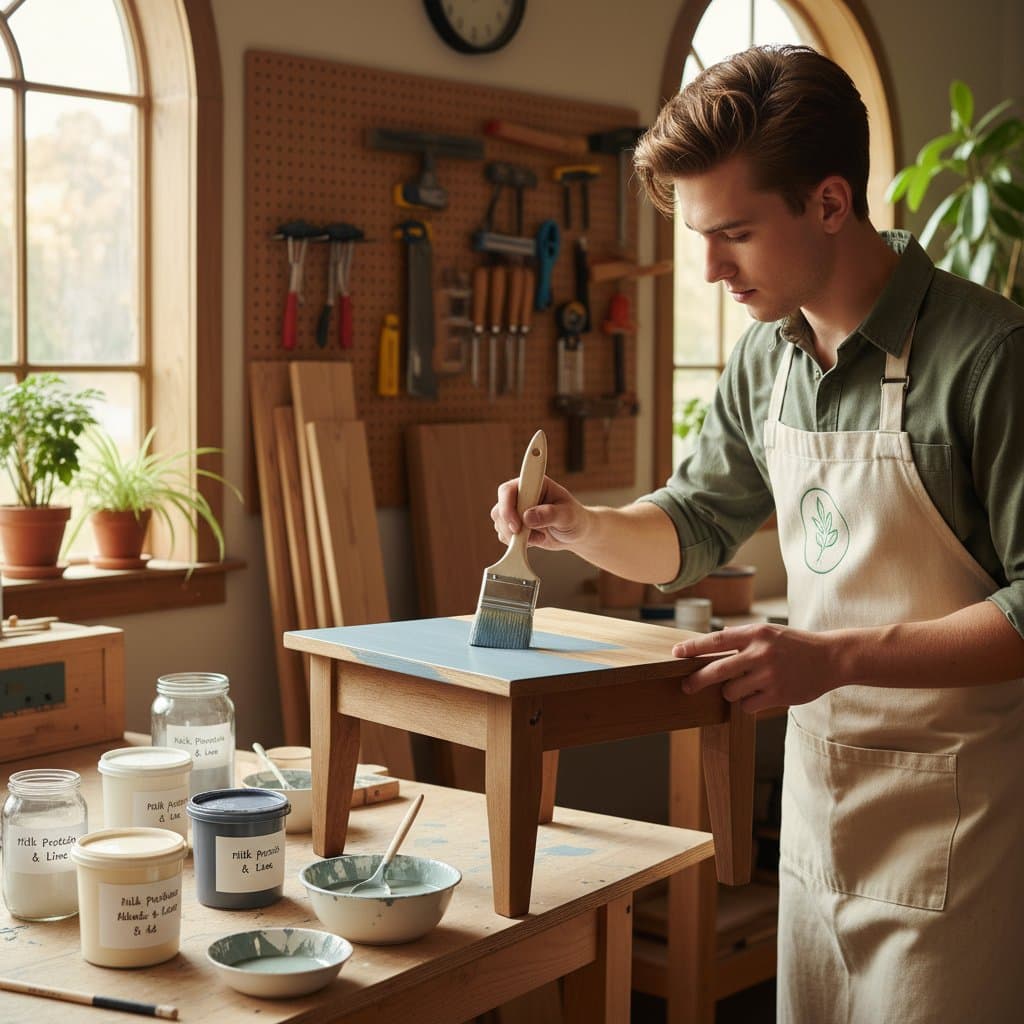
Milk Paint Revival Draws in Gen Z with Zero-VOC Benefits
Young woodworkers and DIY enthusiasts increasingly select a finish familiar to previous generations. Milk paint, composed of casein from milk, lime, and natural pigments, experiences renewed popularity in home studios and compact workshops. One gallon ranges from $45 to $60 and covers approximately 150 square feet, yielding a soft matte texture unmatched by synthetic alternatives. This resurgence, initially among restoration specialists, now aligns with Gen Z priorities of genuineness, healthy environments, and artistic flexibility.
Reasons Milk Paint Attracts the Current Generation
Milk paint aligns with the principles and visual preferences of Gen Z creators. Many live in rented apartments, manage side businesses, and seek to eliminate harmful vapors. They favor substances connected to tradition yet adaptable to contemporary designs.
Key Distinctions from Conventional Paints
Standard paints often incorporate artificial binders and solvents that emit volatile organic compounds, or VOCs, leading to respiratory discomfort and indoor air quality issues. Milk paint features zero VOCs, excludes plastic resins, and avoids formaldehyde. Its core components include:
- Casein, a protein from milk that solidifies during the curing process.
- Lime, which interacts with casein to form a strong connection.
- Earth-based pigments, supplying hues without artificial additives.
This composition produces a permeable, mineral surface that integrates with the wood substrate. The result resists peeling, ages elegantly, and allows restoration through gentle sanding followed by an additional layer.
Suitability for Compact Work Areas
In apartment-based setups or indoor tasks, milk paint offers minimal scent and rapid drying, enhancing usability. One application sets in 30 minutes to one hour, influenced by moisture levels, with complete hardening occurring over two weeks. Individuals apply it indoors without extensive ventilation or fan systems. Such convenience contributes significantly to its attractiveness.
Practical Tip: Purchase a sample kit, priced at $12 to $15, and apply it to test wood to evaluate color intensity and surface feel prior to larger undertakings.
Budget Considerations and Material Planning
Projects like refinishing a dresser or table require few items. A complete kit may consist of:
- One gallon of milk paint powder: $50
- Bonding agent: $15
- Hemp oil or wax for sealing: $20
- Brushes and sandpaper: $25
These elements total around $110, sufficient for several modest furniture items. A similar low-VOC latex arrangement expenses $80 to $100, though milk paint provides superior depth and ecological advantages that offset the modest increase.
Strategies for Cost Efficiency
Prepare only necessary quantities to extend resources. A one-cup mixture covers about 20 square feet. Dry, unmixed powder remains viable indefinitely when stored properly. Creators often acquire base shades and enhance them with pigment powders at $5 per ounce, yielding bespoke colors economically.
Essential Investments
Proper surface preparation remains crucial; neglect leads to inconsistent uptake and shedding. Fresh materials prevent defects. Bonding agents or lime from non-finishing sources risk incompatibility.
Practical Tip: Record mixing proportions and coverage outcomes. These details facilitate consistent results in future applications.
Avoiding Typical Errors in Application
Novices encounter challenges, but awareness of frequent issues streamlines the process.
Addressing Inconsistent Coloration or Lines
Incomplete dissolution of powder causes such problems. Stir vigorously and filter through cheesecloth if particles persist. A prompt re-blending often corrects imperfect mixtures.
Preventing Separation or Chipping
Pre-existing seals without bonding agents hinder adhesion. Incorporate one part bonding agent to two parts paint for the initial layer over varnished or polyurethane surfaces.
Managing Excess Sealer
Over-application of oil or wax alters shade and leaves tacky areas. Remove surplus after 20 minutes and polish once set.
Eliminating Cross-Contamination
Dedicate tools and vessels to milk paint alone. Traces from synthetic products disrupt the formula.
Practical Tip: Maintain a project journal noting ratios, environmental conditions, and observations. Progress accelerates with documented experiences.
Customizing Finishes for Personal Expression
Milk paint empowers Gen Z through its inherent variability and adaptability. Batches develop unique traits, allowing color overlays, edge weathering, or pigment blending to complement elements like clay, hemp, or rattan.
Techniques for Layering and Distressing
Apply successive thin coats for depth, sanding lightly between layers to reveal undertones. For aged effects, rub edges with fine steel wool post-curing, then seal selectively to highlight wear.
Sourcing Inspiration and Materials
Examine historical furniture references or online woodworking communities for ideas. Local art supply stores provide pigment options, while specialty retailers offer pre-mixed kits. Experiment with natural additives like clay for subtle earth tones.
Sustainable Benefits and Long-Term Value
Beyond aesthetics, milk paint supports eco-conscious practices. Its natural breakdown minimizes environmental impact, and reusability reduces waste. Woodworkers achieve durable, health-focused results that endure, fostering a legacy of mindful craftsmanship in everyday spaces.