
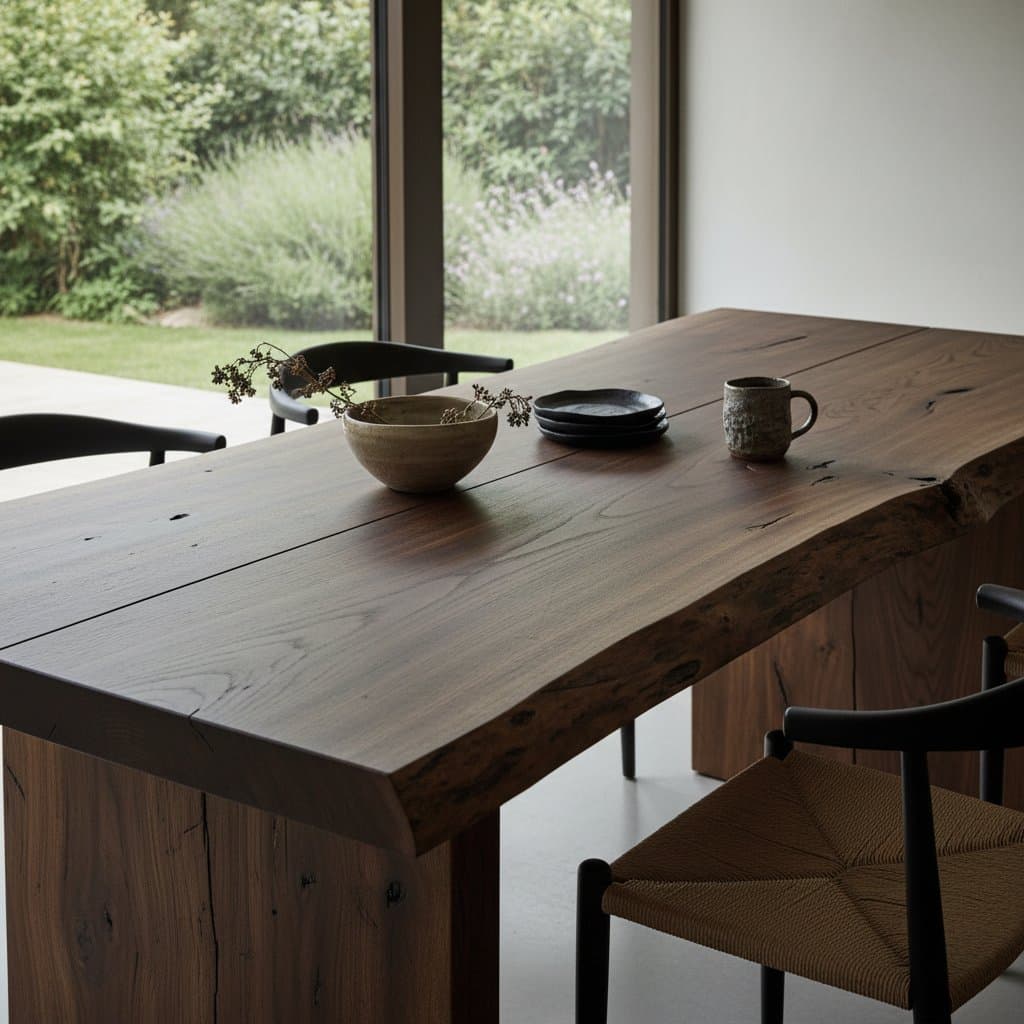
Why Imperfect Finishes Are Taking Over Wood in 2025
A flawless tabletop once represented the pinnacle of quality. Today, numerous homeowners and designers opt for wood surfaces that appear unpolished, matte, and rich in character. From raw-edge dining slabs to uneven applications of oil, the imperfect wood finish emerges as the contemporary benchmark for beauty. This evolution mirrors a broader acceptance of the Japanese philosophy of wabi-sabi, which honors impermanence, simplicity, and genuineness.
Initially, the notion of investing in furniture that exhibits signs of age or irregularity might seem counterintuitive. However, observing how these finishes transform the ambiance of a room reveals their appeal. The following sections examine the forces propelling this trend and provide guidance on incorporating it into personal projects.
What Drives the Imperfect Finish Trend
Multiple cultural and practical elements fuel this transformation in wood finishing preferences.
- Sustainability awareness. Consumers increasingly favor treatments that minimize synthetic chemicals. Natural oils, waxes, and low-VOC sealants align with eco-conscious choices by reducing environmental impact.
- Desire for authenticity. Surfaces achieved through machinery often appear cold and impersonal. Hand-applied finishes transmit sincerity and skilled artistry, fostering a connection to the material's origin.
- Repair-friendly living. Matte or intentionally distressed textures conceal everyday wear effectively. Addressing a minor scratch requires only localized touch-up rather than a complete refinishing.
Industry experts note that clients seek finishes designed to evolve gracefully with use. For instance, a well-applied oil finish typically endures five to eight years before requiring reapplication, whereas traditional lacquer might develop chips after just two years. Maintenance proves simpler, and the aesthetic matures attractively rather than deteriorating.
The appeal lies in how the human eye responds to irregular textures. Subtle variations in surface capture light in unique ways, producing depth and warmth absent in high-gloss alternatives. Consider a live-edge oak console: its natural knots and undulations draw attention, inviting touch and conversation in a living room setting.
This trend extends beyond residential spaces. Commercial designers incorporate imperfect woods in office lobbies and retail environments to create inviting, human-scale atmospheres. The result counters the sterility of modern minimalism with organic vitality.
DIY or Professional: Which Makes Sense for You
Achieving a wabi-sabi-inspired finish proves feasible for novices, provided one exercises patience and allows the wood to guide the process rather than imposing uniformity.
When DIY Fits Your Project
Opt for a do-it-yourself approach under these conditions:
- The work involves small items covering less than 20 square feet.
- Essential tools include sandpaper in progressive grits, lint-free cloths, and protective equipment such as gloves and masks.
- You accept outcomes that vary naturally, embracing the wood's inherent quirks.
Start by selecting a base finish like tung oil or linseed oil, applied in thin layers. Sand progressively from 120 to 220 grit to open the grain without over-smoothing. After the final coat, allow 24 to 48 hours of curing in a dust-free area. This method suits side tables or shelves, where experimentation builds confidence.
When to Hire a Professional
Engage an expert for more demanding applications:
- Large installations, such as built-in cabinetry or tables exceeding eight feet in length.
- Projects demanding uniform coloration across several components.
- Valuables like reclaimed or exotic woods valued above $500.
Skilled finishers employ techniques such as controlled humidity chambers and layered applications to achieve nuanced depth. Costs for a standard dining table range from $300 to $700, depending on wood type and complexity. Request sample boards demonstrating variations in oil-to-wax mixtures to visualize the final effect. Verify the use of low-VOC or food-safe formulations, especially for kitchen islands or cutting boards.
Professionals often recommend hybrid approaches for mixed woods, blending oils with natural pigments to harmonize tones without masking character. This ensures longevity while preserving the wabi-sabi essence.
Action step: Before committing to any method, test on scrap pieces. Document the finish type, coat count, and drying duration on each sample. Review after one week to assess adhesion and sheen, refining your technique accordingly.
| Finish Type | Cost per Sq Ft | Upkeep Frequency | Appearance Evolution |
|---|---|---|---|
| Natural Oil | $0.50–$1.00 | Every 1–2 years | Deepens with use, enhances grain |
| Wax Blend | $0.75–$1.50 | Annually | Soft patina, subtle sheen build |
| Low-VOC Polyurethane (Matte) | $1.00–$2.00 | Every 3–5 years | Maintains matte, resists stains |
| Lacquer (Traditional) | $1.50–$3.00 | Immediate refinishing on damage | Gloss fades, chips visible |
Maintaining the Authentic Look Over Time
After full curing, which spans seven to fourteen days depending on the finish, the surface develops a tactile silkiness that feels inherently organic. Daily care remains uncomplicated: address spills immediately with a lightly dampened cloth, avoiding harsh abrasives.
Periodic renewal involves reapplying a thin oil layer every two to three years, focusing on high-traffic areas. For thorough cleaning, employ pH-neutral soap diluted in warm water and a non-scratch sponge. This routine sustains the finish without altering its character.
Anticipate gradual shifts in coloration as part of the design. Exposure to sunlight might pale walnut to a softer honey tone or enrich oak toward deeper chocolate hues. These evolutions embody wabi-sabi principles, transforming potential concerns into appreciated stories of lived experience.
To safeguard the surface integrity:
- Position felt protectors beneath vases, lamps, or other weighted objects.
- Maintain indoor humidity levels between 40 and 55 percent using a hygrometer for monitoring.
- Steer clear of silicone-based polishes, which can create buildup and dull the natural matte quality.
Embracing these practices not only extends the lifespan of your wood pieces but also cultivates a mindful appreciation for their journey. In 2025, this approach elevates everyday furniture into heirloom-quality elements that resonate with personal narratives and sustainable values.