
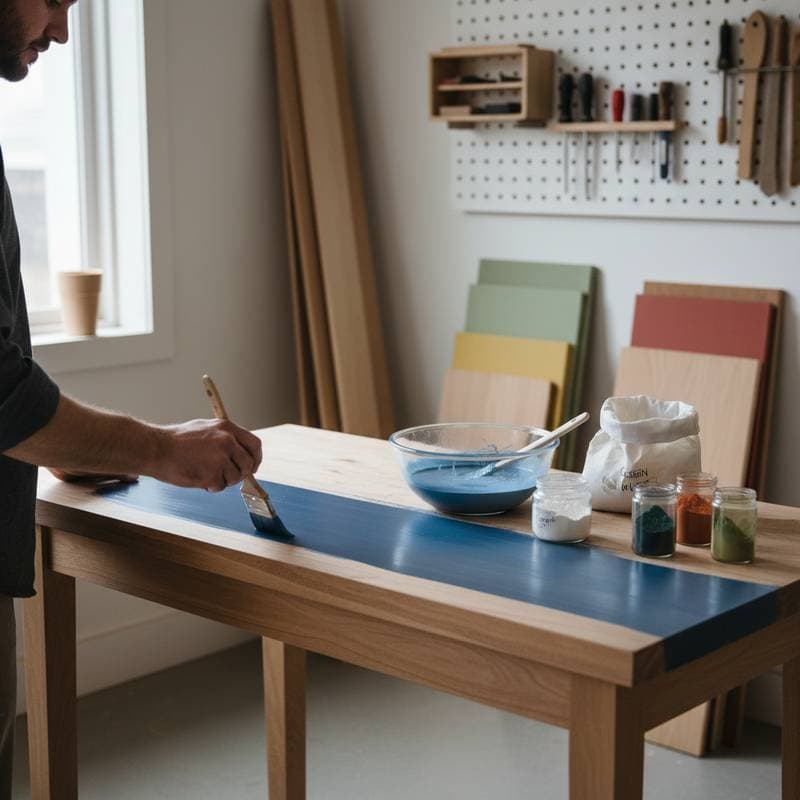
Milk Paint's Return as the Top Eco Finish
A quart of milk paint costs about 25 dollars and covers 150 square feet. Its appeal extends well beyond cost. This finish now appears on heirloom furniture, modern cabinets, and custom millwork in workshops that value air quality and sustainability.
Why Milk Paint Fits Modern Workshops
Synthetic finishes once dominated because they dried fast and looked uniform. They also released volatile organic compounds and required heavy solvents. Woodworkers now seek coatings that remain safe indoors and support environmental goals.
Milk paint meets these needs through simple ingredients. Casein from milk, lime, clay, and natural pigments combine with water to form a mineral bond. The coating penetrates wood rather than forming a surface film.
One quart finishes a typical dresser. Two quarts handle a large dining table. Sand the surface for a soft feel or add natural oil for extra protection. The result suits both minimalist and rustic designs.
The lime and casein react during curing to create a natural polymer. This bond resists peeling because the finish integrates with the wood fibers instead of sitting on top.
Start with pine or maple for a first test. Mix equal parts powder and water. Wait 15 minutes, then apply a thin coat. Color deepens as the surface dries. A second coat evens the texture.
Achieving Desired Color and Texture
Natural pigments produce soft, chalky tones that shift with light. Layer colors to create aged effects. These hues offer depth that synthetic tints seldom match.
Mix the powder with a whisk or blender until smooth. Allow the blend to rest 10 to 15 minutes. Strain through fine mesh for a smoother application. Stir during use to keep pigments suspended.
Thin the mix slightly and use a foam brush for clean modern results. Retain brush marks with a natural bristle brush for rustic texture. Apply wax resist before the final coat, then sand through for a distressed look.
Topcoats of natural wax, shellac, or water-based polyurethane adjust sheen and durability. The mineral bond allows moisture to pass through the wood. This breathability reduces blistering on solid panels.
Keep sealed and unsealed samples on a shop color card. Clients see how each shade will age, and repeat orders stay consistent.
Choosing Between DIY and Professional Help
Milk paint requires moderate skill focused on mixing and timing. Tools include a mixing cup, whisk, and natural bristle brush. Most projects finish in three to six hours with warm water cleanup.
DIY works well for small furniture, decor, or test pieces. Hire professionals for large built-ins, full kitchens, or commercial spaces that need color consistency. Request samples of their prior milk paint work and confirm they use true casein formulas rather than latex chalk paint.
Professionals often employ spray equipment and custom pigments. Their experience with drying conditions and sealing options improves outcomes on complex jobs.
Test the finish on oak, pine, and maple before offering it as a service. Each species absorbs the paint differently, which affects final appearance.
Caring for the Finished Surface
A properly applied milk paint finish lasts decades. It bonds directly to the wood, so touch-ups blend without visible lines. Lightly sand and recoat faded areas with the same color. Reapply wax or oil every few years on sealed pieces.
Interior furniture typically lasts 20 years or longer. Light cabinetry holds up 10 to 15 years. Decorative panels remain intact indefinitely when kept dry.
Clean with a soft damp cloth only. Avoid harsh chemicals and standing water. Buff wax periodically to maintain sheen on sealed surfaces.
The mineral structure resists ultraviolet fading better than most synthetic paints. Over time the surface develops a velvety patina that many designers prefer.
Practical Benefits for Daily Use
Clients appreciate that milk paint requires no special solvents during application or cleanup. The finish supports healthy indoor air because it contains no volatile organic compounds. Its natural composition also allows easy future refinishing without heavy stripping.
Woodworkers gain a versatile option that performs across styles and project sizes. The same product serves both quick weekend builds and long-term commissioned pieces. This flexibility reduces the need to stock multiple finish types.