
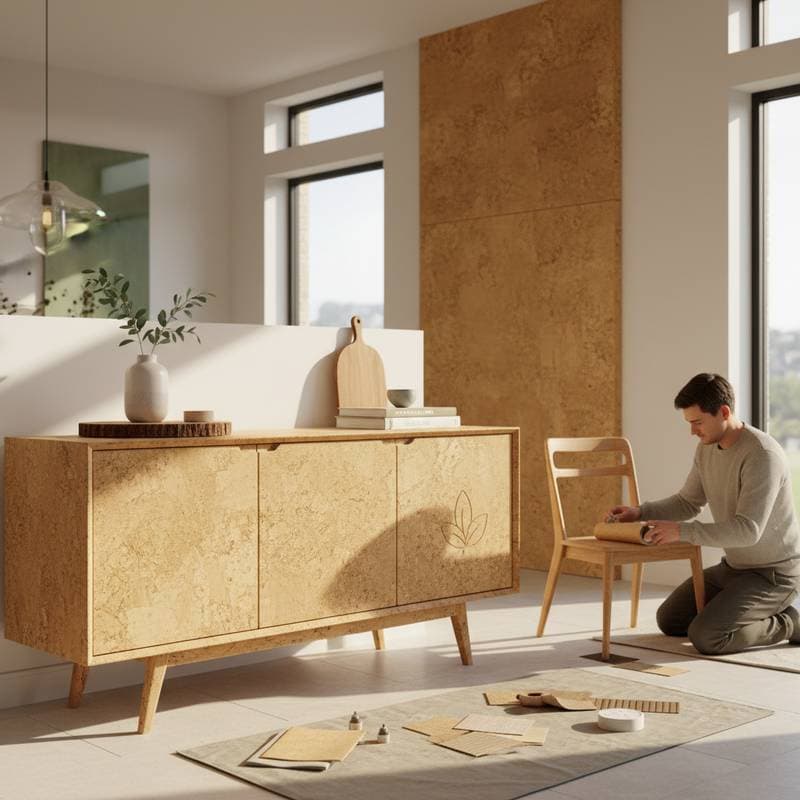
Why Cork Veneer Leads Sustainable DIY Finishes in 2025
Cork veneer has emerged as the preferred material for sustainable furniture finishes. Individuals focused on waste reduction, chemical avoidance, and the creation of warm, durable surfaces find cork veneer delivers on these priorities. The material proves renewable, cost-effective, easy to handle, and possesses a tactile quality that complements modern and rustic aesthetics alike.
Prior to commencing a woodworking or furniture endeavor, understanding the reasons for cork veneer's rising popularity, its pricing structure, and proper application techniques proves essential. This knowledge enables informed decisions that enhance project outcomes while upholding environmental responsibility.
The Sustainability Advantages of Cork Veneer
Cork veneer derives from the bark of cork oak trees, which naturally regenerate their outer layer. The harvesting process leaves the tree intact, positioning cork as one of the rare wood-derived materials capable of repeated renewal. A mature cork oak can yield harvestable bark for more than 100 years, ensuring a consistent supply without contributing to deforestation.
Manufacturing requires limited water and energy resources in comparison to engineered woods or laminates. Numerous suppliers adhere to certifications from bodies like the Forest Stewardship Council, confirming ethical sourcing practices. These standards verify that production supports biodiversity and long-term forest health.
Available in thin sheets measuring 1 to 2 millimeters, cork veneer covers extensive surface areas efficiently across various projects. This thin profile minimizes material usage and waste generation. Additionally, its lightweight nature reduces the carbon emissions associated with transportation when compared to denser hardwood veneers.
Cork also excels in thermal and acoustic insulation, absorbing up to 50 percent of sound waves and regulating temperature fluctuations. These properties enhance indoor comfort while further reducing energy demands in finished spaces.
Action step: Select cork veneer products displaying FSC certification or similar eco-labels. Such verification guarantees alignment with sustainable forestry initiatives and bolsters the integrity of your project.
Pricing and Budget Considerations
Projects incorporating cork veneer remain economical relative to solid woods or composite alternatives. Material expenses typically range from $4 to $12 per square foot, influenced by texture variations and backing options. Veneers backed with paper or fabric facilitate simpler adhesion, whereas unbacked sheets offer a marginally lower price point.
Associated finishing materials contribute approximately $25 to $50 for a compact furniture item, covering adhesives, sealants, and application tools. Engaging a professional for finishing services may incur $40 to $75 per hour, resulting in overall project expenditures of $250 to $600 for items such as a medium-sized coffee table or console unit.
Factors influencing costs:
- Veneer thickness and quality grade
- Adhesive selection, including contact cement or specialized wood glues
- Quantity of finish applications required
- Time allocated for edge trimming and sanding
- Local availability and transportation charges
Budget tip: Procure cork veneer sheets exceeding project dimensions slightly. Post-adhesion trimming avoids edge imperfections that might cause delamination over time.
Essential investments: Prioritize high-quality adhesives to ensure a robust, flexible connection. Inferior products risk forming bubbles or separations. Opt for formulations explicitly designed for veneer or cork substrates to maximize adhesion reliability.
For larger undertakings, such as cabinetry panels, bulk purchasing can lower per-square-foot costs by 10 to 20 percent. Comparing suppliers online or through specialty lumber outlets often uncovers competitive pricing without compromising quality.
Pitfalls to Sidestep in Application
Cork veneer forgives minor imperfections, yet certain oversights can compromise longevity. Addressing these common challenges proactively preserves the material's performance.
-
Inadequate surface preparation. Residual dust or irregularities on the base material become visible post-application. Sand the substrate to 180 grit and clean thoroughly prior to adhesion.
-
Excessive adhesive application. Surplus glue permeates the cork, reducing flexibility. Distribute a uniform, thin layer across both the veneer and substrate surfaces.
-
Oversight of edge protection. Cork edges readily absorb ambient moisture, leading to expansion. Seal all trimmed edges with a thin sealant layer immediately after cutting.
-
Aggressive sanding techniques. The soft composition of cork yields to over-sanding, creating uneven thinning. Employ fine-grit abrasives with minimal pressure for smoothing.
-
Failure to acclimate materials. Without adjustment to ambient conditions, sheets may warp during installation. Allow at least 24 hours for veneer to equilibrate with room humidity levels.
-
Incompatible finish selections. Harsh varnishes can discolor cork; select water-based polyurethanes or natural oils for compatibility and preservation of the material's warmth.
Quick fix: For emerging bubbles, insert a fine pin to release trapped air, inject a dab of adhesive, and roll firmly to re-secure the area. Monitor for recurrence and reinforce as needed.
Regular maintenance, such as annual dusting and spot-cleaning with mild soap, extends durability. Avoid direct sunlight exposure to prevent fading, and use coasters on finished surfaces to guard against moisture rings.
Customizing with Cork Veneer
The versatility of cork veneer invites personalization across design styles. Crafters can shape it into intricate patterns, incorporate laser-etched motifs, or pair it with contrasting woods for visual depth. This adaptability suits minimalist spaces with clean lines or organic environments emphasizing natural textures.
Experimentation with stains or dyes alters cork's neutral tone, enabling matches to existing decor. For instance, a light oil finish accentuates the material's subtle grain, while deeper tints create dramatic accents on tabletops or wall panels.
In larger applications, such as flooring underlays or acoustic room treatments, cork veneer integrates seamlessly, enhancing functionality without overwhelming aesthetics.
Key takeaways:
- Cork veneer ranges from $4 to $12 per square foot, delivering unmatched sustainability credentials.
- It imparts sound absorption, thermal warmth, and resistance to dents and scratches.
- DIY projects succeed with methodical preparation and appropriate adhesives.
- Thorough sealing and edge treatment ensure a service life exceeding 10 years.
Enhancing Projects with Eco-Friendly Durability
Integrating cork veneer elevates woodworking endeavors by merging practicality with environmental stewardship. This material not only withstands daily use but also contributes to healthier living spaces through its hypoallergenic and antimicrobial qualities. By choosing cork, creators invest in pieces that endure, reducing the need for frequent replacements and fostering a legacy of sustainable craftsmanship.