
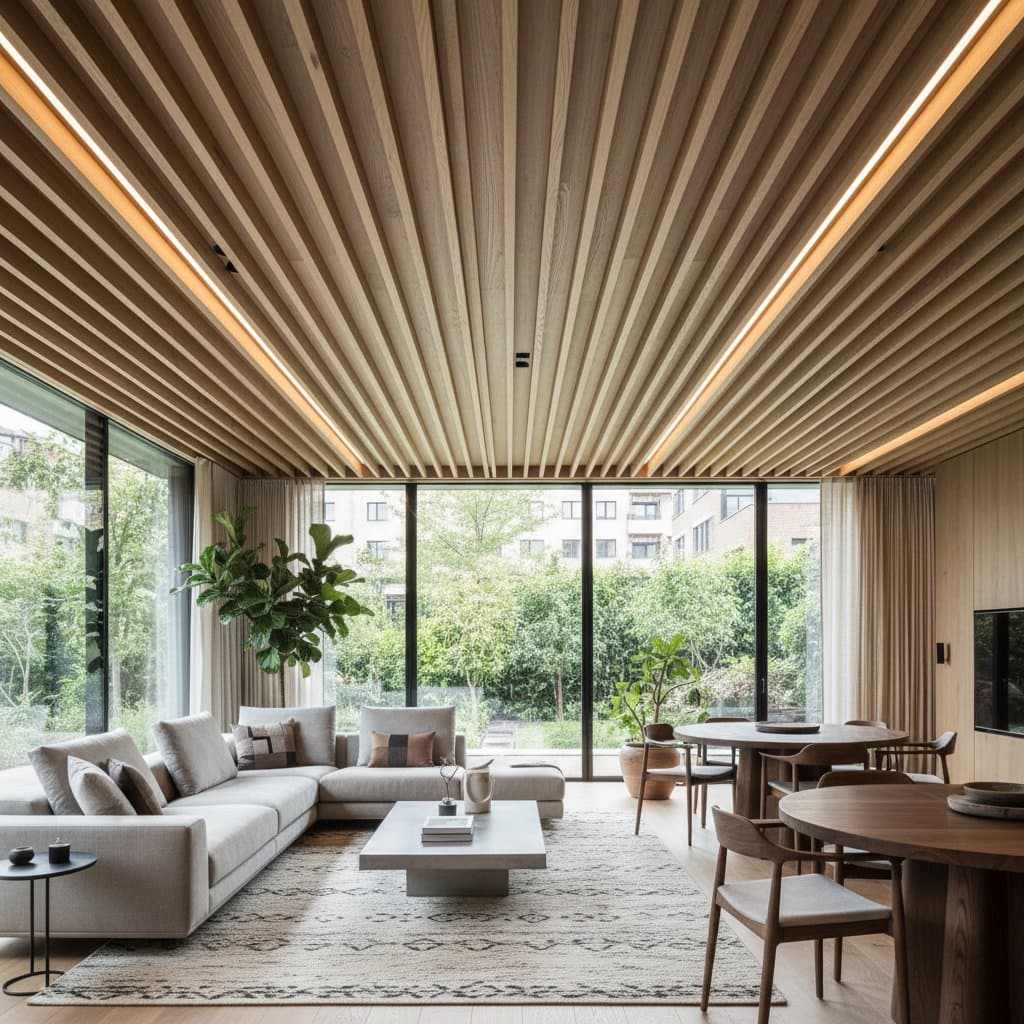
How Wood Slat Ceilings Tackle Open-Plan Noise Challenges
Wood slat ceilings transition from specialized studios to standard residences. These installations soften echoes, introduce linear patterns, and infuse overhead spaces with organic texture. Originally a premium acoustic fix, they now suit weekend builds for those inclined toward hands-on design. Current kits and prefabricated sections simplify the process using basic equipment like a tape measure and saw.
The design merges aesthetic depth with practical benefits. Slats diffuse sound reflections and temper overly reflective environments with extensive glass or tile. Open-plan areas, dedicated workspaces, entertainment zones, and cooking spaces gain the most. The outcome yields a ceiling that mutes ambient noise while providing a strong visual focal point.
Quick Overview
- Trend Focus: Wood Slat Ceilings as DIY Acoustic Solutions
- Primary Benefits: Noise reduction paired with material authenticity
- Best Applications: Expansive living zones, creative studios, professional offices, lower-level rooms
- Required Expertise: Moderate hands-on skills
- Essential Equipment: Miter saw, fastening tool, straightedge, sound-absorbing substrate
Reasons for Current Popularity
Expansive floor plans intensify auditory issues. Voices reverberate off rigid materials, and thin builds transmit vibrations across levels. A wood slat ceiling functions as an overhead screen and sound barrier. The gaps in slats scatter waves, and underlying fabric or filler captures residual resonance.
Individuals appreciate the hands-on nature of wood. It offers genuine appeal and customization potential. Boards accept stains, protective layers, or natural patinas. Experts highlight its straightforward impact. Interior designer Cara Jensen notes, “You can hear and feel the difference immediately. The wood warms the tone of a room in both color and sound.”
Components of a Slatted Ceiling
This ceiling type layers elements for integrated results:
- Foundation: Standard plasterboard or current overhead surface.
- Sound-Dampening Middle: Fabric strips, mineral-based fill, or repurposed fiber sheets to minimize vibrations.
- Surface Slats: Thin wood strips, typically 1 inch thick and separated by 1 inch, secured in straight lines.
Gap proportions influence sound transmission to the damping material. Living areas often feature 50 percent openness, whereas professional spaces prefer denser arrangements. Orientation aligns with or against primary walls to direct visual flow.
Selecting Materials and Treatments
Oak and walnut lead for their durable patterns and enduring hues. Poplar and pine provide pale shades at reduced expense. Prefinished overlays on composite bases ensure uniformity in DIY projects. Full wood selections demand environmental adjustment prior to fitting to avoid distortion.
Treatments span subtle sheens to rich colorations. Apply a pale wash to scatter light while revealing wood figure. A gloss-resistant topcoat bounces light moderately to enhance room luminosity without harsh reflections.
Contemporary styles pair dark fabric undersides with untreated oak for bold definition. Traditional vibes use golden tones on broader pieces alongside salvaged elements and bare structural beams.
Step-by-Step Installation Guide
Precision defines a successful wood slat ceiling setup, though the sequence remains direct. Establish a straight framework marked on the surface. Identify support positions and prepare holes as required. Secure damping sections initially. Fasten slats to support rails with nails or clips, maintaining even intervals via a guide jig.
Prefabricated units frequently feature slats affixed to fabric in 24-by-48-inch modules. Trim these with a rotary cutter and fix via fasteners into beams or supports. Continuous wood lines mask joints seamlessly.
Incorporate a 1/4-inch perimeter buffer for material shift. Complete with edging or recessed margins for a finished appearance.
Incorporating Lighting Elements
Illumination elevates the installation. Embed slim LED bars in slat intervals for even surface glow. Place compact overhead lights amid rows to preserve continuity. Aim for layered illumination: general overhead, focused task areas, and perimeter highlights.
During electrical planning, confirm fixture gaps pre-slats. Maintain 1/2-inch separations around units to manage warmth. Retrofitting favors clip-on rail systems that sidestep fabric penetration.
Measuring Acoustic Effectiveness
Standard setups with fabric undersides shorten echo duration by 40 percent versus plain surfaces. This shift registers in dialogue and audio reproduction. Reverberations lessen, and definition sharpens. Dedicated viewing areas see better vocal distinction and controlled low tones.
Performance ties to thickness and filler compactness. Two-inch mineral layers excel at lower pitches. Compact zones or workspaces suffice with slim fabric for higher-frequency control.
Budget and Timeline Estimates
Entry-level self-installs range from 6 to 10 dollars per square foot, varying by wood and damping choices. Hired services may increase costs twofold. Average spaces require two full days, covering preparation, fabrication, and detailing.
Overhead labor demands secure positioning. Opt for light components and support frames. Assistance aids in leveling and accelerates the build. Protect surroundings and ensure airflow during fabrication or coating to contain particles.
Adaptable Design Approaches
Wood slat ceilings fit diverse settings. Consider these three configurations:
Scandinavian Simplicity
Location: Portland, Oregon
Design: Studio Linwood
Elements: Pale oak overlays with neutral surroundings and hidden LED paths.
Advantages: Introduces subtle tone to stark schemes. Even light distribution mirrors frame divisions in glazing.
Midcentury Update
Location: Palm Springs, California
Design: Rios Renovation
Elements: Teak strips over dark undersides, complemented by rounded fixtures.
Advantages: Opaque base conceals utilities. Deep wood links to era-specific furnishings.
Industrial Edge
Location: Brooklyn, New York
Design: Kate Fowler Interiors
Elements: Salvaged fir on steel rails with exposed fasteners.
Advantages: Preserves unrefined character. Intervals mitigate echoes from solid bases.
These options span financial levels and styles, united by acoustic and thermal gains.
Functional Enhancements
Beyond sound management, ceilings conceal utilities. Embed air flows, audio units, and lines within the framework for tidy appearances. One method tucks a retractable screen above, deploying on demand. Another employs detachable magnetic sections for utility access.
For tech inclusion, outline routes prior to slat placement. Bundle lines along beams and fasten securely. Mark paths for future reference. The aim yields an unbroken look with practical upkeep.
Eco-Friendly Aspects
These ceilings align with green practices. Suppliers provide certified overlays and reused fabric cores. Composite foundations limit excess and enhance stability. Hands-on creators source regional lumber or repurposed stock cut to size for minimal impact.
Low-emission coatings preserve air purity. Aqueous or plant-based options dry quickly with reduced vapors. Test samples in site conditions to match desired shade and sheen before full application.
Avoiding Typical Errors
Experienced installers sometimes overlook key steps. Address these issues:
- Omitting Damping: Slats alone serve decoration. Integrate absorptive material always.
- Poor Alignment: Irregular gaps or offsets draw attention. Employ guides and verify periodically.
- Inadequate Fixture Space: Units require ventilation. Route electrics pre-assembly.
- Excess Weight: Dense woods strain supports. Calculate load capacity upfront.
Detailed planning of layout and sizes averts corrections.
Budget-Tiered Implementation Guide
Basic Option:
Select off-the-shelf units with attached overlays. Secure over plasterboard with hardware. Efficient and accessible.
Intermediate Level:
Assemble bespoke framework using affordable woods finished to taste. Add 1-inch fabric or alternative for enhanced damping.
Premium Choice:
Source dense hardwoods with built-in lights and concealed ducts. Suited to broad or media-focused areas.
All levels provide aesthetic and auditory upgrades, scaled by personalization.
Essential Insights
- Wood slat ceilings manage echoes and contribute organic tone.
- Prefab sections enable capable self-builds.
- Underlying damping proves crucial.
- Light layering boosts dimension and function.
- Green sourcing and treatments support healthy environments.
Function meets style in this enduring solution. As residences incorporate rigid elements and fluid layouts, overhead solutions that harmonize sound and sight remain vital.
Experiencing the Installation
After completion, the ceiling alters room dynamics. Exchanges gain precision, and distractions recede. Daily light shifts highlight wood textures, fostering steady ambiance. Maintenance involves light surface cleaning with soft tools.
Scheme updates allow on-site renewal. Gentle abrasion followed by fresh coloration revives without disassembly. The build persists through its blend of durability and appeal, linking technique to everyday ease.
Credits
- Design Firms: Studio Linwood, Rios Renovation, Kate Fowler Interiors
- Images: Provided by respective studios
- Specialist Input: Cara Jensen, interior designer
Wood slat ceilings exemplify skilled integration of form and utility. From custom fabrication to kit assembly, they deliver subdued acoustics and elevated presence. The overhead plane evolves into an active contributor to serene, engaging spaces.