
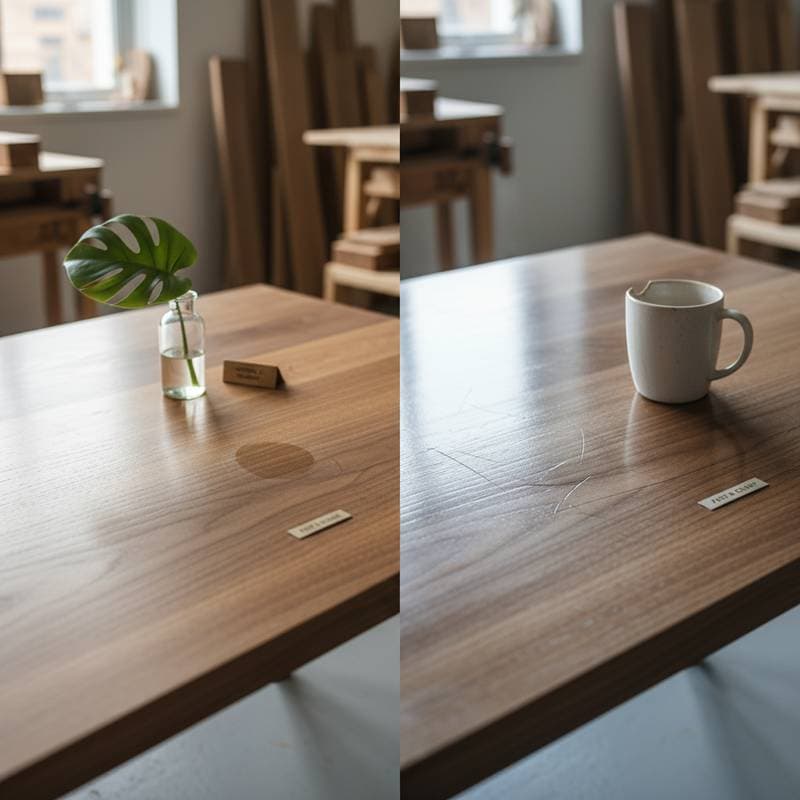
Why Tung Oil Outperforms Polyurethane for Wood Finishes in 2025
A freshly sanded tabletop appears flawless until the finish application reveals its true character. Many DIY woodworkers select polyurethane as their go-to option, yet tung oil delivers superior results in natural beauty, ease of repair, and enduring appeal. A quart of tung oil typically costs between $25 and $40, sufficient to finish two medium-sized tables or a complete set of shelves. Polyurethane presents a lower initial cost of about $15 to $25 per quart, but the long-term trade-offs emerge through daily use.
At a Glance: Tung Oil vs. Polyurethane
Finish Comparison Table
| Feature | Tung Oil | Polyurethane |
|---|---|---|
| Appearance | Warm, natural, matte to soft gloss | Plastic-like shine |
| Cost per Quart | $25–$40 | $15–$25 |
| Dry Time | 24–48 hours per coat | 2–4 hours per coat |
| Durability | Flexible, repairable | Hard, prone to cracking |
| Maintenance | Spot repairs feasible | Requires sanding entire area |
The Appeal of a Natural, Living Finish
Tung oil soaks deeply into wood fibers and establishes a flexible bond that accommodates seasonal expansion and contraction. Polyurethane, by contrast, creates a rigid surface layer prone to chipping or peeling during wood movement. This distinction becomes evident in both tactile sensation and visual tone: tung oil accentuates the grain with a subtle, hand-rubbed luster that invites touch, while polyurethane imparts a glossy veneer that obscures the inherent texture of solid wood.
Pure tung oil hardens through oxidation, a process where it reacts gradually with oxygen in the air. After curing, it demonstrates strong resistance to water, mild acids, and alcohol, surpassing many linseed-based alternatives. Applying three to five coats builds a profound depth unmatched by any film-forming finish. Annual maintenance involves a single recoat without the need for surface stripping, a feature particularly valuable for furniture enduring regular handling.
Mechanisms Behind Its Effectiveness
The polymerized composition of tung oil permeates and fills wood pores from within, rather than forming an external barrier. This approach yields a breathable finish that permits safe moisture vapor transmission. Such permeability avoids the moisture entrapment that frequently causes haze or delamination beneath polyurethane layers. Recoating specific areas proves straightforward, as fresh oil integrates seamlessly with existing layers following light sanding.
Practical Application Tip: For a dining table or desk surface, dilute the initial coat by 50 percent with mineral spirits to enhance penetration. Allow it to dwell for 30 minutes, then wipe away excess material. Repeat the process at 24-hour intervals until the wood ceases to absorb additional oil.
Evaluating Polyurethane: Advantages and Limitations
Polyurethane endures as a favored choice due to its rapid drying and robust scratch resistance. It suits high-traffic applications such as flooring or cabinetry subjected to ongoing wear. However, its rigidity poses a significant drawback: cracks in the film permit moisture infiltration, leading to widespread peeling. Remedying such damage necessitates sanding the affected panel back to bare wood, a process far more time-intensive than initial application.
Oil-based polyurethane maintains integrity for five to seven years before noticeable yellowing occurs. Water-based variants preserve clarity longer but often appear stark against warm woods like cherry or walnut. Regardless of formulation, both types produce a synthetic sheen that diminishes the sensory warmth derived from genuine wood grain.
Scenarios Where Polyurethane Excels
Opt for polyurethane in situations demanding swift completion or exceptional abrasion tolerance. Bar tops or workbench surfaces gain from its fortified protection. For items like furniture, musical instruments, or cutting boards, tung oil strikes an optimal balance between user safety and straightforward upkeep.
Transition Guidance: To convert an existing polyurethane finish to tung oil, sand thoroughly to expose bare wood. Degrease the surface with mineral spirits, and apply a test patch of tung oil to verify uniform absorption prior to full coverage.
Budget Considerations and Long-Term Value
Completing a tung oil finish amounts to approximately $1 to $2 per square foot, encompassing all necessary materials. One quart spreads over 100 to 125 square feet across two coats. Polyurethane edges lower at about $0.75 per square foot, though premature full refinishing elevates overall expenses. Across a decade, tung oil demands only two maintenance applications, totaling under $50. In comparison, polyurethane may necessitate comprehensive sanding and recoating, potentially exceeding $200 in supplies and effort.
Cost-Effective Strategies:
- Select 100 percent pure tung oil over blended products marketed as “tung oil finish,” which frequently include varnish or petroleum distillates.
- Prepare thinned coats in-house using mineral spirits, avoiding pricier pre-diluted options.
- Employ reusable lint-free cotton rags for application, storing used ones in a sealed metal container to mitigate fire risks from spontaneous combustion.
Tackling the Project: DIY Versus Professional Assistance
Tung oil accommodates methodical DIY enthusiasts with minimal tools: soft cloths, 320-grit sandpaper, and a low-dust workspace suffice. Each coat requires roughly 30 minutes for application and one to two days for drying. Polyurethane demands brushes, sprayers, vigilant leveling, and stringent dust management during the cure phase. Professional services for polyurethane refinishing range from $5 to $8 per square foot, whereas a self-directed tung oil endeavor stays below $1 per square foot.
Indicators for Professional Involvement:
- Expansive tabletops exceeding 6 feet that require precise color matching.
- Flooring projects spanning multiple rooms for uniform sheen.
- Restoration of antique pieces where finish adhesion proves critical.
Benefits of DIY Execution: Refreshing a tung oil surface occurs effortlessly at any time. A gentle sanding followed by one fresh coat restores vibrancy without evident seams or inconsistencies.
Avoiding Pitfalls in Application
- Overapplication of Oil: Leaving excess material results in a gummy, tacky residue. Wipe diligently after 20 to 30 minutes of dwell time.
- Inadequate Preparation: Residual dust or prior finishes hinder absorption. Sand to 220 grit minimum and eliminate all debris before proceeding.
- Contamination from Waxes or Silicones: These substances block oil entry. Degrease completely using mineral spirits.
- Reliance on Blended Products: Items labeled “tung oil finish” may incorporate polyurethane, undermining natural advantages. Verify packaging for pure tung oil designation.
Sustaining Finish Longevity
Preserve the vitality of a tung oil-treated surface through routine care. Clean spills promptly with a mild soap solution to prevent staining. Avoid prolonged exposure to direct sunlight, which can accelerate fading. For enhanced protection in high-use zones, integrate coasters and placemats to shield against heat and moisture. Annual inspections allow early detection of wear, enabling targeted recoats that extend the finish lifespan indefinitely. This proactive approach ensures wood projects retain their aesthetic and functional integrity for generations.