
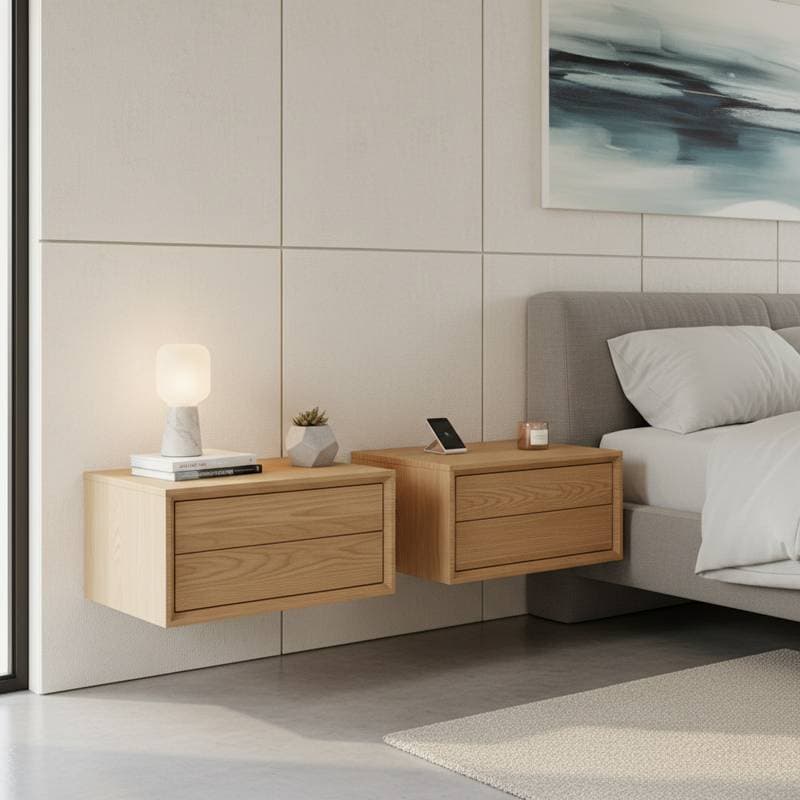
Floating Nightstands Fuel Bedroom Storage Boom
A floating nightstand transforms the feel and function of a bedroom. Storage that ascends the wall creates floor space, achieves cleaner lines, and fosters a sense of calm order. Homeowners view floating furniture as more than a design choice; it serves as a practical solution for constrained square footage and the increasing demand for custom built-ins.
At a Glance
| Feature | Typical Range | Notes |
|---|---|---|
| Cost per nightstand | $120 to $600 | Depends on materials and hardware |
| Install time | 1.5 to 3 hours | Includes layout, wall anchoring, and leveling |
| Weight limit | 30 to 80 pounds | Based on bracket type and wall structure |
| DIY skill level | Moderate | Basic carpentry and stud finding required |
| Common materials | Birch plywood, maple, walnut, MDF, veneer | Matches most bedroom palettes |
Why Floating Nightstands Are Surging
Bedrooms now function as multi-purpose areas for reading, work, and relaxation. Traditional furniture often appears bulky, particularly in smaller homes or apartments. Floating nightstands liberate floor space, permitting air and light to circulate beneath the unit. This visual openness enlarges the perceived room size without altering the actual footprint.
Home improvement retailers document double-digit growth in wall-mounted storage categories. Search volume for terms such as "floating nightstands" and "wall-mounted bedside tables" rises consistently, propelled by renters, residents of compact spaces, and homeowners attuned to design. Carpenters and cabinet shops gain advantages as well. Custom floating pieces begin at $400 per unit, with premium hardwoods or integrated lighting elevating prices beyond $1,000. Professionals enjoy robust margins due to swift installation and efficient material use.
Why It Works
A floating configuration eliminates clutter accumulation. The open underside prevents legs and cords from tangling on the floor, accommodating baskets, air vents, or robotic vacuums. Wall mounting enables precise height adjustment, aligning the top surface with the mattress edge.
Such accuracy enhances comfort. Standard nightstands measure 24 to 28 inches in height, yet mattress thicknesses differ. Floating units adapt to individual setups, optimizing reach and ergonomics.
Action step: Measure from the floor to the mattress top before purchasing or constructing. Position the mount so the nightstand surface aligns within one inch of that measurement.
Design Choices That Define the Look
A floating nightstand adapts to sleek modern aesthetics or warm rustic vibes. Mounting techniques remain consistent, while materials and finishes alter the overall ambiance.
Materials to Consider
- Solid wood such as maple or walnut yields a timeless appearance and handles heavier loads. Costs range from $250 to $600 per unit.
- Plywood with hardwood veneer provides a lighter weight and reduced expense, typically $150 to $300. Edge banding conceals layers for a seamless finish.
- Painted MDF delivers a smooth, uniform surface suited to contemporary environments. Prices fall between $120 and $250, complementing minimalist decor.
- Metal and wood hybrids introduce an industrial flair, often featuring exposed steel brackets beneath the shelf. These options cost $200 to $450.
Storage Configurations
- Open shelf: Simplest to construct and maintain. Ideal for small bedrooms or guest spaces.
- Single drawer: Conceals essentials while preserving a lightweight profile.
- Double drawer or cubby combination: Suited for shared spaces or substantial bedside storage.
Action step: Inventory bedside items, then select drawer depth. A 12-inch depth accommodates books and chargers without exceeding wall capacity.
Step-by-Step Installation Overview
Installation requires approximately two hours with essential tools. Success hinges on precise layout and firm anchoring.
- Locate studs. Employ a stud finder to identify and mark two points 16 inches apart. Secure units to studs, avoiding reliance on drywall alone.
- Plan height. Measure the mattress and indicate the target top line.
- Mark level line. Draw a horizontal guide using a bubble level.
- Attach mounting bracket or cleat. Systems typically involve French cleats or concealed steel brackets. Pre-drill and fasten with 2.5-inch screws into studs.
- Hang and test. Position the nightstand on the bracket. Apply firm downward force to verify stability.
For walls without accessible studs, use toggle bolts rated for 80 pounds or higher, confirming the product load specifications.
Action step: Shut off power at the circuit breaker and verify no electrical lines lie behind the intended anchor area before drilling.
Costs and Budget Planning
Costs for floating nightstands vary widely based on dimensions, materials, and labor.
Budget Breakdown
| Project Type | Cost Range | Description |
|---|---|---|
| DIY basic shelf | $80 to $200 | One open box or shelf, painted or stained finish |
| Custom shop build | $400 to $800 | Drawer, hardwood veneer, premium hardware |
| Designer integrated piece | $900 to $1,500 | Lighting, hidden wiring, or matching headboard panels |
Allocate $250 to $450 per side for midrange options. Professional labor charges $75 to $150 per hour, contributing $200 to $300 per installation.
Where to Save
- Select prefinished plywood to minimize sanding and finishing efforts.
- Opt for standard drawer slides over soft-close mechanisms on tight budgets.
- Omit integrated lighting unless essential, as wiring increases expense and intricacy.
Where Not to Cut Corners
- Brackets: Select hardware rated for 1.5 times the anticipated load.
- Finish quality: Inferior applications degrade near lamps and devices.
- Leveling: A half-inch deviation disrupts visual harmony; adjust meticulously.
Action step: Compare DIY and professional quotes. Certain woodshops provide semi-finished kits for self-installation, reducing costs by about 30 percent.
DIY or Professional Build
Floating nightstands occupy a moderate position on the DIY spectrum. Individuals skilled in accurate measurement, clean drilling, and leveling can manage the task. Professionals suit specific scenarios.
When DIY Makes Sense
- Ownership of a drill, level, and stud finder exists.
- Wall construction features standard drywall over studs.
- Enjoyment of finishing and basic carpentry prevails.
DIY kits supply pre-cut panels and concealed brackets, simplifying the process. Complete two units in three to five hours.
When to Hire a Professional
- Solid hardwood drawers or integrated lighting are desired.
- Walls consist of masonry, plaster, or uneven surfaces.
- Seamless integration with headboard panels is preferred.
Experts align units precisely and conceal wiring for sconces or USB ports. Shop-built versions feature durable factory finishes resistant to scratches and moisture.
Action step: Request insurance proof and references from hires. Reputable installers warrant mounts for at least one year against sagging or failure.
Common Mistakes to Avoid
Wall-mounted furniture challenges even seasoned DIYers. These errors prompt frequent adjustments or fixes.
- Missing studs. Drywall anchors support under 25 pounds typically. Prioritize solid backing.
- Uneven surfaces. Walls deviate from flatness; shim brackets to ensure squareness.
- Overloading drawers. Adhere to bracket limits, often 50 pounds for smaller models.
- Ignoring clearance. Factor in bedding overhang and outlets prior to drilling.
- Skipping finish protection. Apply two coats of polyurethane or lacquer minimum to counter spills and marks.
Action step: Test stability by pressing down with both hands before adding contents. Address any movement by tightening fasteners or reinforcing support.
Maintaining Your Investment
Installed floating nightstands demand minimal upkeep, yet routines preserve their condition.
- Clean gently. Wipe with a damp cloth and mild soap. Steer clear of ammonia products that diminish sheen.
- Check mounts yearly. Tighten screws upon detecting gaps or noises.
- Protect surfaces. Employ coasters for beverages and felt pads beneath lamps.
- Recoat finish as needed. Light sanding followed by a new layer restores vibrancy every few years.
Sagging signals bracket inspection after removal. Wood compression occurs gradually; larger screws or new anchors often resolve the issue.
Action step: Store excess stain or paint in sealed containers for repairs. Replicating finishes proves difficult without original references.
Enhancing Bedroom Functionality
Mounted floating nightstands provide tangible daily benefits. Rooms gain a tidier appearance, and cleaning simplifies. LED strips beneath the shelf offer ambient illumination serving as a night light.
Resources and Visual Aids
- Mounting Diagram: Illustrates bracket placement and stud intervals. Alt text: diagram of floating nightstand wall mounting using French cleat system.
- Finish Sample Chart: Presents wood tones from light birch to dark walnut. Alt text: chart of wood finish colors for floating nightstands.
Floating nightstands transcend trends, embodying adaptable, efficient storage. Whether self-built or shop-commissioned, they yield uncluttered space, refined aesthetics, and tranquil retreats. Prioritize measurements, quality components, and enduring construction.