
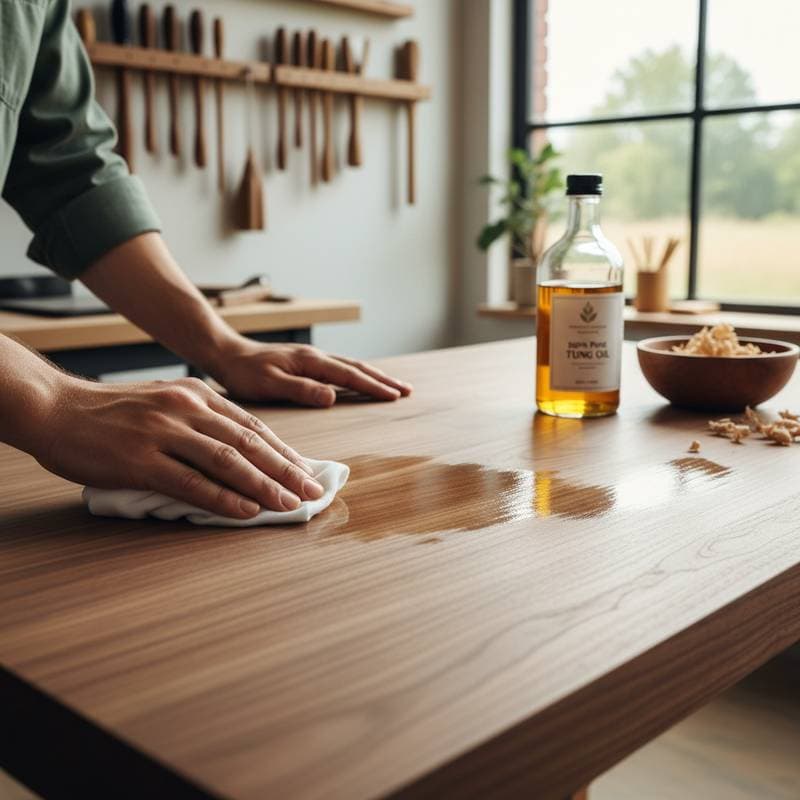
Tung Oil Comeback: Beating Polyurethane Naturally
Once a staple of traditional woodworking, tung oil is finding new life as woodworkers look for natural, durable finishes that let wood breathe and age gracefully. The shift reflects a larger design movement that values authenticity, low toxicity, and tactile warmth over plastic-like perfection. Where polyurethane seals wood under a hard film, tung oil soaks in, hardens within the grain, and leaves a soft, hand-rubbed sheen that feels alive under your fingers.
At a Glance
- Professional woodworkers, furniture makers, and homeowners drawn to natural finishes
- Workshops, small studios, and home renovation projects across North America
- Pure tung oil, polymerized tung oil, and blends with citrus or hemp oils
- About 400 square feet (37 square meters) per gallon for the first coat
Design insight: Tung oil gives wood a quiet glow rather than a loud shine, said furniture maker Riley Hart. It lets the material speak for itself.
Before
In many modern shops, polyurethane became the default. It promised quick results, glossy surfaces, and consistent protection. The tradeoff was sensory. Polyurethane sits on top of the wood, creating a thin plastic barrier that can mute texture and color depth. Over time, finishes can yellow, chip, or peel. Repairing a damaged section often means sanding down large areas and recoating.
Woodworker Dana Lee said, I loved the speed of polyurethane, but I missed feeling the wood itself. I wanted a finish that moved with the piece instead of sealing it away.
After
The return to tung oil marks a subtle but meaningful change. The finish enhances the natural movement of wood fibers, deepens grain contrast, and develops a patina that improves with handling. It does not crack or peel, and when it needs renewal, you simply wipe on another coat. The process takes patience, yet the result looks timeless.
Pure tung oil cures through oxidation rather than evaporation. Each layer bonds with oxygen, forming a flexible, water-resistant polymer within the wood. The finish does not trap moisture, which helps prevent warping. Light reflects softly across the surface, bringing out the wood variation rather than masking it.
In workshops and home studios, you can see the difference immediately. A maple tabletop finished with tung oil glows with quiet depth. Walnut darkens into rich chocolate tones that shift with the light. Even pine gains dignity, its pale surface warmed to honey.
What Changed and Why It Matters
Interest in tung oil surged as makers began questioning what goes into their finishes. Many wanted to reduce volatile organic compounds and synthetic resins. Pure tung oil is pressed from the seeds of the tung tree, a renewable source that contains no heavy solvents when used in its natural form. That makes it safer for enclosed workshops and for furniture used in kitchens or nurseries.
Designers also noticed that the aesthetic fits current architecture. Natural finishes pair well with matte walls, raw stone, and linen fabrics. They invite touch. They photograph beautifully too, showing the pores and fibers that remind viewers of real material.
Tung oil bridges modern minimalism with old-world craft, said interior designer Kira Dominguez. It fits homes that want both environmental awareness and emotional warmth.
How to Apply Tung Oil for Best Results
Applying tung oil is simple but requires attention to detail. The process rewards those who slow down and work with the material rather than against it.
- Sand the surface to at least 220 grit. Remove all dust with a clean cloth or vacuum.
- Mix pure tung oil with a natural thinner such as citrus solvent at a 1:1 ratio. Brush or wipe on generously until the wood stops absorbing. After 30 minutes, wipe off excess oil.
- Let the surface rest for 24 hours in a warm, ventilated space. Avoid touching it during this period.
- Apply two to four more coats, each lighter than the last. Wait a full day between applications.
- After the final coat cures completely, buff with a soft cotton cloth or 0000 steel wool for a satin finish.
The full cure can take several days, but once hardened, the surface resists water rings and minor abrasion. The result is subtle, tactile, and easy to maintain.
Design Details
- 100 percent pure tung oil or polymerized tung oil for faster curing
- Slight ambering that deepens grain without overpowering it
- Re-oil every one to two years depending on use
- Keep in a sealed container away from sunlight to prevent premature curing
- Dispose of oily rags in a sealed metal container filled with water to prevent spontaneous combustion
Comparing Tung Oil and Polyurethane
| Feature | Tung Oil | Polyurethane |
|---|---|---|
| Appearance | Natural matte to soft gloss | Glossy plastic-like finish |
| Application | Wipe-on, hand-rubbed | Brushed or sprayed film |
| Repair | Spot repairable | Requires full sanding and recoat |
| Breathability | Allows wood to breathe | Fully sealed surface |
| Toxicity | Low if pure | Can contain solvents and VOCs |
| Maintenance | Periodic reapplication | Long intervals but difficult renewal |
The comparison highlights why tung oil appeals to those prioritizing tactile quality and sustainability. While polyurethane can be tougher in high-traffic areas, the natural oil finish wins on authenticity and repairability.
Everyday Use and Longevity
Tung oil finishes suit furniture that benefits from gentle wear, such as dining tables, cutting boards, desks, and cabinetry. For floors or outdoor pieces, it can be blended with resin-based oils for extra durability. Over time, tung oil builds character rather than showing damage. Scratches blend into the patina instead of standing out as white marks.
Homeowner Alex Ruiz said, We used tung oil on our kitchen shelves. The color keeps getting richer. It feels like the wood is alive.
Unlike synthetic coatings, tung oil continues to harden slowly as it ages. Each year, the surface becomes slightly more water-resistant. The finish never forms a brittle shell, which means seasonal wood movement does not cause cracks.
Practical Tips for Woodworkers
- Apply thin coats. Heavy application delays curing and can leave a tacky surface.
- Warm the oil slightly before use for deeper penetration.
- Use lint-free cloths to avoid fibers sticking to the surface.
- For extra sheen, mix the final coat with a small amount of beeswax.
- If you need faster drying, use polymerized tung oil, which is heat-treated for shorter curing times.
These small adjustments create consistent results whether you are finishing a single tabletop or a full cabinet set.
Cost and Availability
Pure tung oil typically sells for around 40 to 60 dollars per gallon, covering roughly 400 square feet (37 square meters) on initial application. You will use less on subsequent coats. Compared to premium polyurethane, the cost per project is similar, though the labor time is longer. For many craftspeople, the time invested feels justified by the sensory quality of the result.
Key Takeaways
- Tung oil is a natural, non-toxic finish that enhances wood grain and texture.
- It penetrates deeply, forming a flexible, water-resistant bond inside the fibers.
- The finish can be renewed without sanding or stripping.
- It complements modern and traditional interiors with its warm matte glow.
- Safe for cutting boards, children furniture, and indoor air quality.
Choosing tung oil is less about nostalgia and more about connection. It reminds you why you chose to work with wood in the first place. The surface feels honest, the maintenance is straightforward, and the results age with grace.