Why Mycelium Outperforms Wood for Sustainable DIY Projects
Builders and hobbyists seek materials that reduce environmental impact without sacrificing quality. Mycelium, the root-like network of fungi, emerges as a superior alternative to traditional wood. This material grows rapidly, molds with precision, and decomposes naturally, enabling the creation of furniture, panels, and decor that align with sustainable practices.
The adoption of mycelium halves carbon emissions compared to wood production. It utilizes agricultural byproducts, requires minimal processing, and supports on-site cultivation. Woodworkers find that integrating mycelium into their routines streamlines workflows while promoting ecological responsibility.
Key Specifications
- Material cost: $4 to $8 per pound for prepared substrate
- Growth duration: 4 to 10 days within a mold
- Weight reduction: Approximately 60 percent lighter than pine
- Degradability: Fully compostable in home systems
The Advantages of Mycelium in Material Selection
Traditional wood demands extensive harvesting, which contributes to deforestation and high energy consumption in drying and milling. Mycelium addresses these challenges by transforming waste materials like sawdust, straw, or hemp hurds into viable composites. Fungal spores bind these substrates into a solid form over roughly seven days, after which low-heat baking halts growth and strengthens the structure.
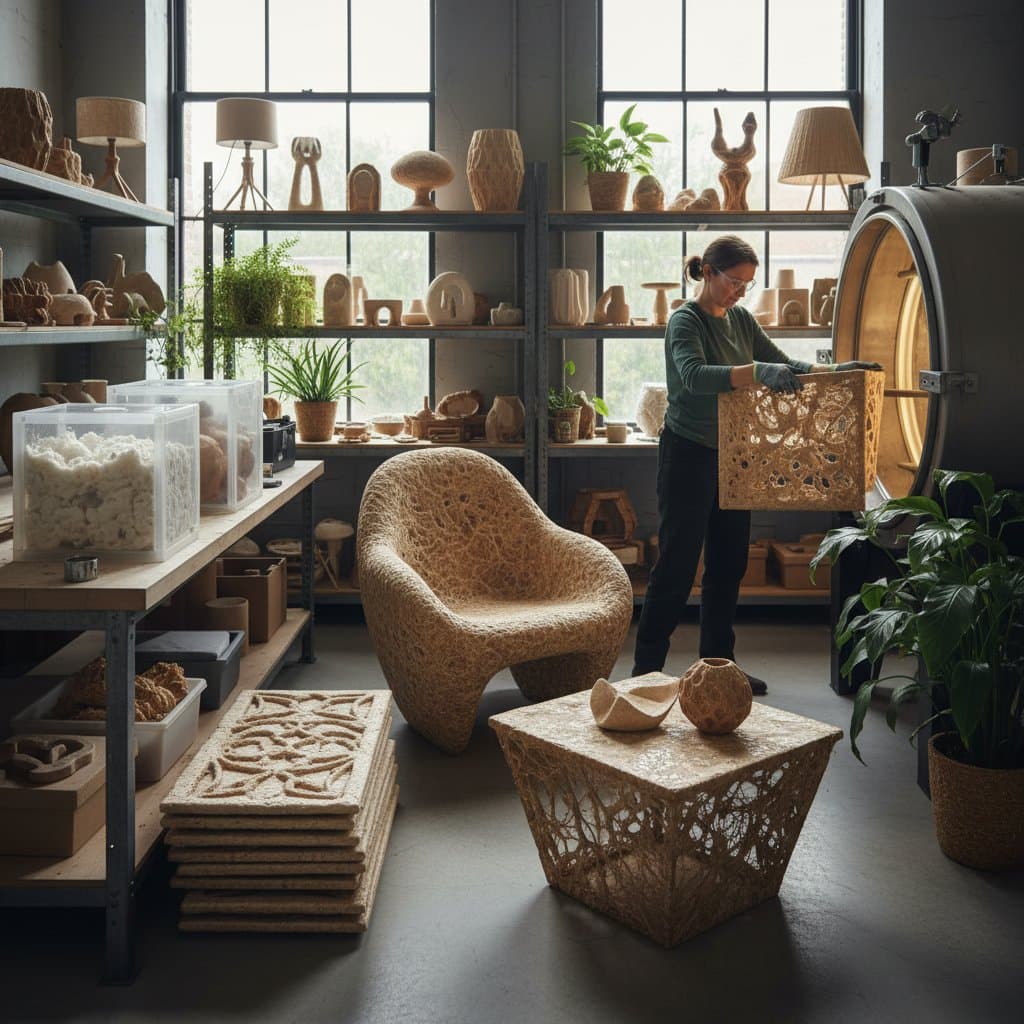
This method conserves resources and lowers production energy. Producing one cubic foot of mycelium composite uses about one-tenth the energy of kiln-dried lumber. Artisans shape it directly into items such as stools, lamp shades, or wall panels, eliminating the need for sawing, joining, or adhesives. The outcome yields a lightweight material with a textured surface resembling wood, yet it withstands indoor stresses effectively.
Renewability stands out as a core benefit. Cultivators produce fresh batches using basic equipment: sealed containers, substrate bags, and a humidified enclosure. This approach bypasses supply chain dependencies on timber, allowing immediate access to custom-grown materials from local waste sources.
Core Mechanisms of Success
- Minimal inputs: Thrives in darkness without added nutrients or water systems.
- Rapid turnaround: Full batches mature in less than two weeks.
- Efficiency in use: Molds yield precise fits, minimizing offcuts and waste.
Begin with simple prototypes like coasters or enclosure boxes to master the material's properties. Progress to larger applications such as seat forms or sound-dampening panels once familiarity develops.
Integrating Mycelium into Woodshop Operations
Existing woodworking facilities adapt readily to mycelium processes. Unlike handling dense lumber, this work emphasizes preparation over power tools. The primary adjustment involves maintaining sterility to support fungal development until fixation occurs.
Essential Workflow Steps
- Substrate preparation: Combine sawdust, straw, or hemp with water to achieve uniform dampness.
- Inoculation process: Incorporate mycelium spawn evenly through gentle mixing.
- Mold filling: Pack the mixture into durable forms constructed from plastic, silicone, or sealed plywood.
- Cultivation phase: Position in a dark, temperature-stable area for approximately seven days.
- Stabilization: Apply heat at 200 degrees Fahrenheit to terminate growth and solidify the form.
Post-baking, treat the material like softwood: cut with standard blades, sand to smoothness, and apply finishes. It accepts paints and low-emission sealants effectively. For longevity, apply protective layers in humid environments like bathrooms or kitchens.
Financial Considerations and Planning
Initial investment varies by project scope. A basic setup for small-scale production costs under $150, covering spawn kits, mold forms, and humidity regulators. Substrate expenses range from $4 to $8 per pound, sufficient for multiple compact items. Full-scale furniture molds may incur $40 to $60 per unit.
In comparison, premium lumber costs $6 to $15 per board foot, excluding scraps and treatments. Mycelium accelerates timelines: a chair component forms in 7 to 10 days, versus weeks for wood milling and assembly. These efficiencies compound savings over repeated projects.
Strategies for Cost Control
- Reuse mold forms to avoid fabrication expenses.
- Procure regional agricultural residues for substrate.
- Employ air-drying techniques prior to baking to conserve energy.
- Pair mycelium elements with recovered wood accents for enhanced durability and aesthetics.
Prioritize thorough sterilization and complete baking cycles. Neglect here invites contamination or weak points that compromise the final product.
Approaches to Production: DIY Versus Professional
Solo makers manage introductory mycelium tasks with standard skills in measurement, blending, and hygiene. The process parallels baking, demanding attention to cleanliness and safety protocols.
For intricate designs like load-bearing panels or expansive furniture, expert involvement ensures reliability. Commercial operations employ advanced climate controls and conduct strength evaluations for uniform results.
Ideal Scenarios for DIY Execution
- Items smaller than 2 square feet.
- Non-structural decor or interior accents.
- Custom contours emphasizing texture or form.
Cases for Professional Assistance
- Designs needing structural certification or regulatory approval.
- Installations such as walls or ceilings requiring fire resistance.
- High-volume production for commercial settings.
Select partners by inquiring about testing protocols, additive compositions, and degradation credentials. Verify alignment with standards like ASTM D6400 for compostability.
Pitfalls and Prevention in Mycelium Fabrication
Novices often accelerate timelines or overlook sanitation, leading to prevalent contamination issues. Clean tools with isopropyl alcohol and use gloves during spawn integration to mitigate risks.
Additional challenges encompass:
- Excessive heat exposure in baking, resulting in fragile exteriors.
- Inadequate compaction within molds, producing inconsistent densities.
- Moisture imbalances during setting, fostering vulnerable zones.
- Flawed mold geometries, complicating demolding due to overhangs.
Counter these through preliminary trials on modest scales. Document variables including humidity levels, ambient temperatures, and durations, as mycelium variants respond uniquely.
Maintaining and Disposing of Mycelium Creations
Sealed pieces endure years in controlled indoor settings. Their subtle, matte appearance complements organic textiles and salvaged timbers seamlessly. Routine care involves shielding from dampness and wiping with soft fabrics.
Address superficial degradation by reapplying natural waxes or shellacs sparingly. At end-of-life, dismantle and compost the material directly. Free of toxic resins or adhesives, it enriches soil without landfill contributions.
Advancing Your Mycelium Initiatives
Supporting Tools and Illustrations
- Diagram: Stages of mycelium development from inoculation to completion (alt text: overview of cultivation and processing).
- Chart: Comparative analysis of costs and weights for mycelium against prevalent woods (alt text: evaluation of material attributes).
Explore local suppliers for spawn and substrates to initiate your first batch. Track environmental benefits through simple logging of material sources and energy inputs. As proficiency grows, innovate with hybrid designs that blend mycelium's virtues with wood's familiarity, fostering a greener workshop legacy.