
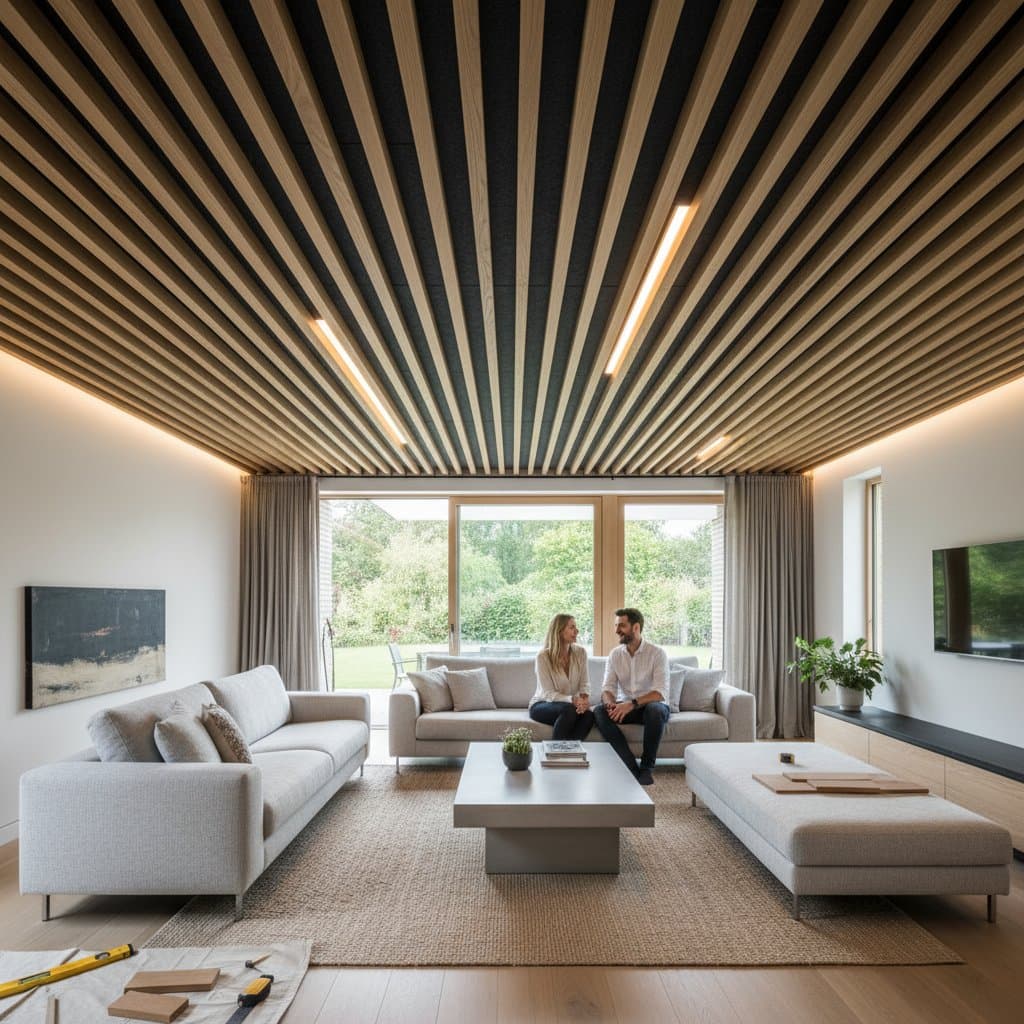
Create Custom Acoustic Ceilings with DIY Wood Slats
A noisy living room or echoing office may make even a beautiful space feel uncomfortable. Installing a custom acoustic ceiling with wood slats brings peace, texture, and style together in a single upgrade. Such a system absorbs sound, hides wiring, and adds a warm, natural finish that drywall cannot provide. Individuals may design it as a full suspended ceiling or a decorative baffle array, with costs ranging from $9 to $22 per square foot based on materials and complexity.
Why Acoustic Wood Slat Ceilings Work
Sound behaves like water, filling every corner and bouncing off hard surfaces. Rows of wood slats with soft insulation behind them allow sound waves to enter the gaps, lose energy, and cease echoing. The result is a quieter, more comfortable environment.
A properly constructed slat ceiling typically includes three layers:
- Structural base, such as joists or furring strips.
- Acoustic backing, made from fabric, mineral wool, or recycled fiber panels.
- Decorative slats that provide the visible finish.
The air space between each slat permits sound to pass through to the absorbent layer. With appropriate spacing, one achieves a Noise Reduction Coefficient (NRC) between 0.6 and 0.9, which proves excellent for offices, studios, or open-plan homes.
Why Wood Matters
Wood diffuses sound differently than foam or metal. It softens echoes without making the room feel flat. Maple, oak, and walnut offer good density and visual warmth, while pine or poplar maintain lower costs. Factory-finished veneers save time but limit custom colors. Raw wood allows staining or oiling the surface to match flooring or furniture.
Action step: Test two or three wood samples on scrap backing before committing. Listen to how each alters the tone of the space. Even small samples reveal significant differences.
Materials and Tools Checklist
Source all items from a lumberyard or home center. For a mid-size room of 200 square feet, plan to purchase:
- Wood slats: 120 to 160 linear feet, depending on spacing, at $3 to $7 per foot.
- Acoustic insulation panels: 8 panels, about $4 to $6 each.
- Mounting hardware: Clips, screws, and anchors, about $60 to $120 total.
- Black fabric or felt backing: 2 rolls, about $40 combined.
- Safety gear: Gloves, eye protection, dust mask, and hearing protection.
Essential tools include a miter saw, cordless drill, tape measure, stud finder, level, and ladder. A brad nailer accelerates installation but remains optional.
Action step: Pre-finish or oil the slats before installation. This approach prevents uneven coverage near joints and maintains a cleaner project site.
Costs and Budget Breakdown
Wood slat ceilings vary widely by design and material quality. Use the following ranges to plan realistically.
| Category | Budget | Mid-range | Premium |
|---|---|---|---|
| Material cost per sq. ft. | $9 to $12 | $13 to $16 | $17 to $22 |
| Typical room size | 150 sq. ft. | 200 sq. ft. | 250 sq. ft. |
| Total estimated cost | $1,350 to $1,800 | $2,600 to $3,200 | $4,200 to $5,500 |
| Labor (if hired) | $3 to $6 per sq. ft. |
Price Factors
Several elements influence the final price. Oak and walnut cost more but endure longer. Tall ceilings require scaffolding and additional hardware. Curved or angled layouts increase cutting time. Prefinished veneers save labor but elevate costs.
Money-Saving Tips
Select pine or poplar for secondary rooms. Purchase full-length boards to minimize waste. Stain and seal the wood personally to avoid factory fees. Maintain slightly wider spacing to use fewer slats without sacrificing performance.
Action step: Calculate total slat footage before buying. Add 10 percent extra for waste. This precaution prevents color mismatches from late reorders.
Common Mistakes and How to Avoid Them
1. Skipping layout lines. Without guides, slats may wander off-square and appear uneven. Mark center lines before fastening every piece.
2. Forgetting access points. Light boxes or vents can become blocked. Plan cutouts in advance and incorporate trim rings for a clean appearance.
3. Over-compressing insulation. Tight packing diminishes sound absorption. Position panels loosely behind the slats.
4. Using mismatched finishes. Different boards may absorb stain unevenly. Mix and blend boards from multiple bundles before mounting.
5. Ignoring weight load. A suspended ceiling adds two to three pounds per square foot. Verify framing and anchors meet proper ratings.
6. Rushing the last coat. A final wipe of oil or clear sealer deepens color and guards against humidity.
Action step: After installation, check for rattles by lightly tapping each slat. Tighten any loose screws before replacing fixtures.
Key Performance Metrics and Final Checks
Remember these essential figures:
- NRC range: 0.6 to 0.9, depending on spacing and insulation.
- Typical cost: $9 to $22 per square foot.
- DIY time: 15 to 25 hours for a medium room.
- Sound reduction: Up to 60 percent improvement.
Conduct a final walkthrough to ensure even spacing and secure mounts. This step confirms the ceiling enhances both acoustics and aesthetics for long-term enjoyment.
Resources and Visual Aids
Suggested Visuals:
- Figure 1: Layout diagram showing joists, insulation, and slat direction.
Alt text: Diagram illustrating ceiling layers and spacing for wood slat acoustics.