
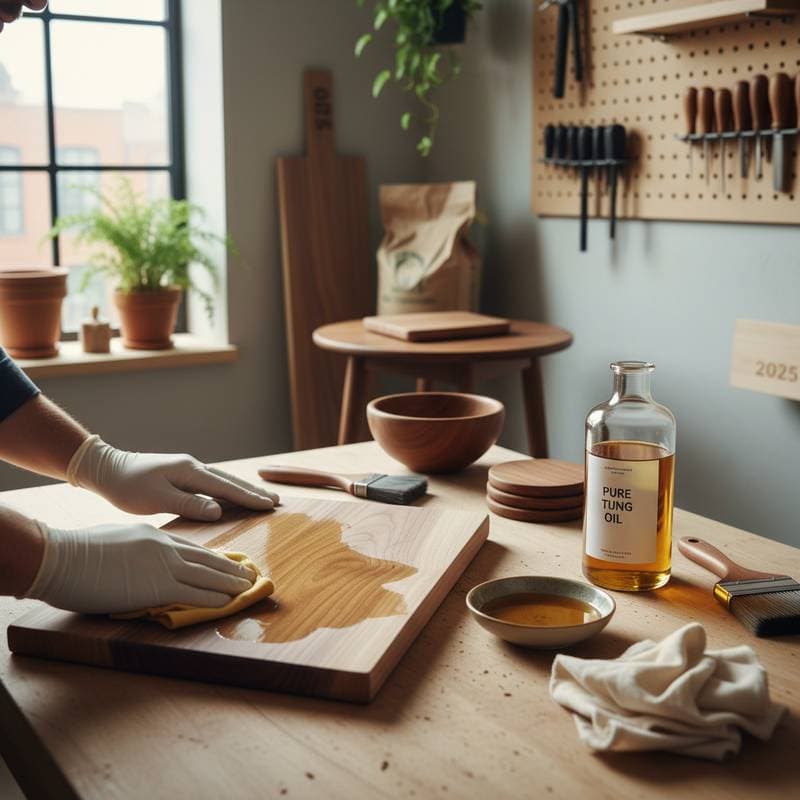
Tung Oil Revival: Non-Toxic Finish Ruling Wood in 2025
A growing number of woodworkers are turning back to tung oil, a natural finish once overshadowed by synthetic varnishes. With health and environmental concerns on the rise, this plant-based option has become the preferred choice for durable, food-safe, and easy-to-maintain wood protection. Woodworkers apply it to countertops, guitars, furniture, and even children’s toys. The appeal lies in its beauty, safety, and longevity.
Why Tung Oil Is Back
Synthetic finishes offer speed and gloss, yet they carry significant drawbacks. Many include volatile organic compounds that release harsh odors and compromise indoor air quality. Tung oil, derived from pressing the seeds of the tung tree, contains no synthetic solvents in its pure form. It penetrates deeply into the wood grain, cures to form a flexible film, and provides superior water resistance compared to other natural finishes.
One pint of tung oil covers approximately 100 to 125 square feet, depending on the wood’s porosity. After curing, it produces a matte to satin sheen with a warm amber tone that accentuates the figure and depth in hardwoods such as walnut, cherry, and maple. Woodworkers describe the effect as a “wet look” for the grain, achieved without the artificial plastic shine of synthetics.
Pure tung oil avoids petroleum additives entirely. Polymerized versions undergo heating to accelerate curing, which benefits commercial operations with tight schedules. Both varieties qualify as non-toxic once fully cured, rendering them suitable for kitchenware, cutting boards, and dining tables where food contact occurs.
To select the right product, examine labels closely. Seek options labeled “100 percent pure tung oil” or “polymerized tung oil.” Steer clear of blends containing mineral spirits or alkyd resins if a completely natural finish is the goal.
Application Techniques for Optimal Results
Applying tung oil requires patience, but the process yields professional-grade outcomes. Begin by preparing the wood surface thoroughly. Sand progressively from coarse to fine grits, finishing with 220-grit paper to create a smooth base that ensures even absorption.
Apply the first coat liberally using a lint-free cloth or brush, working the oil into the grain along the wood’s direction. Allow it to soak for 15 to 20 minutes, then wipe away excess to prevent pooling. Subsequent coats, applied thinly after the previous one dries (typically 24 hours), build depth and protection. Three to five coats suffice for most projects, with each enhancing the wood’s natural luster.
For enhanced durability in high-traffic areas, mix pure tung oil with a small amount of citrus solvent to thin it slightly, promoting deeper penetration. Always work in a well-ventilated space, and wear nitrile gloves to protect skin from prolonged exposure.
Curing time varies by climate; warmer, drier conditions speed the process. Full hardness develops over 30 days, during which the finish hardens through oxidation. This gradual curing contributes to its flexibility, allowing the wood to expand and contract without cracking.
Costs and Budget Considerations
A quart of pure tung oil typically costs between $25 and $60, varying by brand and purity level. Polymerized blends range from $40 to $75 per quart, offering faster drying times that reduce labor in professional settings. For small projects, budget around $10 to $20 per square foot, factoring in solvents, cloths, and application tools.
Several elements influence overall expenses:
- Surface area: Larger tabletops demand more oil during initial coats due to higher absorption.
- Wood species: Open-grained woods like oak consume greater quantities than dense varieties such as maple.
- Finish thickness: Additional coats increase depth and protection but elevate material use.
To manage costs effectively, purchase in bulk for multiple projects and store sealed containers in a cool, dark location. Tung oil maintains its quality for years under proper conditions.
Invest wisely in safety supplies. Use fresh, clean rags and gloves for every session. Discarded oily rags pose a fire risk through spontaneous combustion; submerge them in water within a sealed metal container before disposal.
Common Mistakes to Avoid
Tung oil application appears straightforward, yet errors can compromise results. Attention to detail ensures a flawless finish.
Frequent pitfalls include:
- Allowing puddles to form: Excess oil leads to sticky, uncured spots. Wipe thoroughly after 20 minutes of each application.
- Neglecting proper sanding: Rough or uneven surfaces result in blotchy absorption and uneven sheen.
- Hastening the curing process: Premature use attracts dust and diminishes gloss; allow full drying between coats and before handling.
- Employing contaminated tools: Residues from wax or silicone on rags hinder proper adhesion and penetration.
Should issues arise, address them promptly. Sand affected areas lightly with 400-grit paper, clean using mineral spirits, and apply a fresh thin coat. Tung oil’s forgiving nature allows corrections to integrate seamlessly upon curing.
Maintenance and Long-Term Care
One of tung oil’s strengths lies in its renewability. Over time, exposure to water, heat, or wear may dull the surface. Refresh the finish by lightly sanding with 400-grit paper and applying a maintenance coat of thinned tung oil.
For cutting boards or tabletops, reapply annually or as needed to restore water resistance. This approach extends the finish’s life indefinitely, avoiding the need for complete stripping common with synthetics.
Store finished pieces away from direct sunlight to preserve the amber tone. Regular dusting with a soft cloth maintains the matte sheen without abrasive cleaners.
Resources and Visual Aids
Suggested visuals:
- Figure 1: Application sequence of tung oil on a walnut board, illustrating penetration after the first and third coats.
- Figure 2: Comparison chart of tung oil versus linseed oil and polyurethane, evaluating durability, toxicity, and appearance.
Next Steps for Your Project
For those prioritizing health, natural grain enhancement, and lifelong renewability, tung oil merits consideration. Begin with a modest project, such as a cutting board, to master the application rhythm.
Experiencing wood’s glow beneath pure oil often shifts preferences away from synthetics permanently. This finish demands patience yet delivers unmatched depth, warmth, and reassurance no chemical alternative can provide.