
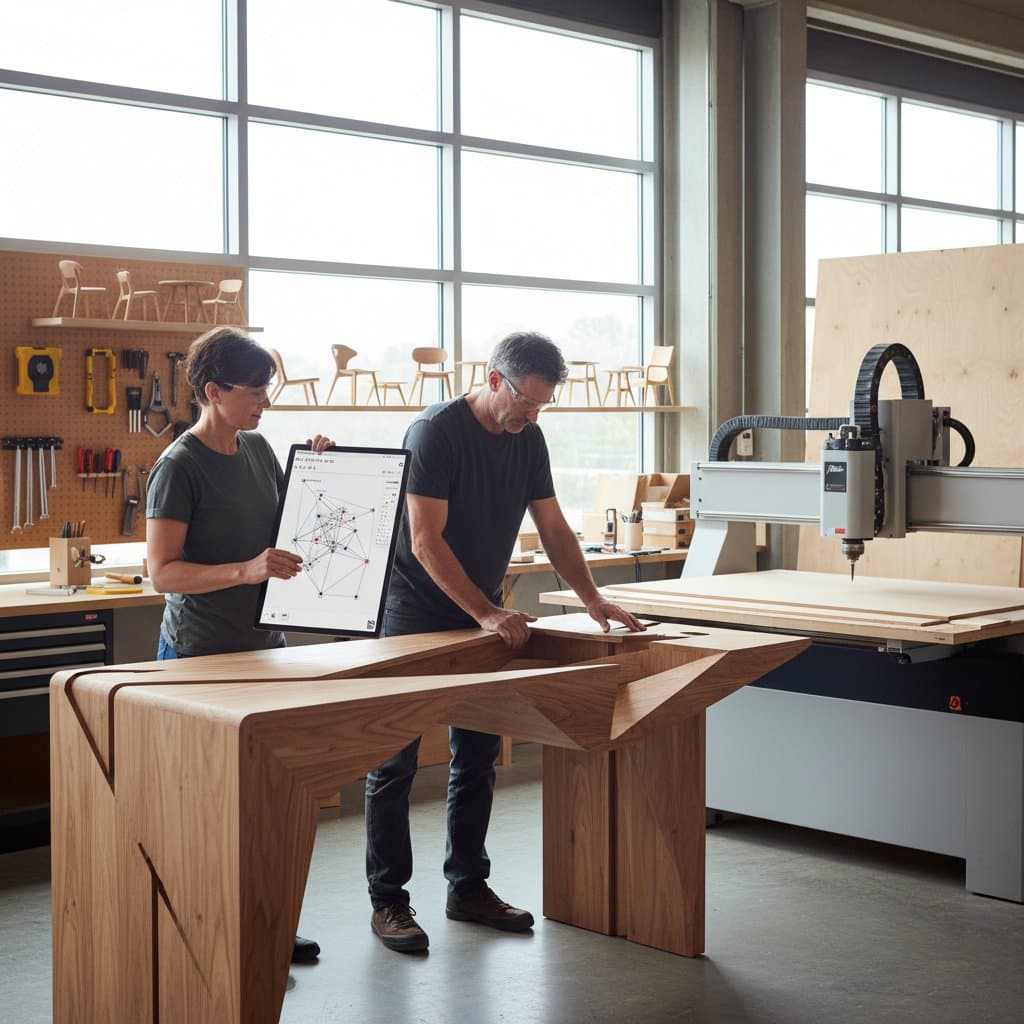
Parametric Design Unlocks Custom Furniture Possibilities
A single table design can generate hundreds of unique versions in minutes. That is the promise of parametric design. This method lets woodworkers and designers define relationships, not just shapes. Change one measurement, and the entire piece adjusts intelligently. For small shops and independent makers, this shift is transforming how custom furniture is conceived, priced, and built.
How Parametric Design Works in a Woodshop
Parametric software uses rules and variable inputs to shape geometry. Instead of redrawing every curve or joint, you set up a system. Tools like Grasshopper for Rhino or Fusion 360 parameter tables let you define relationships such as leg height equals seat thickness multiplied by three. Once those dependencies exist, you can adjust size and proportion without breaking the model.
This method fits woodworking because material thickness, joinery depth, and clearances are repeatable and measurable. A parametric model keeps your constraints intact while giving you freedom to explore new forms. Many designers describe it as drawing with logic instead of lines.
Why it works:
- Every measurement reacts to a change, so redesigning a custom piece takes minutes.
- The software can output clean files for CNC routers or laser cutters.
- You can generate multiple design options quickly and share them with clients.
Action step: Start with one furniture type, such as a stool or side table, and build a parametric base file. You can reuse it for years and adapt it to different materials or finishes.
Costs and Budget
You can start exploring parametric tools with low initial investment, but professional workflows require reliable software and training.
Software and training costs:
- Rhino with Grasshopper: about 995 dollars for a perpetual license.
- Fusion 360 commercial plan: approximately 500 dollars per year.
- Training: online courses range from 100 dollars to 400 dollars per module.
Hardware considerations:
- Mid-range workstation with 16 GB RAM and dedicated graphics card: about 1200 dollars to 1800 dollars.
- CNC router integration setup: 800 dollars to 2000 dollars depending on controller compatibility.
Money-saving strategies:
- Start with a single seat or table model to learn parameter linking.
- Use free or educational versions to test workflows before investing.
- Share templates with peers to reduce setup time.
Avoid cutting corners on hardware or training. Poorly defined parameters can cause toolpath errors, which waste both material and time.
Common Mistakes with Parametric Furniture Models
Even experienced designers make errors when setting up parameters. Small logic gaps can lead to broken geometry or inaccurate cut lists.
Frequent issues include:
- Missing constraints. Forgetting to tie parts together causes floating components.
- Overcomplicated relationships. Too many dependencies slow computation and increase errors.
- Ignoring material thickness. Real lumber dimensions rarely match nominal values.
- Skipping prototype builds. A digital model may look perfect but fail under real loads.
Fixes that work:
- Test variables one at a time before scaling up.
- Use clear naming for each parameter.
- Run small CNC tests on scrap material to confirm fit.
Resources and Visual Aids
Suggested visuals:
- Diagram showing how a parameter change adjusts a table model.
- Screenshot of Grasshopper logic nodes controlling leg spacing.
Next Steps for Implementation
Begin by selecting a simple project and building your first parametric file today. This approach delivers faster revisions, precise CNC output, and stronger client presentations while preserving the hands-on quality that defines fine woodworking.