
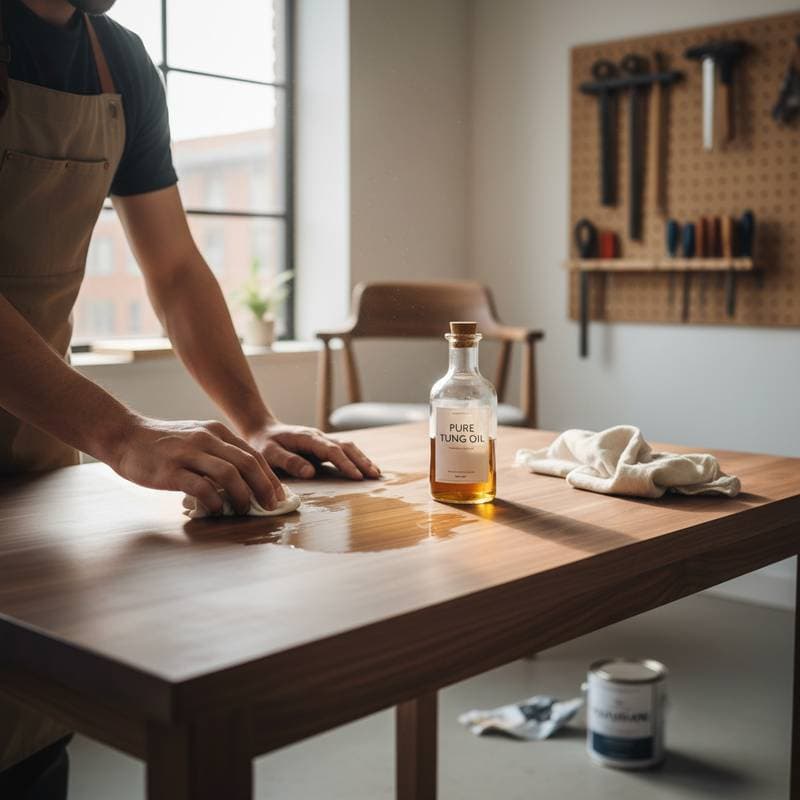
Why DIY Woodworkers Are Embracing Tung Oil Over Polyurethane
In the evolving world of home woodworking, tung oil emerges as a preferred choice for many enthusiasts. Derived from the nuts of tung trees, this finish penetrates deeply into wood fibers, offering protection without forming a rigid surface layer. Unlike synthetic options, it allows the material to breathe and age naturally, appealing to those who value authenticity in their creations.
This shift aligns with broader trends in crafting that emphasize sustainability and sensory engagement. Woodworkers report greater satisfaction from the hands-on application process, which encourages patience and attention to detail. The result is furniture and fixtures that feel alive under touch, reflecting the wood's true character.
The Appeal of Tung Oil in Modern Crafting
Tung oil's resurgence mirrors a cultural move toward mindful making. Crafters seek finishes that reveal rather than conceal the wood's story, from subtle grain variations to evolving patinas over time. The application demands deliberate steps, such as waiting between coats, which transforms routine tasks into meditative practices.
Health considerations further boost its popularity. Formulations with low volatile organic compounds (VOCs) and natural thinners enable indoor use without irritating vapors. For items like serving boards or utensils, pure tung oil provides a food-safe barrier once fully cured, prioritizing safety in everyday applications.
Woodworker Jared Kim shares his perspective: “I started using tung oil for the smell alone. But now I stay with it because it makes every surface feel natural again. You can actually sense the wood beneath your fingers.”
Tung Oil Versus Polyurethane: A Detailed Comparison
Understanding the differences helps woodworkers select the right finish for their needs. Polyurethane creates a tough, glossy shield ideal for high-traffic areas, while tung oil delivers a satin luster that highlights natural textures. The choice often hinges on desired aesthetics, maintenance preferences, and environmental factors.
| Feature | Polyurethane | Tung Oil |
|---|---|---|
| Application | Brush or spray for even coverage | Hand-rubbed with cloth for control |
| Appearance | High-gloss, consistent sheen | Matte to satin, enhances variations |
| Repair | Requires sanding and full recoating | Local reapplication blends easily |
| VOC Level | Moderate to high emissions | Low to negligible with pure forms |
| Durability | Excellent surface resistance to wear | Good penetration for internal strength |
| Feel | Smooth but synthetic | Warm and tactile |
| Best Use | High-wear surfaces like floors | Decorative pieces and food-contact items |
This table illustrates how tung oil suits projects where organic integration matters more than impervious barriers.
Workshop Case Studies: Tung Oil in Action
Real-world applications demonstrate tung oil's versatility across scales and styles. These examples showcase preparation techniques, outcomes, and user feedback from professional and home settings.
Portland Studio Table
Design Team: Whitney Craft Finishes
A 6-foot reclaimed fir table underwent complete refinishing to revive its worn surface. The team began by stripping away old polyurethane, then sanded progressively to 220 grit for smoothness. Four thin coats of tung oil, applied over five days, restored the wood's depth, allowing ambient light to accentuate the grain without glare.
The non-film finish conceals minor imperfections and simplifies spot repairs with a fresh oil application. Lead finisher Whitney Gray explains: “The client wanted a surface that would age, not resist time. Tung oil gives that patina you can’t fake.”
Austin Family Bench
Design Team: Simple Grain Studio
This 48-inch-wide red oak entryway bench, with a 16-inch seat depth, prioritized family-friendly durability. Opting against plastic-like coatings, the studio applied a polymerized tung oil blend for quicker curing and water resistance against daily foot traffic. Three coats revealed the oak's ray flecks, with the finish developing a subtle richness through regular use.
Designer Lin notes: “We tell clients that tung oil is meant to be lived with. It accepts wear gracefully.” The result is a piece that integrates seamlessly into home life.
Minneapolis Walnut Counter
Design Team: North Edge Workshop
In a compact kitchen update, a 10-foot walnut counter benefited from tung oil's enhancing properties. Sanding reached 320 grit before the initial thinned coat penetrated the dense grain, followed by three full layers. The finish shifts hues from deep brown to golden under kitchen lights, maintaining a velvety texture that invites contact.
Homeowner Maya Torres appreciates the low-maintenance routine: “I just wipe on a little more oil once a year. It’s part of the rhythm of the kitchen.” This approach ensures longevity without disruptive refinishing.
Essential Benefits and Considerations
Tung oil stands out for its ability to amplify wood's tactile qualities, preserving texture while adding subtle sheen. Repairs involve minimal effort, as new oil merges with existing layers for uniform results. The low-emission profile supports crafting in confined spaces, reducing health risks associated with solvent-heavy alternatives.
Sourced renewably from tung tree nuts, it appeals to environmentally conscious makers. However, the process demands time for drying between applications, rewarding those who invest in quality outcomes. Overall, it balances protection with preservation, ideal for pieces meant to endure personal histories.
Application Techniques for Optimal Results
Success with tung oil starts with thorough surface preparation. Sand in increasing grits up to 220, then wipe away residue using a tack cloth to ensure adhesion.
- Dilute the initial coat 50/50 with a citrus thinner to promote deep absorption, especially on hardwoods like maple.
- Allow 24 hours between applications, buffing lightly with 0000 steel wool to smooth raised fibers.
- Maintain ambient temperatures between 65 and 75 degrees Fahrenheit for consistent curing, avoiding direct sunlight.
- After the final coat, protect the piece from dust for at least 72 hours before light use.
- For safety, spread oil-soaked rags flat outdoors to dry completely, preventing fire hazards from spontaneous combustion.
These steps yield a finish that deepens with each layer, creating a resilient yet forgiving surface.
Maintaining Tung Oil Finishes Over Time
Once applied, tung oil requires periodic renewal to sustain its protective qualities. Annually inspect high-touch areas for signs of drying or wear, such as faded color or rough texture. Reapply a thin coat as needed, buffing to restore vibrancy without buildup.
Avoid harsh cleaners; instead, use mild soap and water for routine care, followed by a light oil wipe to replenish moisture. This ongoing dialogue with the finish keeps wood nourished, preventing cracks and enhancing its lived-in charm. Homeowners find this ritual reinforces the joy of craftsmanship, turning maintenance into a simple affirmation of the material's enduring appeal.