
TikTok's Chippy Milk Paint Revival: Restoring Vintage Furniture with Authentic Patina
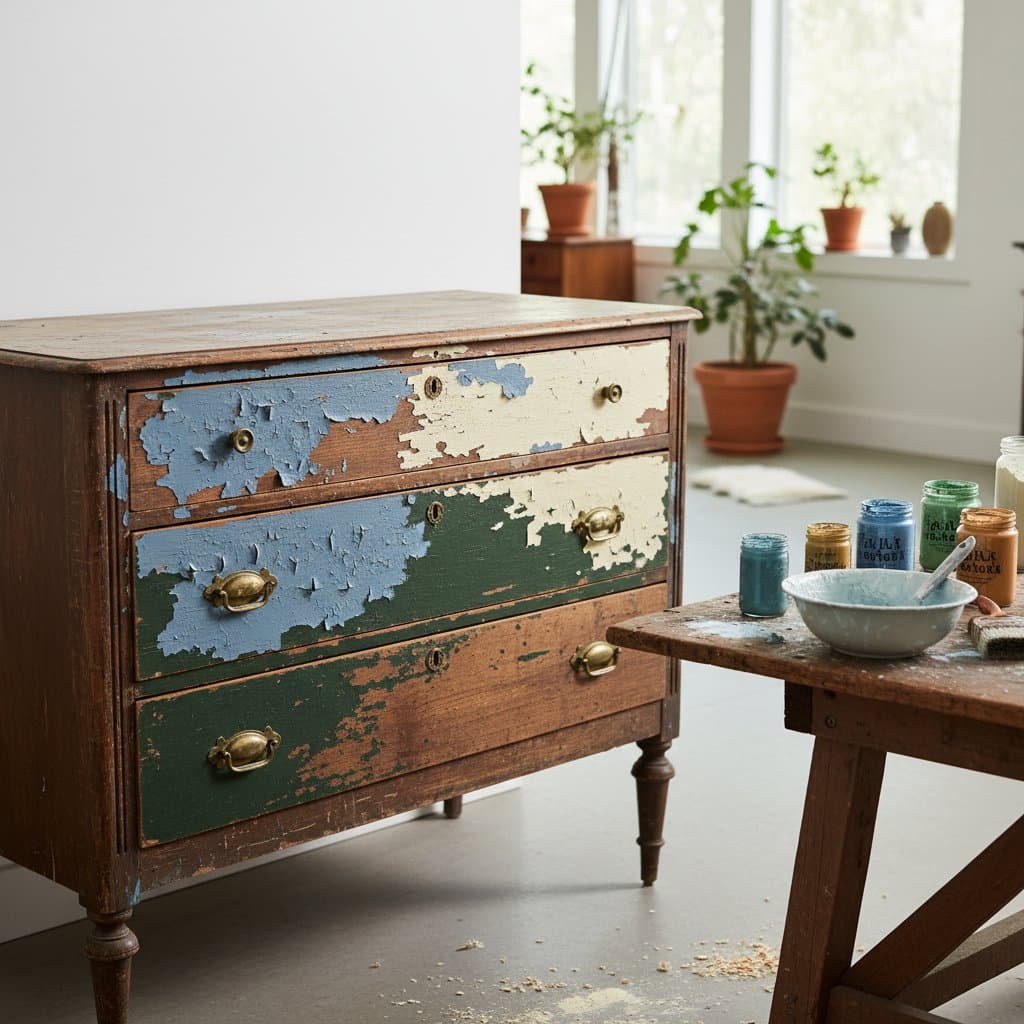
The allure of weathered paint gains renewed popularity. On TikTok, creators apply brushes, sanders, and distressing tools to craft layered finishes on furniture that mimic cherished family heirlooms. Milk paint serves as the core element, a powdered natural mixture that interacts variably with wood surfaces to yield genuine chippy textures. This practice evolves from a sentimental pursuit into a broader design phenomenon, breathing new life into overlooked items and altering perceptions of patina among younger audiences.
At a Glance
Participants: DIY furniture refinishers and small-scale artisans
Locations: Home workshops and garages around the globe
Focus: Refinishing vintage furniture with milk paint and chippy effects
Style Influences: Classic farmhouse and early American aesthetics
Visuals: Images provided by creators using #chippymilkpaint and #vintagerefinish
The Starting Point
Numerous antique dressers, cabinets, and tables gather dust in storage areas or secondhand shops. Their surfaces fade, veneers peel, and fittings corrode over time. Coatings from mid-century production often lack dimensional appeal. Restorer Emily Tran notes, “I used to strip everything down for a clean modern coat, but it always felt too flat. I wanted something that looked like it had lived a life.”
DIY practitioners face the task of merging genuineness with longevity. Contemporary paints adhere excessively to prevent flaking, whereas chalk paints may disintegrate absent proper protection. The goal involves developing a natural, multi-layered appearance that conveys history instead of artificial aging, a challenge this movement addresses effectively.
The Transformation
Milk paint adheres inconsistently to unprepared or absorbent wood, permitting areas to adhere firmly while others loosen during drying. This process generates a surface with organic texture that appears serendipitous yet captures light compellingly in images. TikTok demonstrations frequently depict the initial application, followed by the emergence of fissures as the coating sets.
Some artisans incorporate barrier agents such as wax or hemp oil between layers to direct peeling patterns. Alternative methods include a fine water spray to encourage natural lifting of edges. Refinisher Carlos Mendez states, “The unpredictability is the point. You cannot replicate that kind of age with latex or spray paint. Each piece tells you what it wants to do.” His workshop favors solid pine and maple, materials that take up color unevenly to maximize chipping effects.
Illumination enhances the final reveal. Creators position pieces near windows or beneath diffused LED workshop lamps to highlight tonal shifts and subtle luster. Captured images display not merely flakes but successive hues that alter softly in daylight. For instance, a cabinet in subdued blue exposes undertones of raw pine along contours, while fronts acquire a gentle radiance from clear wax application.
Technique Essentials
- Paint Preparation: Mix traditional milk paint from powder and water in modest quantities for precise consistency.
- Application Approach: Employ natural bristle brushes or foam tools to achieve an even foundational layer.
- Aging Methods: Apply subtle scraping, fine sanding, or barrier applications with beeswax, paraffin, or oils.
- Protection Steps: Use penetrating oils, matte polyurethane, or paste wax to safeguard the surface without adding shine.
- Accent Elements: Select salvaged brass handles or subdued black pulls to complement the textured body.
- Display Lighting: Utilize warm overhead LED arrays or ambient natural light to accentuate hue variations.
These elements foster the tangible authenticity central to chippy aesthetics. What might seem like defects transforms into intentional stylistic choices. The workflow promotes deliberate pacing and intimate interaction with raw materials.
Essential Techniques
- Select Sturdy Wood: Opt for solid lumber over veneers or composites, which seldom yield true chipping. Perform light sanding to expose the grain.
- Prepare Batches Carefully: Milk paint sets quickly; mix in small volumes, agitate thoroughly, and trial on test pieces prior to full use.
- Apply Barriers Judiciously: Excess wax or oil risks uncontrolled delamination; use sparingly for targeted effects.
- Assess Under Proper Light: View the completed work in diffused daylight to discern accurate colors and depths.
- Protect Thoughtfully: Oils deepen pigmentation, whereas matte waxes maintain understated elegance.
Such methods suit novices while offering depth for experts. They encourage trial and adaptation, where variances enhance artistic expression over detracting from quality.
Integrating Pieces into Spaces
A furniture item finished with chippy milk paint excels as a focal point in any setting. Its irregular surface interacts uniquely with shifting sunlight, tempering sleek surroundings and stabilizing vibrant areas. In a kitchen, such a cabinet unites contemporary flooring with aged elements seamlessly. In a sleeping area, a treated chest introduces coziness against stark bedding.
The non-reflective quality repels smudges and conceals routine use, prolonging the utility of items headed for disposal. Julia Reeves, a homeowner, shares, “I stopped chasing perfect finishes. Now, every scratch and chip feels intentional. It reminds me that furniture can age gracefully, just like people.”
For artisans and restorers, this approach marks a pivot toward character over flawlessness. Milk paint links traditional skills with eco-conscious practices through basic components like lime, casein, and earth-derived colors. It values endurance and honors the passage of time rather than concealing it.