
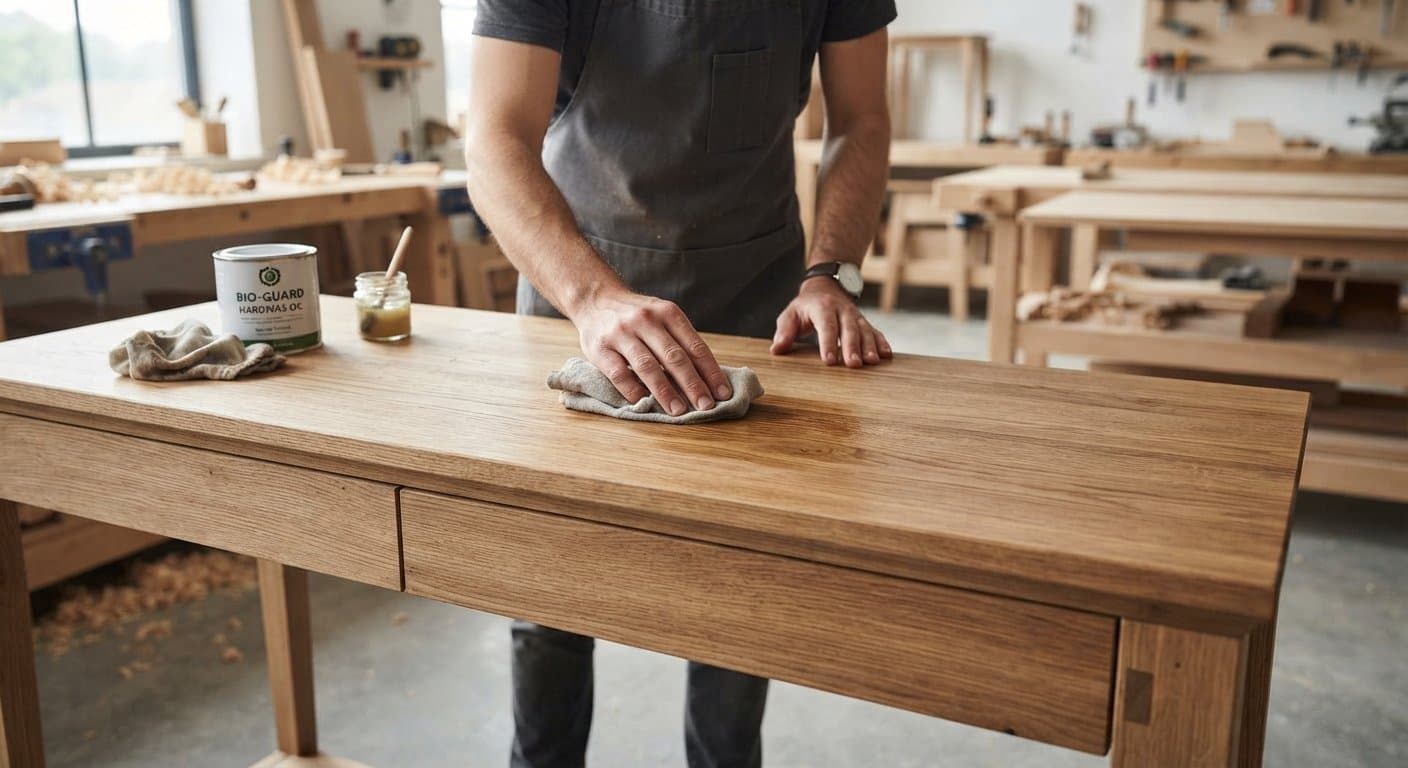
Hardwax Oil: A Natural Wood Finish for Modern Furniture
A furniture finish needs to protect wood without hiding its grain or making upkeep difficult. Hardwax oil answers that need with a low sheen, a tactile surface, and a repair approach suited to everyday use. Its growing appeal comes from a practical balance: the finish can feel close to raw wood while helping furniture stand up to routine wear.
For woodworkers and homeowners, the choice still deserves care. Products vary in ingredients, application, durability, and emissions, so natural or eco-friendly on a label is not enough. Understanding the finish helps you decide where it works, how to apply it, and what to check before bringing a product into your shop or home.
At a Glance
Hardwax oil is a wood finish made from drying oils, hard waxes, or a combination of both. Common ingredients include linseed or sunflower oil and waxes such as carnauba. Formulas differ by brand, and some contain solvents, metallic drying agents, pigments, or other additives.
Unlike a thick film finish that sits above the wood, hardwax oil penetrates the surface and leaves a thin, protective layer. It generally preserves visible grain and a natural-looking feel. The result is often a matte or satin surface, though tinted and higher-sheen options are available.
The term does not guarantee a product is non-toxic, solvent-free, or safe for every application. Check the label and safety data sheet, especially if you are finishing children's furniture, food-contact items, or work in a small, poorly ventilated space.
Why the Finish Is Drawing Interest
Furniture buyers are paying closer attention to material character and maintenance. Hardwax oil supports both priorities: it allows oak, walnut, ash, and other woods to remain visually prominent, and small worn areas can often be refreshed without stripping an entire tabletop.
That repairability matters in homes where furniture gets daily use. A dining table may collect water rings, scratches, and dull spots. With a compatible finish, you can clean the surface, lightly abrade the affected area if the product instructions allow, and apply a small amount of oil. A localized repair may blend more easily than a patch in a thick, glossy coating.
The look also suits contemporary furniture, where visible grain, softened color, and restrained sheen complement simple shapes. The finish does not create a perfectly uniform plastic-like surface. Natural variation in the wood remains part of the design.
What Changes in the Room
A low-sheen finish scatters light rather than reflecting it sharply. On a broad tabletop, that can soften glare from windows and overhead fixtures. It also makes the grain easier to read from different angles, while warm-toned oils can deepen the wood's color.
The effect depends on species and preparation. White oak may take on a warmer cast, while maple can show uneven absorption if sanding is inconsistent. Always test the chosen product on an offcut from the same board, then view it in the room's natural and artificial light.
Hardwax oil also leaves a distinct surface feel. The wood can feel less sealed than a thick film finish, which some people prefer on a desk or dining table. That tactile quality comes with a tradeoff: standing water, heat, and harsh cleaners can still damage the finish, particularly if spills sit for long periods.
Design Details
- Sheen and color: Choose clear, white, or tinted formulas based on the wood and the room. A test panel helps reveal color shifts before they spread across a large surface.
- Surface preparation: Sand evenly and remove dust. Uneven sanding can create blotches, especially on woods with varied grain or absorption.
- Application: Apply thin coats and remove excess product as directed. Pooled oil can leave a sticky or uneven surface.
- Curing: Dry-to-touch does not always mean fully cured. Follow the manufacturer's instructions before placing objects, washing the surface, or using the furniture heavily.
- Maintenance: Clean with a product approved for the finish. Avoid abrasive pads and strong household cleaners unless the manufacturer confirms they are suitable.
Application methods vary, so the product instructions should lead. Some finishes call for one coat, others require more. A typical furniture project may involve two or three thin applications, but that is not a universal rule. Rushing between coats can compromise the result.
Choosing an Eco-Friendly Wood Finish
Eco-friendly can refer to different things, including plant-based ingredients, lower volatile organic compound emissions, renewable raw materials, or reduced packaging. Look for specific claims rather than relying on broad marketing language. A technical data sheet can list volatile organic compound content, while a safety data sheet explains hazards and handling precautions.
A product marketed as non-toxic may still require ventilation, gloves, or careful disposal. Some oils can generate heat as they dry, especially when absorbed into rags. Follow the label's disposal instructions, and never leave oil-soaked cloths crumpled in a pile. Use the product's specified method, such as laying cloths flat to dry in a safe location or storing them in a sealed, approved container.
For furniture that will contact food, verify that the finish is explicitly suitable for that use once cured. Do not assume a finish is appropriate for cutting boards or direct food contact simply because its ingredients sound natural. For children's furniture, check applicable safety claims and allow the full cure period before use.
Where Hardwax Oil Works Best
Hardwax oil is a strong option for interior furniture where a natural appearance and repairable surface matter. It can suit dining tables, desks, benches, cabinets, and shelves. It is less forgiving when the furniture faces constant moisture, heavy chemical exposure, or a need for a highly resistant, uniform film.
Consider the room and the user before choosing. A rarely used side table may need little maintenance. A busy family dining table may need regular cleaning and occasional refreshes. A bathroom vanity exposed to standing water may call for a finish designed for greater moisture protection, or a different finishing system altogether.
Quick Decision Guide
- Choose hardwax oil when grain visibility, low sheen, and local repair are priorities.
- Consider a film-forming finish when you need a more continuous barrier against moisture and abrasion.
- Test any finish on a matching offcut before coating the finished piece.
- Compare product data, including emissions, cleanup method, cure time, and approved uses.
Applying It at Home
A careful workflow improves both appearance and durability. Start with clean, dry wood and a consistent sanding pattern. Follow the product's grit recommendations, because sanding too finely can limit absorption for some formulations.
Apply a small amount with the recommended pad or cloth, working in manageable sections. Spread it thinly, then wipe away all excess within the stated window. Inspect the surface under raking light, which makes missed patches and glossy pools easier to spot.
Keep the workspace ventilated and protect nearby surfaces. The finish may change the wood's color, so compare the cured sample with the room's cabinets, floors, and natural light.
Practical Maintenance Steps
Regular care keeps hardwax oil surfaces looking their best. Dust weekly with a soft, dry cloth. For deeper cleaning, use a mild soap solution approved by the finish manufacturer, applied with a barely damp cloth.
Address spills immediately. Blot standing liquids rather than wiping them, which can spread moisture into the finish. For water rings or light scratches, clean the area, allow it to dry completely, then apply a small amount of the original finish to restore protection.
Heavy use areas may need periodic refresh coats. Clean the surface thoroughly, lightly sand with fine grit paper if the manufacturer permits, and apply a thin maintenance coat. This approach extends the finish life without requiring complete refinishing.
Safety Considerations During Application
Work in a well-ventilated area when applying hardwax oil. Open windows and use fans to move air across the workspace. Wear nitrile gloves to protect your skin from prolonged contact with oils and solvents.
Store oil-soaked applicators safely. Spread used cloths flat on a non-combustible surface outdoors until completely dry, or submerge them in water in a sealed metal container. Check local regulations for disposal of oil-contaminated materials.
Allow adequate cure time before using finished furniture. Most hardwax oils reach initial cure in 24 to 48 hours, but full hardness may take several weeks. Follow the specific product's timeline before placing heavy objects or exposing surfaces to moisture.
When to Consider Alternative Finishes
Hardwax oil may not suit every application. Furniture exposed to frequent moisture, such as bathroom vanities or kitchen countertops near sinks, benefits from finishes with stronger water resistance. Film-forming finishes like polyurethane create a more continuous barrier against liquids and abrasion.
High-traffic commercial settings may require finishes that withstand daily cleaning with harsh chemicals. In these cases, catalyzed finishes or specialized commercial coatings provide better long-term performance than hardwax oil systems.
Outdoor furniture needs finishes formulated for exterior exposure. Hardwax oil products designed for interior use will not withstand ultraviolet light, temperature fluctuations, or weather exposure without rapid deterioration.
Making the Right Choice
Hardwax oil delivers a natural-looking wood finish with a tactile surface and practical maintenance path. Its appeal is strongest when the design calls for visible grain, subdued sheen, and a finish that can be maintained without refinishing an entire piece.
The best choice depends on more than appearance. Compare product specifications, confirm the finish suits the furniture's use, and treat safety instructions as part of the application process. Test finishes on sample pieces before committing to your final project.