
Hardwax Oil Finishes Bring a Natural Look to Wood
A wood finish needs to protect a surface without hiding the grain that makes it worth keeping. Hardwax oil is drawing interest as a natural looking option for furniture, floors, and cabinetry, with a soft sheen and a repair approach that suits real workshops and lived in rooms.
What Makes Hardwax Oil Different
Hardwax oil combines plant derived oils with waxes to penetrate and protect wood near the surface. Unlike a thick film finish, such as polyurethane, it leaves less of a plastic like layer over the grain. The result is a tactile surface that keeps the wood's texture visible.
Products vary by formula, so natural should not be treated as a guarantee of low emissions or a specific ingredient list. Check the manufacturer's technical data and safety information, especially for indoor air quality, food contact, and disposal guidance.
Hardwax oil can work well on tables, counters, floors, and built ins. It is not automatically the right choice for every setting. A busy kitchen or a commercial floor may need a finish with stronger resistance to standing water, heat, or frequent cleaning.
Why the Finish Is Gaining Ground
The appeal is practical as well as visual. Many homeowners want wood that looks like wood, rather than a glossy coating that changes its color and feel. Designers and woodworkers also value the option to refresh a worn patch without sanding an entire surface back to bare timber.
Rubio Monocoat is one widely recognized product line in this category. Its oil finishes are designed to bond with wood fibers, and product instructions generally emphasize applying a thin coat and removing excess. Other brands use different formulas and application methods, so follow the label rather than assuming every hardwax oil works alike.
Where It Fits Best
Hardwax oil is a strong candidate when you want a matte or low sheen finish and visible grain. It can also suit projects where localized maintenance matters, such as a dining table that may collect scratches and small spills.
Before choosing it, consider:
- Use: Floors and worktops face more abrasion and moisture than a bedroom dresser.
- Appearance: Test a sample on the same species and sanding grit as the finished piece.
- Care: Regular cleaning and prompt spill removal help preserve the surface.
- Safety: Oil soaked rags can heat up and ignite. Handle and dispose of them exactly as the product maker directs.
Applying It for a Better Result
Surface preparation shapes the final look. Sand evenly, remove dust, and test the finish in an inconspicuous area. Some oils deepen color or bring out contrast in the grain, especially on pale woods. A sample helps you judge that change before it covers a whole floor or tabletop.
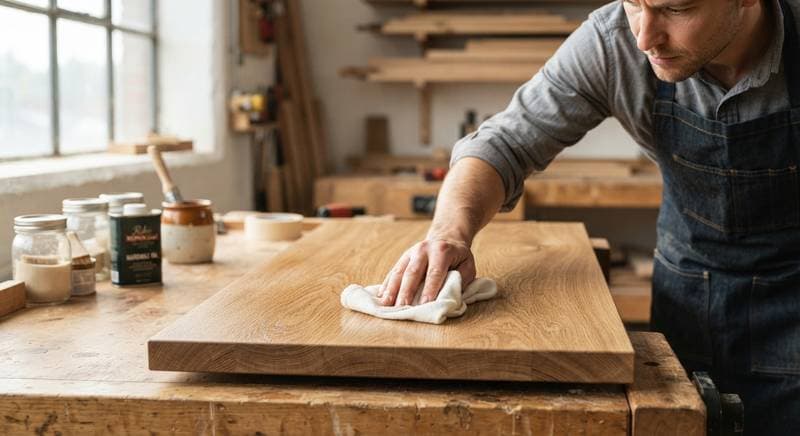
Apply a very thin coat with the recommended pad, cloth, or spreader. Work in manageable sections, then wipe away all excess within the stated window. Pooled oil can leave a sticky, uneven surface. Drying and curing times depend on the product, temperature, airflow, and wood, so keep the piece out of service until the manufacturer says it is ready.
A Natural Look With Clear Tradeoffs
Hardwax oil offers a warm, close to the wood appearance and a maintenance route that can be less disruptive than refinishing a full surface. In return, it asks for careful application and routine care. It may need more frequent attention than a durable film finish in a wet or heavily used area.
For your next project, compare product specifications, make a test board, and match the finish to the way the surface will be used. That small step helps you choose an oil that protects the wood while keeping its grain and texture at the center.