
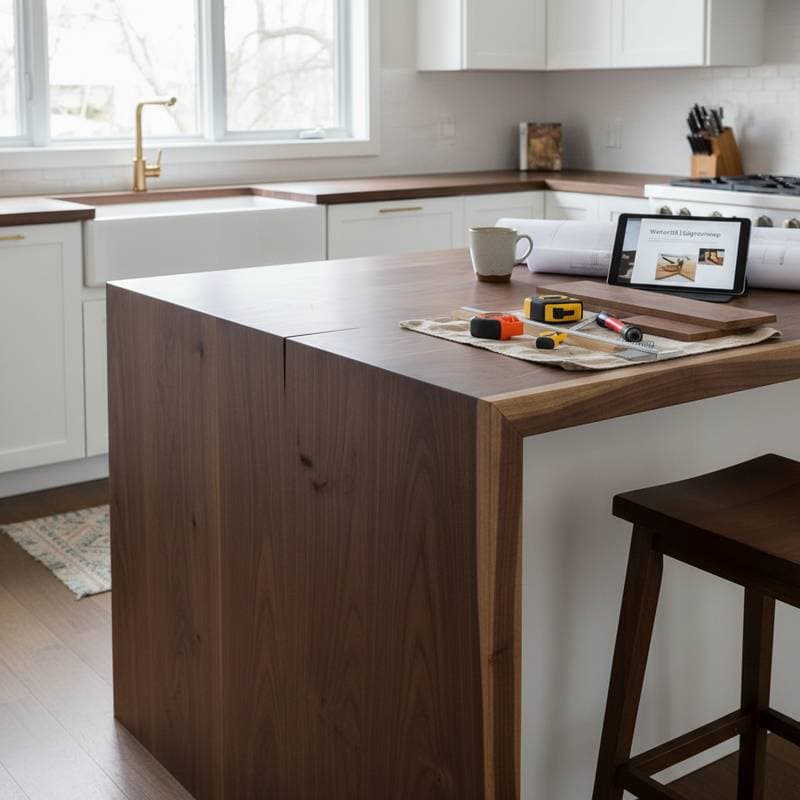
DIY Wood Waterfall Edges: A 2025 Essential for Kitchen Design
Readers have likely encountered sleek stone waterfall countertops that cascade smoothly to the floor. These installations convey expense and modernity, yet fabrication and installation often exceed ten thousand dollars. Wood waterfall edges replicate the sculptural impact with added warmth, texture, and personality at a significantly reduced price. Proper materials and preparation enable achievement of this premium aesthetic using existing tools.
Average cost: $450 to $1,200 for DIY materials.
Professional build: $2,500 to $4,800 based on wood species and finish.
Project time: 3 to 5 days for typical DIY participants.
Skill level: Intermediate woodworking.
Defining the Appeal of Wood Waterfall Edges
A waterfall countertop prolongs the surface material down one or both sides of a cabinet base to the floor, forming a continuous grain pattern. In wood versions, this seamless flow elevates the design. Matching the grain from the horizontal top to the vertical side creates an illusion of the wood folding naturally over the edge.
Key advantages include:
- Visual anchoring of islands or peninsulas.
- Softening of rigid materials such as stone or metal.
- Highlighting of live edges for natural variation.
- Adaptability to rustic, modern, or Scandinavian styles.
Wood waterfall edges serve as an accessible alternative for homeowners seeking luxury without the expense of stone slabs. Appropriate sealing ensures durability in kitchens, bars, or laundry areas.
Action step: Determine coverage for one or both sides before starting. Measure cabinet dimensions precisely and map grain orientation.
Step-by-Step Guide to Constructing Wood Waterfall Edges
The procedure appears intricate but adheres to a straightforward progression. Basic carpentry tools and deliberate pacing suffice for completion.
Step 1: Measure and Cut the Countertop
Begin with the main countertop slab. Employ a table saw or track saw for precise straight cuts. Retain an additional half-inch on each end for final adjustments. Indicate the attachment point for the waterfall section.
Step 2: Form the Miter Joint
Adjust the saw blade to a 45-degree angle and cut along the intended seam between the top and side panel. Mirror the cut on the waterfall panel to ensure a flush fit. Utilize a miter gauge or straightedge to maintain accuracy.
Step 3: Dry Fit and Grain Alignment
Position both components on a level surface and align the grain patterns. Refine placement until the flow appears organic across the joint. Secure with tape for visual inspection. Reverse or reposition the side panel if the continuity disrupts.
Step 4: Apply Glue and Clamps
Spread waterproof wood glue or epoxy along the miter surfaces. Secure with extended clamps and a right-angle jig to compress the joint evenly. Remove excess adhesive promptly. Allow full curing overnight.
Step 5: Sand and Address Imperfections
After curing, smooth the seam starting with 120-grit sandpaper, progressing to 180-grit and 220-grit. Introduce color-matched wood filler or epoxy into small voids. A refined surface enhances the final finish quality.
Step 6: Apply Sealant and Finish
Select penetrating oil, hard wax, or marine-grade polyurethane for protection. Layer two to three coats, sanding lightly between applications for uniform coverage. This shields against kitchen moisture.
Step 7: Mount on Cabinets
Incorporate hidden brackets or L-braces within the cabinet base for stability. Ensure level positioning prior to securing. For dual-sided installations, incorporate a minor expansion gap at the floor level to avoid warping.
Action step: Permit the finish to harden for 24 hours minimum before routine use. Place felt protectors beneath stools or appliances to safeguard the wood.
Deciding Between DIY and Professional Assistance
Fabricating a waterfall countertop demands exacting precision. Individuals with moderate woodworking background can manage the task through thorough planning and care. Novices in joinery or finishing may benefit from partial professional involvement.
Elements suited to DIY:
- Slab cutting and sanding.
- Finish application.
- Grain matching and preliminary assembly.
Areas warranting expert input:
- Precision machining of extended miters on substantial slabs.
- Securing panels over irregular floors.
- Execution of high-gloss epoxy sealants.
Professional woodworkers charge $60 to $120 hourly. Fabrication and installation typically require 15 to 25 hours. Request insurance documentation and client references focused on countertop projects.
Action step: Enlist assistance for slab manipulation in DIY scenarios. Pieces range from 80 to 150 pounds based on dimensions.
Expert Recommendations for Optimal Results
Subtle refinements elevate the project to professional standards and extend longevity.
- Incorporate a biscuit joiner or domino system within the miter for reinforced alignment.
- Seal every surface, including undersides, to equalize moisture exposure.
- Install a drip edge below the front overhang to divert water from the vertical face.
- Opt for adjustable cabinet feet on uneven subfloors to minimize joint stress.
- For live-edge selections, embed clear epoxy in natural voids prior to final sanding and coating.
Action step: Document each phase with photographs, particularly cuts and joints. This aids consultation with experts or future replication.
Integrating and Enjoying the Finished Design
Upon installation, the wood waterfall countertop transcends functionality to become a central visual and sensory element. The grain narrative unfolds daily, fostering connection. Its inherent warmth draws gatherings rather than repelling them.
Daylight variations subtly alter the wood's hue. Matte finishes diffuse illumination gently, whereas glossy versions mirror it vividly. Each choice complements distinct kitchen aesthetics.
Action step: Incorporate under-cabinet illumination or pendant lights to accentuate the descending grain. This amplifies the architectural drama.
Advancing Your Woodworking Project
Progress hinges on skill confidence and tool availability. Initiate with miter practice on scrap material. Experiment with finishes to match personal preferences and upkeep tolerance.
Acquire a live-edge slab once prepared, then layout meticulously. Capture progress images, consult local woodworking communities for insights, and refine techniques. Such endeavors enhance abilities and property worth.
A wood waterfall edge embodies the harmony of skilled work and natural elements. Diligent application of these methods yields a countertop that invigorates the kitchen space with vitality.