
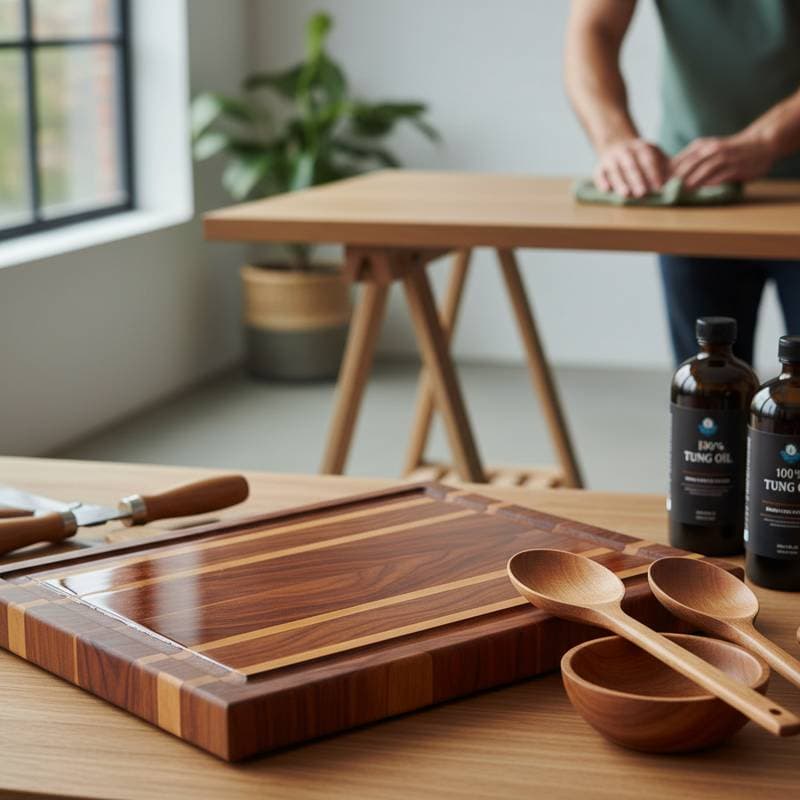
Why Tung Oil Beats Polyurethane for DIY Wood Finishes
A hand-applied tung oil finish imparts a warm glow to a maple tabletop that no synthetic film can achieve. Polyurethane offers robust protection, yet numerous DIY enthusiasts encounter issues such as brush strokes, peeling borders, and an overly plastic appearance. Selecting the appropriate finish influences not only the initial shine but also the project's longevity, damage resistance, and compatibility with daily use.
For those seeking a natural, food-safe option that delivers richness and smoothness, tung oil frequently proves superior. This section examines the reasons this age-old drying oil excels over contemporary coatings in home workshops.
How Tung Oil Integrates with Wood Fibers
Tung oil, extracted from tung tree seeds, functions as a penetrating oil. Upon application to wood, it absorbs into the fibers and hardens via oxidation, forming a supple, water-repellent connection within the grain. Polyurethane, however, creates a rigid film that adheres to the surface.
This fundamental chemical distinction alters performance significantly. A finish that permeates the wood accommodates variations in humidity and temperature, whereas a surface film risks cracking or delaminating. Woodworkers in regions with variable climates report that tung oil applications remain intact for decades.
Key advantages include:
- Tung oil solidifies inside the wood, rendering scratches less noticeable.
- Absence of peeling or flaking, as no external film exists to separate.
- Preservation of the wood's natural texture, free from the sealed sensation of plastic.
Practical application tip: Test tung oil on a scrap of oak or walnut. Apply a thin layer with a cloth, allow one hour for penetration, then remove excess by buffing. Observe how the grain intensifies and the surface develops a subtle sheen without high gloss.
Advantages in Natural Composition and Safety
For projects involving kitchenware, the organic nature of tung oil holds strong appeal. Pure tung oil, once cured, lacks synthetic resins or solvents. Polyurethane, even varieties marked as safe after drying, incorporates additives unsuitable for food contact.
Fully cured tung oil establishes a cross-linked polymer that proves non-toxic and impervious to water. Such properties suit cutting boards, salad bowls, and butcher blocks effectively. Professional woodworkers often incorporate it into custom mixtures with citrus solvents or beeswax to enhance luster.
Guidelines for food-safe application:
- Select only 100 percent pure tung oil, avoiding blends labeled as tung oil finish that contain varnish.
- Apply coats thinly and permit complete curing between applications, typically 24 to 48 hours.
- Steer clear of mineral spirits or petroleum-based thinners on food-contact surfaces.
- Polish the completed surface using a lint-free cloth until it achieves a dry, smooth finish.
Safety measure: Clearly mark the oil container and store it away from heat sources. Place used oily rags in a metal disposal bin to mitigate risks of spontaneous combustion.
Applying Tung Oil: DIY Approach and Professional Considerations
Tung oil application suits beginners, though it demands patience. In contrast to polyurethane, which allows brushing in one or two substantial coats, tung oil benefits from numerous thin layers. Each layer requires full curing prior to the next.
Elements that support DIY success:
- Basic equipment: soft cloths, protective gloves, and clean rags.
- Minimal exposure to fumes when using pure formulations.
- Straightforward cleanup employing natural solvents or mild soap.
Scenarios for professional assistance:
- Extensive flooring exceeding 200 square feet, where uniform absorption proves essential.
- Restoration of antique furniture demanding precise color harmony.
- Commercial kitchen installations requiring verified food-safe certifications.
Evaluating a professional service:
Inquire whether they employ pure tung oil or altered versions. Request a sample board to assess sheen and tactile quality. Verify safe disposal practices for rags and waste, given the self-heating potential of drying oils.
Required skill assessment:
Suitable for beginners to intermediate users. Allocate approximately 4 to 6 hours of active effort across multiple days for a standard tabletop.
Getting started:
Begin with modest pieces. Complete a cutting board or stool to grasp absorption rates and curing times before tackling larger items like furniture.
Maintaining and Evolving with Tung Oil
Individuals transitioning from polyurethane to tung oil commonly observe two qualities: the wood appears vibrant, and the finish matures attractively over time. Subsequent applications restore brilliance without diminishing underlying character. Minor abrasions integrate into the developing patina, avoiding stark white scars.
Since tung oil infuses rather than overlays, the surface stays permeable. This feature enables furniture to respond to indoor humidity fluctuations without distortion. The resulting subtle matte aesthetic complements rustic, Scandinavian, and contemporary designs seamlessly.
Ongoing care routine:
- Remove dust weekly using a dry cloth.
- Reapply a light coat annually or biennially as needed.
- Refrain from abrasive cleaners and alcohol-containing sprays.
- For increased polish, rub with a combination of tung oil and beeswax.
Quick revival method:
Maintain a small container of oil nearby. Upon noticing dullness or dryness on a tabletop, apply a teaspoon of oil, allow ten minutes for absorption, then buff thoroughly. The original radiance reemerges promptly.
Essential Tools and Further Guidance
Recommended visual elements:
- Before-and-after images of wood samples treated with tung oil versus polyurethane.
- Step-by-step photo sequence illustrating thin coat application and buffing.
- Close-up shots highlighting grain enhancement and matte finish texture.
Valuable standards and sources:
- ASTM D4446, which outlines protocols for drying oil finishes.
- USDA recommendations regarding wood coatings suitable for food contact.
- Product specifications from reputable pure tung oil producers, including Real Milk Paint Co. and Tried & True.
Tung oil empowers DIY projects with enduring, authentic protection that evolves alongside the wood. This choice not only safeguards surfaces but also celebrates their inherent beauty, ensuring pieces remain functional and visually compelling for years.