
Why Shaker Cabinets Dominate DIY Kitchen Remodels in 2025
The Shaker cabinet stands out as a timeless and versatile kitchen element. Its signature five-piece door features a recessed center panel, appealing to homeowners seeking a blend of classic charm and modern refinement. As DIY renovations gain momentum this year, Shaker profiles highlight how restraint serves as the most adaptable design approach.
At a Glance
Homeowners: DIY enthusiasts nationwide undertaking kitchen updates
Typical Kitchen Size: 180 to 250 square feet (16.7 to 23.2 square meters)
Design Teams: Combinations of local woodworkers, online suppliers, and self-directed builders
Photography: Provided by independent craftspeople and contributors
Before
Most DIY kitchen projects start with standard builder cabinets and outdated surfaces that absorb light and constrain the space. Shallow drawers limit accessibility, while bulky upper units dominate the ceiling line. One homeowner likened her previous setup to a cluttered labyrinth lacking coherent storage. The primary issues rarely involve the overall layout but rather inefficient functionality. Without balanced rhythm or symmetry, the area appears chaotic and overwhelming.
After
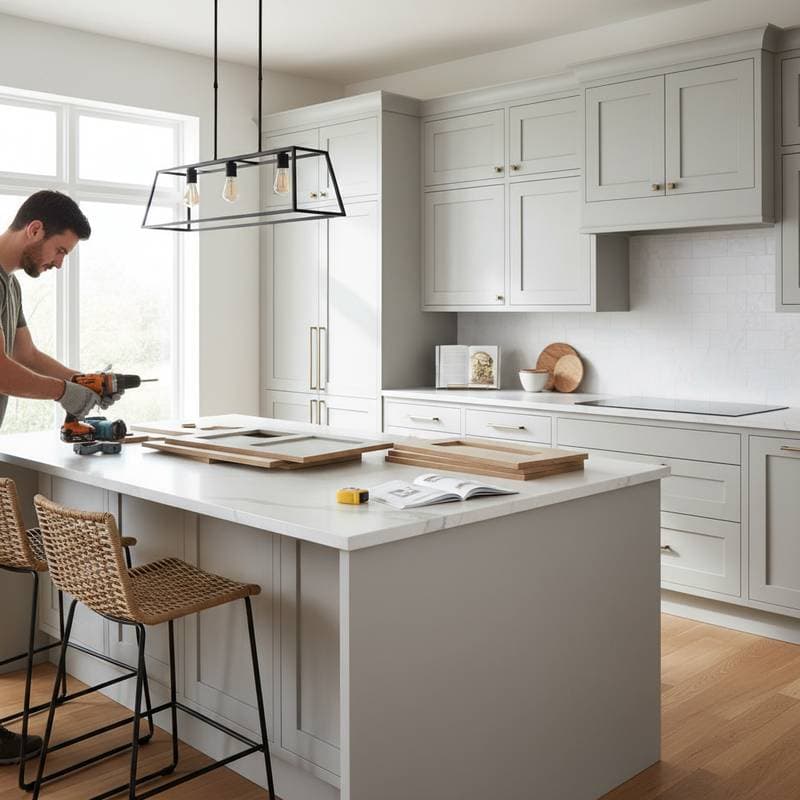
Swapping out plain or elaborate door faces for Shaker styles immediately imposes clarity. The squared frame establishes firm structure, complemented by the smooth flat panel for a streamlined appearance. Experts and homeowners alike note the primary benefit as reduced visual clutter. In images, these fresh lines distribute illumination evenly, unifying upper and lower cabinets into a cohesive surface. Soft white coatings and matte sheens amplify natural light reflection, with understated hardware emphasizing the geometric form without excess.
"Shaker design allows focus on proportion," observes cabinetmaker Luis Ortega, who assists clients in installing solid maple doors. "Straight lines and exposed joints shift attention to alignment and spacing rather than ornamentation."
The outcome yields a kitchen that conveys artisanal quality alongside current aesthetics. Open shelving paired with expansive drawers offsets the framed doors, delineating areas for cooking, preparation, and presentation. LED under-cabinet lighting prolongs illumination, and hidden electrical outlets preserve clear countertops.
Why the Shaker Profile Suits DIY Projects
The Shaker door lends itself to straightforward assembly, appealing to weekend builders. Each frame comprises two vertical stiles and two horizontal rails encasing a central panel, secured via pocket screws or tongue-and-groove joints. Components derive from solid lumber or arrive as pre-cut kits. Square edges demand few specialized tools for cutting and finishing; a table saw, router, and firm grip suffice for expert-level outcomes.
A uniform 2.5-inch (6.35-centimeter) frame width accommodates standard hardware and hinges, while straight margins ease precise fitting. "Build a single prototype to verify dimensions, then replicate for the full set," advises DIY educator Kelly Zhang, who conducts online cabinetry classes. "The design tolerates minor adjustments effectively."
Material and Finish Trends
Beyond traditional white coatings, DIY builders explore varied options. Natural ash, rift-sawn oak, and walnut veneers suit warmer, earthy kitchens. Painted surfaces in subdued clay, stone, or sage hues maintain a neutral foundation. The flat panel accepts paint uniformly, minimizing visible strokes. For stained wood, a clear matte sealant accentuates the grain without reflective shine.
Hardware selections evolve as well. Sleek bar pulls in brushed nickel or aged brass align seamlessly with the rails, enhancing linearity. In compact spaces, some opt for hardware-free designs, incorporating beveled edges as finger grips to preserve a seamless facade.
Design Details
- Frame Width: 2.5 inches (6.35 centimeters) standard for optimal balance and scale
- Material: Maple, poplar, or MDF for painted applications; oak or walnut for stained ones
- Finish: Waterborne lacquer or low-VOC enamel to ensure longevity
- Lighting: Under-cabinet LED strips tuned to 3000K for inviting task illumination
- Storage Additions: Full-extension drawers under counters, vertical compartments for utensils, and slide-out racks for spices
These precise elements boost practicality. Generous drawers supplant multi-tiered doors and shelves, minimizing awkward movements. Uniform lighting illuminates key zones, and aligned frames expand the perceived room dimensions.
The DIY Advantage
Constructing or refinishing Shaker doors in-house cuts expenses and allows scheduling flexibility. Prefinished units range from $60 to $120 apiece, whereas unfinished blanks halve that cost. Diligent applicators achieve professional sheen with a spray system or foam applicator. For existing enclosures, door replacement alone revitalizes the entire area.
This adaptable approach aligns with DIY principles. Tackle sections sequentially, such as coating panels in groups and remounting over a weekend. The Shaker aesthetic spans modern and traditional realms, complementing surfaces from butcher block to quartz seamlessly.
When to Go Custom
Standard sizes fit many renovations, yet certain configurations warrant tailored adjustments. Cabinets reaching 96 inches (243.8 centimeters) to the ceiling minimize dust buildup and optimize capacity. Glass-fronted uppers in select spots add interest while upholding uniformity. For added depth, beadboard or tongue-and-groove inserts within frames provide subtle texture.
"Clients value the framework but seek gentle individuality," notes interior designer Dana Fields. "Varying panel depth or rounding inner edges tempers the profile softly."
Such modifications preserve enduring appeal while infusing personalization, rendering the kitchen bespoke rather than commonplace.
Key Takeaways
- Shaker cabinets merge simplicity with skilled execution, perfect for hands-on endeavors.
- Linear forms, uniform ratios, and apparent joinery promote meticulousness and tranquility.
- Finishes in paint or stain conform to diverse aesthetics, from rustic cottages to sleek lofts.
- Modular construction enables updates to current structures without complete overhauls.
- Enhancements like integrated lighting and organized storage elevate usability and ease.
Living with Your Design
Installed Shaker cabinets require minimal upkeep. Flat surfaces accumulate less dust, and repairs integrate smoothly due to squared borders. Proper sealing limits seasonal shifts. Gradual changes in color or finish enhance the crafted essence over years.
The lasting draw of Shaker cabinets resides in their influence on routine activities. Doors operate fluidly, light disperses consistently, and structured visuals anchor the environment.