
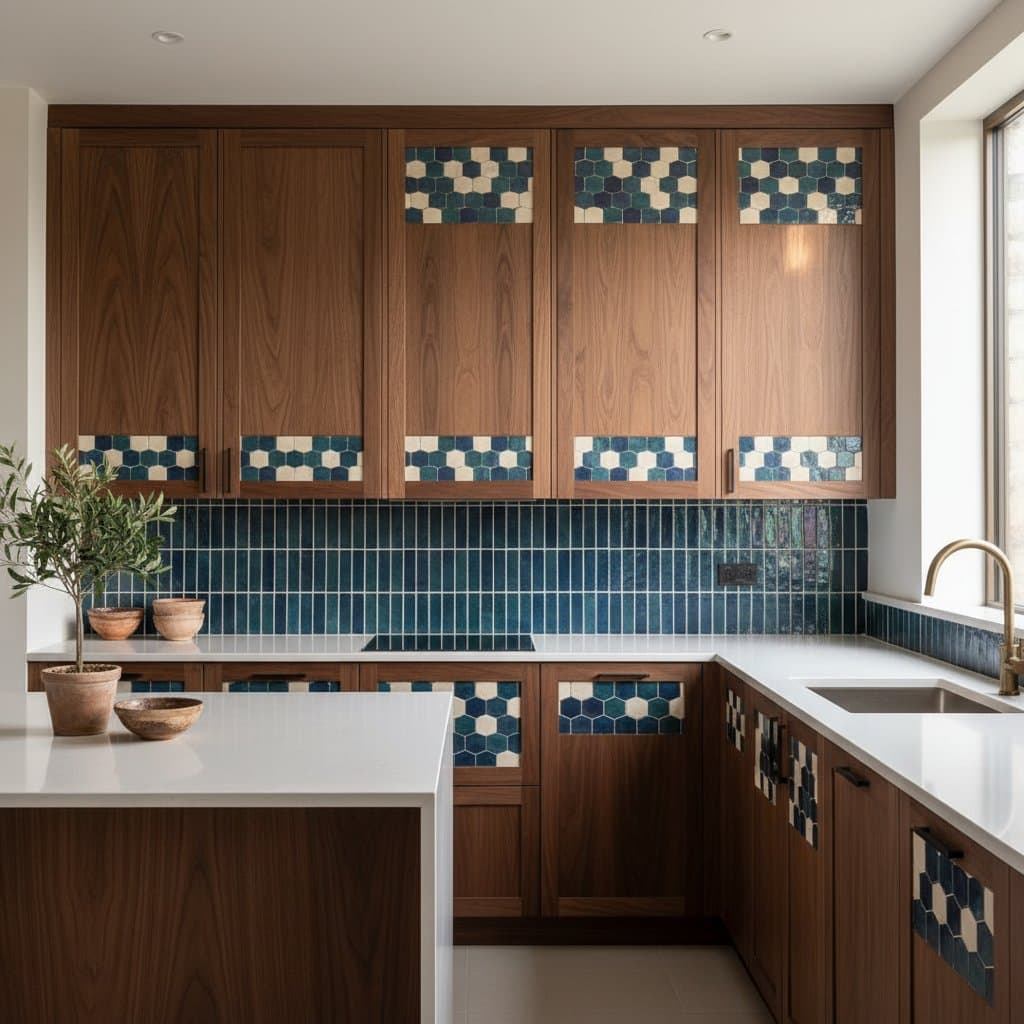
Why Zellige Inlays Are 2025's Cabinet Game-Changer
Cabinet design evolves rapidly, and one material redefines the essence of customization. Zellige inlays, those hand-cut Moroccan tiles celebrated for their uneven surfaces and radiant glazes, now appear in luxury kitchens, artisanal furniture workshops, and specialized millwork operations. While familiar in backsplashes or feature walls, their integration into cabinetry challenges woodworkers to reconsider texture and premium pricing.
These inlays demand a higher initial investment, generally increasing costs by $45 to $70 per square foot for materials and labor. However, the aesthetic rewards and growing client interest justify the expense. Designers observe that clients gravitate toward the fusion of artisanal variance and exacting craftsmanship. This blend yields a style that feels worldly yet rooted, positioning Zellige as a pivotal trend in contemporary design.
Why Zellige Works in Cabinet Design
Artisans craft each Zellige tile from pure clay, sun-dry it, and fire it in kilns before applying glazes in limited runs. The minor dimensional differences, typically 1 to 2 millimeters, impart a layered quality to cabinets that automated cuts cannot replicate. Embedded in wooden panels, the glossy finish refracts light variably, generating subtle motion independent of vivid hues or motifs.
Woodworkers value the compatibility of these tiles with standard techniques, such as diamond-wheel cutting and placement into machined grooves akin to stone veneers. The interplay of polished tile and wood's subtle grain introduces tactile richness suitable for spare modern spaces or classic settings alike.
Professionals note that Zellige inlays facilitate harmonious multi-material kitchens. Consider walnut cabinets accented with creamy Zellige sections alongside brass fittings and matte-finish marble surfaces. This assembly conveys timeless elegance with modern vitality, accounting for the recent surge in showroom inquiries.
Action step: In cabinet layout sketches, designate one or two prominent panels for Zellige accents rather than applying them across full elevations. Such selectivity manages expenses while preserving ease of upkeep.
Costs and Budget Planning
A complete kitchen featuring Zellige inlay highlights may incur an additional $3,000 to $8,000 for materials and workmanship. Factors influencing the total include tile origin, glaze intricacy, and panel quantity.
Main cost drivers:
- Tile Grade: Genuine Moroccan Zellige ranges from $25 to $40 per square foot. U.S.-made replicas begin at $12 yet compromise on glaze vibrancy.
- Labor: Expert fitting contributes $20 to $30 per square foot, primarily for accurate milling and secure placement.
- Sealing and Grout: Allocate $2 per square foot for durable, clay-friendly protectants.
Money-saving strategies:
- Limit Zellige to island extremities or eye-level cabinet faces.
- Inquire about surplus stock from vendors for modest undertakings; suppliers often offer partial lots ideal for drawer faces.
- Opt for uniform tones over elaborate mosaics, as inherent glaze shifts suffice for engagement.
Avoid shortcuts on protection: unsealed Zellige readily takes in cooking oils and spills, necessitating complete restoration.
Common Mistakes and How to Avoid Them
Zellige's allure stems from its organic inconsistencies, yet inadequate foresight can lead to complications. Below are prevalent pitfalls and preventive measures.
- Skipping acclimation. Allow unpacked tiles to equilibrate for a minimum of 48 hours in the workshop environment. This adjustment averts future detachment due to moisture shifts.
- Overtight joints. Maintain essential grout gaps to safeguard against fractures during the drying phase.
- Inconsistent sealing. Apply protectant uniformly to eliminate matte spots prone to dirt accumulation.
- Using high-gloss polyurethane nearby. Adjacent overspray can matte the glaze or leave tacky films; shield areas meticulously before coating.
- Ignoring panel weight. Each square foot of Zellige contributes 2 to 3 pounds; upgrade to reinforced hinges or heavy-duty soft-close mechanisms for doors.
Remedying these issues post-installation often doubles expenses. Thorough upfront measures prove more economical than subsequent fixes.
Next Steps for Your Project
To incorporate Zellige inlays into forthcoming cabinet work, prepare a sample board first. Pair your selected timber, tile shade, and surface finish to assess light dynamics among elements. This prototype aids client comprehension of the end result and minimizes expensive alterations.
Seek out tile specialists familiar with woodworking applications for sourcing guidance. Experiment with scale by testing small sections on scrap panels to refine your technique before full commitment. With careful integration, Zellige elevates cabinets from functional to focal, enhancing both aesthetic appeal and project prestige.