
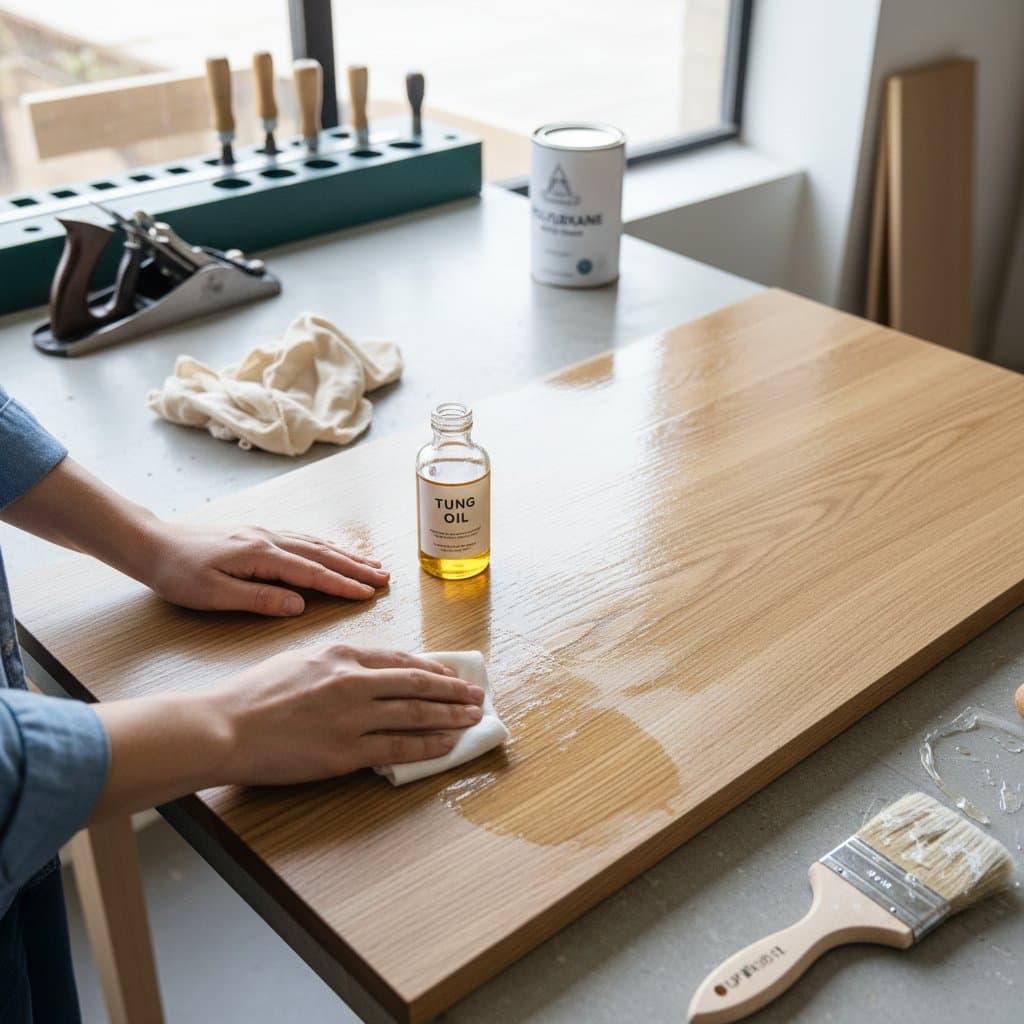
Why DIYers Favor Tung Oil Over Polyurethane Finishes
A superior finish elevates a woodworking project from ordinary to exceptional. Woodworkers invest extensive time in shaping, sanding, and assembling components, yet the final coat often determines the overall success. Many encounter issues where the finish conceals the wood's natural grain or imparts an unnatural plastic texture. This challenge prompts home woodworkers to explore alternatives, and tung oil emerges as a preferred choice. It delivers a warm, authentic surface that values deliberate application. Although polyurethane occupies prominent shelf space in stores, growing numbers of DIYers recognize tung oil's advantages in achieving the desired appearance and tactile quality.
Why Finish Choice Matters
Wood finishes serve purposes beyond mere protection. They influence color saturation, surface texture, and the sensory experience of the material. Polyurethane creates a durable shell resistant to water and wear, yet it often appears artificial on woods with pronounced grain, such as oak or walnut. Tung oil, however, soaks into the fibers and polymerizes internally. This approach yields a vibrant surface that integrates seamlessly with the wood.
For DIYers, the application process shapes the experience. Polyurethane requires meticulous brushing or spraying, along with dust-free conditions and exact timing for multiple layers. Tung oil supports a more gradual method. Apply it with a cloth, allow time for absorption, remove excess, and repeat across several sessions. This technique fosters a connection to the wood, akin to caring for a living material rather than merely covering it.
Individuals who prioritize precision, ease of repair, and direct interaction with their creations find tung oil particularly suitable.
Characteristics of Polyurethane
Polyurethane consists of synthetic resins that solidify into a robust film as solvents dissipate. It performs well in demanding environments, including floors, cabinetry, and countertops exposed to frequent use or moisture. The hardened layer withstands heat, alcohol, and common chemicals. One gallon typically covers approximately 400 square feet, providing economical coverage for expansive areas.
Reasons for Its Continued Use
Builders seeking a high-gloss surface with minimal ongoing care view polyurethane as a reliable option. It endures for ten years or longer without refinishing in moderate conditions. The protective qualities guard against spills and abrasions, making it suitable for households or rental spaces where resilience takes precedence over visual appeal.
Limitations to Consider
The protective film that shields the wood also separates users from its inherent qualities. Damage such as chips or flaking necessitates complete sanding and reapplication. Oil-based variants may yellow with age, shifting the wood's color. Water-based options maintain clarity but can appear dull on warmer tones like cherry or mahogany. The strong odors during application and the need for mineral spirits in cleanup deter many DIYers.
Application Considerations for DIY and Professionals
Both finishes accommodate home application, though the learning curves vary significantly.
Scenarios for DIY Success
Tung oil suits novices due to its forgiving nature. Errors in coverage or quantity resolve with additional wiping. Brush marks do not occur, and personal cleanup involves only soap and water. The method emphasizes steady pacing over advanced techniques.
Situations Calling for Professional Help
Polyurethane excels on broad, even surfaces like flooring or stairs, where imperfections such as streaks or bubbles compromise results. Experts employ professional sprayers and managed settings to produce seamless coatings. For areas exceeding 200 square feet or requiring industrial strength, professional services prevent common pitfalls.
Selecting Reliable Contractors
When evaluating professionals, inquire about:
- Familiarity with oil- and water-based polyurethane variants.
- Measures for ventilation and dust mitigation.
- Coverage through insurance for accidents or unintended application.
- Provision of test samples to compare finish levels.
Reputable applicators detail curing durations, ideal environmental conditions, and maintenance protocols post-application.
Avoiding Common Errors
Excess Tung Oil Application
Excess oil leads to a gummy residue. Remove surplus within 30 minutes of application. For persistent stickiness, lightly sand with 400-grit paper using a minimal amount of oil to even the surface.
Premature Polyurethane Layers
Coating over an uncured layer traps solvents and creates haze. Consult product guidelines for intervals between applications and verify readiness by sanding a test spot lightly. If residue clings, extend the drying period.
Neglecting Preparation
No finish conceals underlying flaws like scratches or adhesive remnants. Progress through grits from coarse to fine, and eliminate all dust before proceeding. Any overlooked imperfection persists after sealing.
Inappropriate Application Tools
Cloths that release lint contaminate tung oil surfaces. Opt for lint-free cotton or microfiber materials. Steer clear of paper towels, which deposit particles.
Enduring Appeal of Tung Oil for DIYers
Tung oil's draw extends beyond visual qualities. It reflects evolving perspectives among home woodworkers on finishing techniques. Rather than erecting a barrier, users cultivate an ongoing bond with the wood. The surface retains its natural texture and warmth. Refreshing occurs without aggressive removal.
Durability and Upkeep
In low-wear settings, tung oil maintains integrity for multiple years. Upon noticing diminished luster, apply a fresh layer by wiping. This approach avoids sanding or solvents, turning care into an enjoyable practice.
Health and Environmental Benefits
Pure tung oil emits no volatile organic compounds after curing. It qualifies as food-safe for items like cutting boards or tabletops. Polyurethane depends on synthetic components and solvents that generate odors. These dissipate eventually, but initial ventilation remains essential for several days.
Visual Enhancements
Tung oil accentuates the figuring in species such as walnut, cherry, and maple, details that polyurethane might mask. It imparts a subtle, rubbed-in sheen instead of reflective gloss. Woodworkers often characterize it as dynamic, with grain patterns responding to light variations.
Safeguarding Your Workspace and Materials
Regardless of the selected finish, implement safety measures to protect the area and personnel.
- Submerge oily rags in water within a sealed metal container to prevent spontaneous combustion.
- Ensure ample airflow, as even natural products require it for proper hardening.
- Mark containers with contents and dates, noting that blends may solidify with time.
- Transfer remnants to airtight glass vessels, minimizing headspace to preserve usability.
These steps minimize risks and sustain supplies for subsequent endeavors.
Maintaining the Finished Piece
Tung oil surfaces enrich in tone over the first few weeks. Refrain from loading with weight until dryness confirms through touch. Routine cleaning uses a moist cloth exclusively. For polyurethane, delay full use until odors subside completely. Select mild cleaners to preserve gloss.
Should preferences evolve, tung oil allows adaptation. Light sanding permits switching finishes. Polyurethane commits to its form, demanding thorough removal for alterations.