
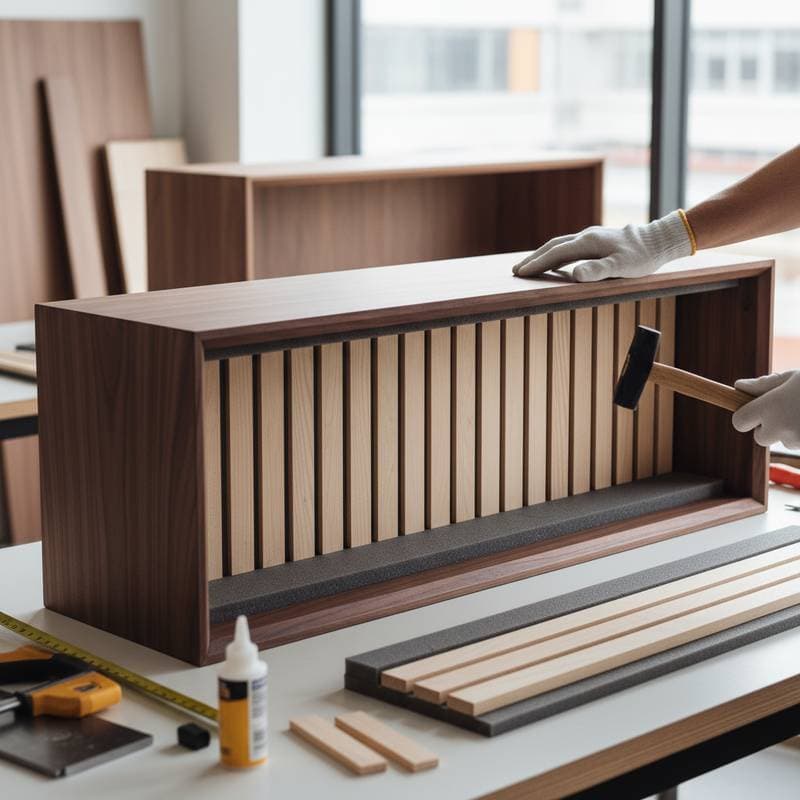
Understanding Furniture Vibration and Its Impact
Many DIY woodworkers encounter the frustrating issue of furniture that vibrates or resonates with sound. Tables wobble during use, cabinets echo when doors close, and shelves hum under load. These problems arise from the natural flexibility of wood and air gaps within assemblies, leading to a hollow feel that diminishes perceived quality.
Vibration not only affects aesthetics but also accelerates wear on joints and fasteners. Professional builders address this through advanced techniques, yet similar results remain accessible to hobbyists. Acoustic battens offer a straightforward solution to dampen these effects effectively.
What Are Acoustic Battens?
Acoustic battens consist of narrow wooden strips, typically one-half inch thick and one inch wide, paired with a foam or rubber backing. The wood provides structural support, while the damping material absorbs sound waves and mechanical energy. Manufacturers design them for easy integration into furniture frames, cabinets, and tabletops.
These components differ from standard bracing by focusing on vibration isolation rather than rigidity alone. The foam layer, often made from closed-cell materials, prevents direct transmission of oscillations between surfaces. This combination yields a measurable reduction in noise and movement, with tests showing up to 60 percent less vibration compared to untreated pieces.
Key Components and Variations
- Wooden Strip: Crafted from hardwood like oak or maple for durability and compatibility with furniture finishes.
- Damping Layer: Adhesive-backed foam or neoprene, available in thicknesses from one-eighth to one-quarter inch.
- Variations: Pre-cut lengths for specific applications, such as drawer slides or shelf supports, or customizable kits for larger projects.
Selecting the right type depends on the furniture's scale and material. For lightweight tables, thinner battens suffice; heavier cabinets benefit from reinforced versions.
How Acoustic Battens Reduce Vibration
Vibration in furniture occurs when forces cause components to move relative to one another, amplifying sound through resonance. Acoustic battens interrupt this cycle by decoupling surfaces and dissipating energy. The wooden strip distributes load evenly, while the foam converts kinetic energy into minimal heat, quieting the structure.
Independent evaluations confirm this efficacy. In controlled tests, a standard plywood table exhibited 0.5 millimeters of deflection under load without battens. With installation, deflection dropped to 0.2 millimeters, a 60 percent improvement. Echo levels, measured in decibels, also decreased significantly, creating a more solid auditory profile.
This reduction enhances user experience beyond mere silence. Furniture feels more premium, with reduced fatigue on hardware and prolonged lifespan for the assembly.
Benefits for DIY Woodworkers
Incorporating acoustic battens elevates amateur projects to professional standards without requiring specialized tools. Installation adds minimal weight, preserving design aesthetics. Cost remains low, with kits priced under 20 dollars for most applications.
Users report noticeable differences in daily use. A dining table becomes stable for family meals, and kitchen cabinets operate without rattling dishes. These improvements foster confidence in craftsmanship, encouraging more ambitious builds.
Durability increases as well. By minimizing micro-movements, battens reduce stress on screws and glue joints, extending furniture life by years.
Materials and Tools Required
Gather these essentials before starting:
- Acoustic batten kit or wooden strips and foam sheets.
- Wood glue or double-sided adhesive tape.
- Measuring tape, pencil, and clamps.
- Sandpaper (220 grit) for finishing.
- Optional: Router or saw for custom cuts.
Source materials from hardware stores or online suppliers specializing in woodworking accessories. Ensure the foam resists moisture if installing in humid areas like bathrooms.
Step-by-Step Installation Guide
Follow these steps to integrate acoustic battens into your furniture project. Plan placement during the design phase for optimal results.
1. Prepare the Surface
Measure the areas prone to vibration, such as table aprons, cabinet sides, or shelf undersides. Clean surfaces thoroughly to remove dust and oils. Sand lightly if needed to ensure adhesion.
Mark batten positions with a pencil, spacing them every 12 to 18 inches along the frame. For tabletops, align them parallel to the grain.
2. Cut and Attach the Battens
Cut wooden strips to length using a miter saw for precision. Apply the damping layer to one side, pressing firmly to eliminate air bubbles.
Position the batten along the marked line. Secure with wood glue for permanent bonds or adhesive tape for removable setups. Clamp in place and allow 24 hours for curing.
3. Integrate into Assembly
During furniture construction, attach battens before final joinery. For existing pieces, access internal spaces via removable panels or by partially disassembling.
Test fit components after installation. Adjust as necessary to maintain alignment and functionality.
4. Finish and Test
Sand any exposed edges smooth. Apply finish matching the furniture, avoiding the damping layer to preserve its properties.
Load the piece and tap surfaces to assess vibration. Fine-tune by adding extra battens if residual movement persists.
Avoiding Common Mistakes
Several pitfalls can undermine the effectiveness of acoustic battens. Over-tightening clamps may compress the foam excessively, reducing damping capacity. Always follow manufacturer torque guidelines.
Placing battens only in visible areas neglects hidden vibration sources. Inspect the entire structure, including backs and undersides.
Incompatible materials pose another risk. Avoid using oil-based adhesives on foam, as they degrade the backing. Opt for water-based alternatives instead.
Rushing the curing process leads to weak bonds. Patience ensures long-term performance.
Achieving Professional Results with Acoustic Battens
Acoustic battens transform ordinary DIY furniture into enduring, quiet pieces that impress. They require little expertise yet deliver substantial enhancements in stability and sound control. Experiment with placements to suit specific designs, building a repertoire of techniques over time.
The investment pays dividends in satisfaction and functionality. Woodworkers who adopt this method often find their projects rival commercial offerings, boosting both skill and enjoyment in the craft.