
Why Mineral Paint Outperforms Chalk Paint in 2025
Chalk paint revolutionized furniture refinishing for small workshops and enthusiasts. The product applied thickly, covered diverse surfaces, and delivered a soft matte finish ideal for farmhouse styles. Mineral paint now emerges as a superior option, providing enhanced adhesion, deeper color, and resistance to fingerprints and water marks without additional sealing. For furniture makers, refinishers, and shop owners, this transition represents a practical advancement that conserves time and maintains pristine appearances over extended periods.
Key Differences in Composition and Bonding
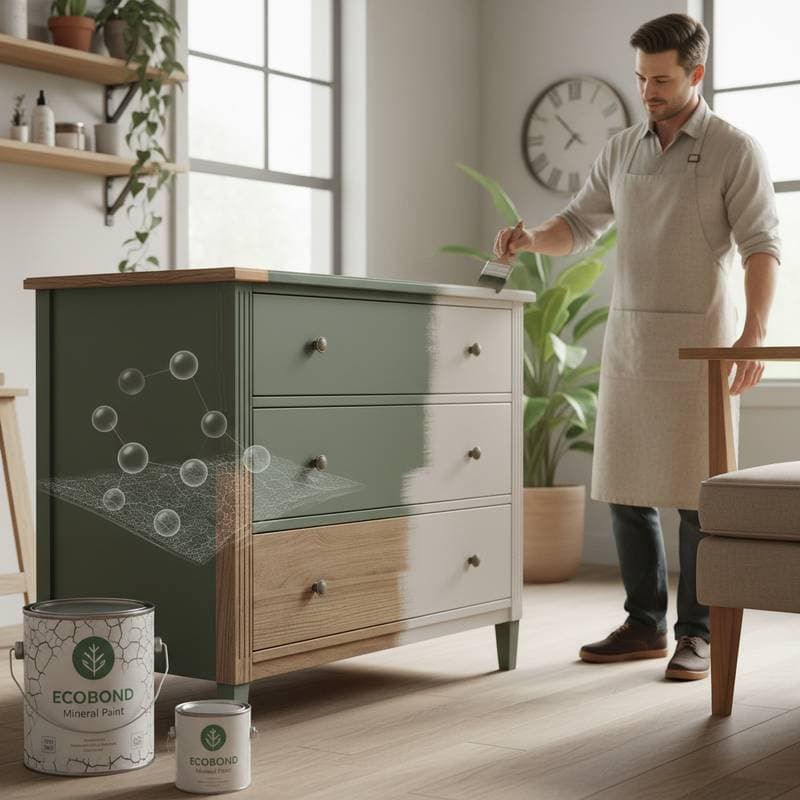
Mineral paint integrates finely ground natural pigments with a silicate or acrylic mineral binder. This formulation creates a finish that bonds molecularly to wood, metal, or laminate. Unlike chalk paint, which rests atop the surface, mineral paint integrates deeply, resulting in reduced chipping, minimal touch-ups, and a durable matte texture free from powdery residue.
Furniture artist Lena Ortiz notes, "I stopped sealing every dresser. The mineral paint I use cures to a low sheen that feels finished on its own." Professionals increasingly adopt it for cabinets, chairs, and tables due to its self-leveling properties, which conceal brush strokes and withstand scuffs after curing.
Visible and Tangible Performance Advantages
Shops prioritizing consistent quality observe superior coverage with mineral paint. One quart covers approximately 150 square feet, or 13.9 square meters, sufficient for a large armoire or multiple dining chairs. High pigment concentration achieves opacity in fewer coats compared to chalk paint, which often demands wax sealing.
Adhesion enhancements streamline preparation: a clean, lightly sanded surface suffices in most cases. This approach minimizes time and waste. For items in high-traffic areas, mineral paint offers surface hardness akin to satin enamel while preserving the matte aesthetic familiar from chalk finishes.
Environmental Advantages and Air Quality Benefits
Modern mineral paints feature low volatile organic compound levels. Water-based and free from ammonia or formaldehyde, they suit indoor applications with quick drying and minimal odor. The mineral binder ensures long-term stability without yellowing.
Clients value these attributes, seeking sustainable options that match performance standards. Shops using mineral paint can highlight eco-friendly practices, aligning with green building certifications and low-emission interior requirements.
Practical Application Techniques
To apply mineral paint, stir the contents thoroughly before use, then apply thin layers with a brush or roller. Select a high-quality synthetic brush or foam roller for uniform texture. The paint self-levels rapidly, yielding a smooth finish without lap marks. For detailed elements like carvings or legs, employ a fine detail brush to ensure even coverage without excess buildup.
The paint dries to the touch in one hour and accepts recoating after two hours. Full curing occurs in several days, forming a robust surface for everyday use. Without a wax layer, shops handle, stack, or ship pieces more efficiently, accelerating workflows and preventing transport-related damage.
Versatility in Design Options
Available in an expanding range of neutrals, pastels, and bold hues, mineral paint maintains color vibrancy across lighting conditions thanks to its mineral pigments. Custom blending proceeds seamlessly without streaking.
Achieve texture by sanding lightly between coats to expose edges or grain. For contemporary appeal, apply without distressing to create an even matte surface. The absence of a topcoat ensures uniform visuals from edges to panels, even in angled lighting.
Essential Performance Metrics
- Coverage: 150 square feet (13.9 square meters) per quart.
- Durability: Superior hardness and water resistance over chalk paint.
- Finish: Matte, smooth, and self-sealing, no wax needed.
- Eco Profile: Low VOC, water-based with mineral binder.
- Dry Time: Touch-dry in one hour, recoat after two hours.
These specifications position mineral paint as an ideal progression for professionals and hobbyists alike.
Maintaining Finishes in Daily Use
Cured mineral-painted furniture cleans easily with mild soap and water. The surface repels household stains and fingerprints, preserving freshness in kitchens, entryways, and living spaces. Shop owners benefit from reduced maintenance requests and increased client satisfaction.
Mineral paint enhances rather than supplants chalk paint's appeal. It retains the cherished matte elegance while delivering resilience for demanding environments.