
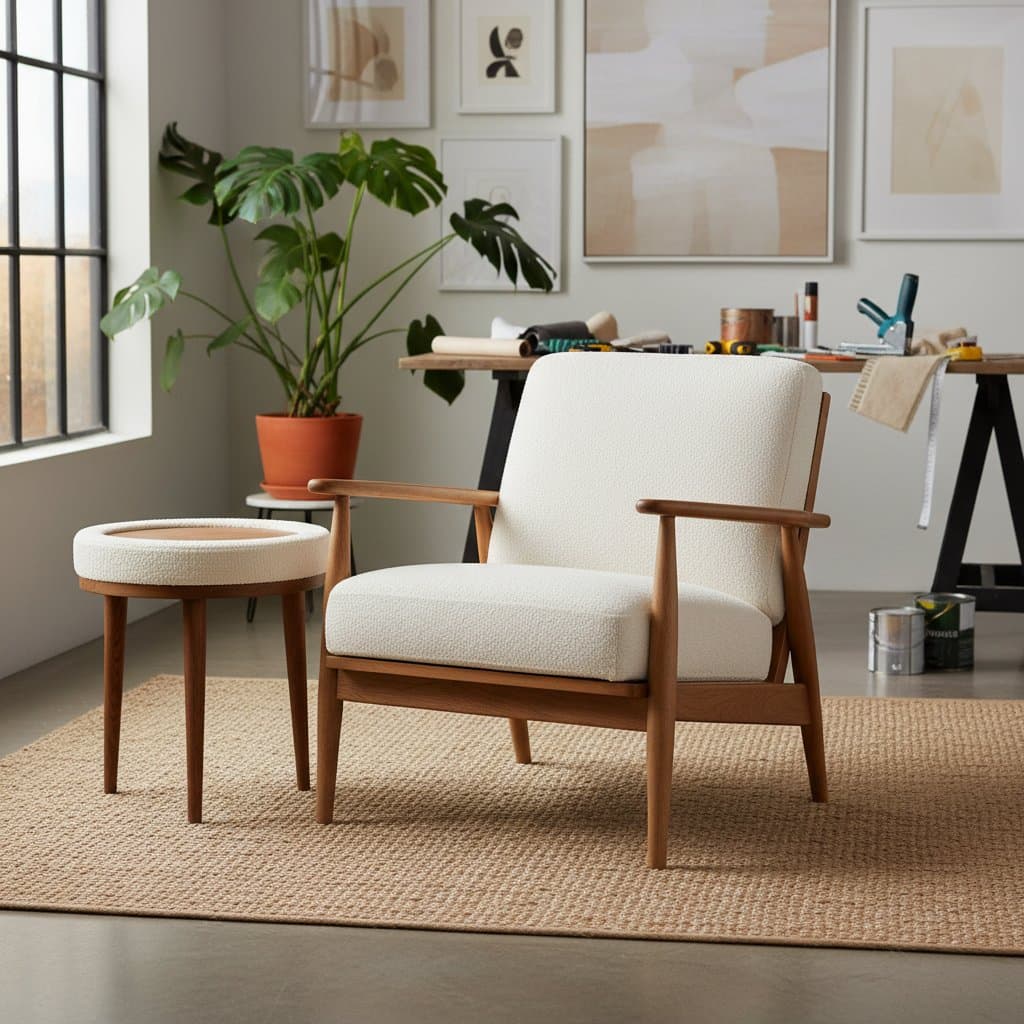
Bouclé and Wood: The Ultimate DIY Furniture Upgrade
Visualize a weathered wooden chair or an outdated bench reborn as an elegant fixture from a luxury boutique. Bouclé fabric enables this transformation. The looped texture of this material delivers softness and refinement, making it ideal for DIY upholstery projects. When combined with the inherent strength of natural wood, the result is furniture that blends contemporary appeal with inviting warmth. Homeowners can revitalize thrift store discoveries or update existing pieces, all while adhering to a modest budget.
This pairing suits various interiors, from minimalist setups to eclectic arrangements. The process requires basic tools and attention to detail, yet yields professional outcomes. Readers gain practical guidance to execute these upgrades confidently.
Why Bouclé and Wood Complement Each Other
Bouclé fabric features a distinctive looped weave, often crafted from wool or synthetic fibers, which forms a plush, resilient surface. This texture provides a striking contrast to the linear grain of solid wood, enhancing visual and tactile interest. The combination yields furniture that appears both inviting and architecturally balanced.
Natural wood offers robust support and enduring durability. A proper sealant protects it from humidity and daily abrasion. Bouclé contributes cushioning and a sensory appeal that encourages prolonged use. Together, these elements adapt to diverse aesthetics, including clean-lined Scandinavian designs or retro mid-century influences.
With correct application, bouclé upholstery withstands five to eight years of regular wear. Its tight construction minimizes pilling and color loss compared to smoother fabrics. Select high-quality variants to ensure longevity; lower-grade options may fray under stress.
Action Step: Opt for neutral tones such as ivory, taupe, or charcoal in bouclé to maximize adaptability across rooms. Match with woods like oak for warmth, maple for lightness, or walnut for depth to create a cohesive, timeless look.
Materials and Preparation Essentials
Gather these items before starting: high-density foam (at least 2 inches thick for seats), bouclé fabric (allow 20 percent extra for seams), staple gun with 3/8-inch staples, wood glue or spray adhesive, sandpaper (120-220 grit), and a wood sealant like polyurethane. Tools include a utility knife, measuring tape, and clamps.
Prepare the wooden frame by removing old upholstery, if present. Sand surfaces smooth to eliminate splinters and imperfections. Clean thoroughly to remove dust, then apply sealant in thin coats, allowing 24 hours to dry between applications. This step prevents future warping and ensures a stable base.
For foam, choose reticulated polyurethane for breathability, which resists sagging over time. Measure twice to avoid waste; fabric widths typically range from 54 to 60 inches, sufficient for most chair seats.
Action Step: Test fabric samples against your wood under room lighting to confirm color harmony and texture balance before purchasing full yardage.
Detailed Step-by-Step Upholstery Guide
Follow these steps methodically to achieve a taut, even finish. Work in a well-lit space with adequate ventilation, especially when using adhesives.
-
Prepare and Cut the Foam
Outline the seat dimensions on the foam sheet with chalk. Use an electric carving knife or serrated bread knife for precise cuts, aiming for straight edges that align flush with the frame. Trim excess gradually to fit snugly without compression. -
Secure the Foam to the Base
Apply a uniform layer of spray adhesive to the wooden seat platform. Position the foam carefully, pressing from the center outward to eliminate air pockets. Allow 10 to 15 minutes for the bond to set firmly before proceeding. -
Apply the Bouclé Fabric
Cut the fabric with 4 to 6 inches of overhang on all sides. Drape it over the foam, centering the pattern if applicable. Staple starting at the midpoint of each side, pulling gently to maintain even tension across the surface. -
Handle Corners and Edges
Fold excess fabric at corners inward, creating crisp pleats similar to bed-making techniques. Staple securely, spacing fasteners 1 inch apart. Trim surplus material close to the staples to reduce bulk. -
Reassemble the Piece
Attach the upholstered seat back to the frame using screws or brackets. Inspect for alignment and stability; tighten all hardware. Flip the item to verify underside neatness and add batting if needed for a polished profile.
A standard dining chair requires two to three hours after preparation. Benches or ottomans demand four to six hours due to larger surfaces. Practice on scrap materials to refine your technique.
Action Step: Retain a fabric remnant for matching repairs or expansions. Store it in a dry place to preserve color integrity.
Variations for Different Furniture Types
Adapt the process for chairs, benches, or headboards. For armchairs, wrap fabric around curves using pins to hold temporarily before stapling. Benches benefit from piped edges for a tailored appearance; sew piping with matching thread for reinforcement.
Incorporate legs or accents by refinishing wood with stain to complement the bouclé. Light stains enhance oak's golden hues, while darker tones deepen walnut's richness. This customization elevates thrift finds to bespoke levels.
Consider seasonal swaps: lighter bouclés for summer, deeper shades for winter. The modular approach allows flexibility without full reupholstery.
Action Step: Experiment with subtle patterns in bouclé, such as subtle herringbone, to add interest without overwhelming the wood's natural beauty.
Deciding Between DIY and Professional Services
Individuals with steady hands and basic tool familiarity can tackle this project independently. Bouclé's inherent texture conceals small errors, making it accessible for those experienced with staple guns or sewing.
Engage a professional for challenges such as:
- Intricate shapes with pronounced curves or button tufting.
- Frames requiring reinforcement or weld repairs.
- Premium fabrics demanding exact pattern matching.
Upholsterers typically charge $150 to $300 per chair, covering labor and supplies. Investment proves valuable for antiques or custom designs where precision matters.
Vet Contractors Carefully: Review certifications from organizations like the Upholsterers Guild, verify liability insurance, and examine portfolios of comparable projects. Discuss fabric orientation and seam placement during consultations to align expectations.
Maintaining Bouclé and Wood Furniture for Longevity
Preserve your upgraded pieces through routine care. Vacuum bouclé weekly with a soft brush attachment to remove dust; spot-clean spills immediately with mild soap and water, avoiding saturation. Professional dry cleaning restores deeply soiled areas annually.
For wood, dust monthly with a microfiber cloth and reapply sealant every two years. Avoid direct sunlight to prevent fading in both materials. These habits extend usability, keeping the furniture vibrant and structurally sound.
The result is not merely refreshed items but a personalized sanctuary that reflects thoughtful craftsmanship. This approach democratizes design, turning accessible materials into enduring statements of style.