
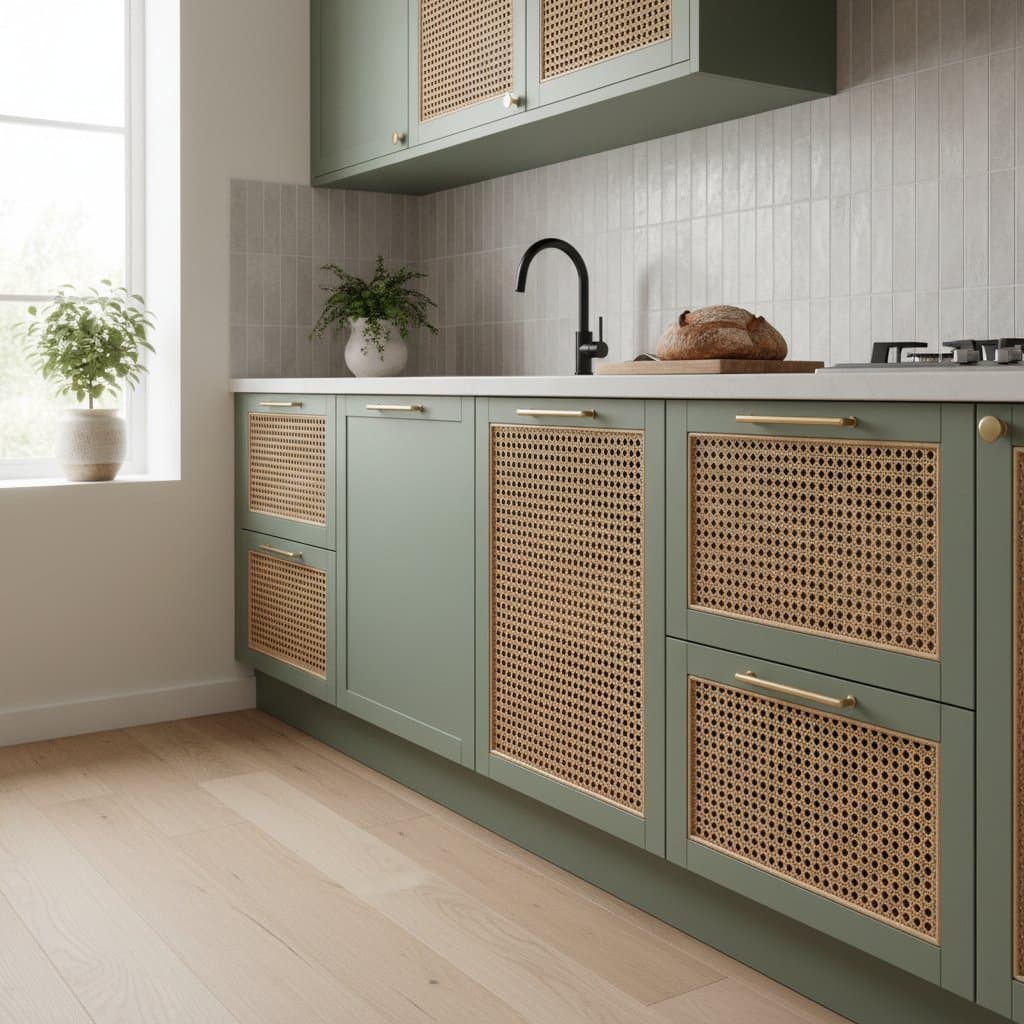
Rattan Webbing: The 2025 DIY Cabinet Door Upgrade
Kitchen and bathroom cabinets establish the overall atmosphere of a space. When these elements appear outdated, a full replacement often ranges from $6,000 to $14,000 for a standard remodel. A more efficient alternative involves applying rattan webbing to existing doors. This natural material imparts a fresh, ventilated texture to furniture and built-ins at a minimal expense. Homeowners can refresh an entire set of cabinet doors for $200 to $450 in supplies over a single weekend.
Rattan webbing transcends fleeting trends. It complements modern, coastal, and vintage aesthetics seamlessly. The material proves durable, renewable, and straightforward to apply. The following sections explore its composition, advantages, and application methods to facilitate a professional-quality transformation.
Why Rattan Webbing Suits Cabinets
Rattan derives from a robust, pliable climbing palm. Woven into cane webbing, it forms a permeable sheet featuring hexagonal or square motifs. Artisans have employed this technique for chair seats and furniture panels over centuries due to its equilibrium of durability and minimal weight.
Key Advantages for Contemporary Cabinets
- Visual Texture: The open weave introduces dimension and contrast to plain surfaces. It tempers rigid edges while diffusing light dynamically.
- Airflow Promotion: In storage areas for fabrics or fresh goods, rattan facilitates circulation to deter odors.
- Sustainability: Rattan regenerates rapidly in tropical regions without requiring replanting. It ranks among the most eco-friendly options for furnishing enhancements.
- Reduced Weight: Substituting a solid wood panel with cane weave lightens doors by approximately 25 percent, easing hinge strain.
- Ease of Repair: Damaged sections can be rehydrated and retightened, avoiding full door replacement.
A clear water-based sealant ensures rattan webbing withstands kitchen and bathroom conditions. The treated material endures routine handling, provided direct water contact remains limited.
Design Options and Weave Variations
Rattan webbing appears in diverse weaves and hues. Selecting an appropriate variant defines the project's aesthetic direction.
Prevalent Weave Styles
- Open Hexagon: Features diamond voids, aligning with traditional or coastal motifs.
- Radio Weave: Offers compact openings, suiting modern or sleek designs.
- Square Weave: Provides geometric symmetry, ideal for mid-century or sparse environments.
Rolls measure 18 to 24 inches in width and 10 to 15 feet in length, priced at $6 to $10 per foot for untreated varieties. Prefinished or colored options incur a modest premium but eliminate on-site treatment.
Hue and Treatment Suggestions
- Natural Tone: A warm amber shade enhances white or pale gray surrounds.
- Stained Variant: Matches deeper timber frames for refined juxtaposition.
- Contrasting Frames: White, sage green, or charcoal borders with untreated cane yield bold duality.
Equilibrium remains essential. The weave's inherent pattern should dominate without clashing accents.
Installation: DIY Guide and Professional Considerations
Most skilled hobbyists can manage rattan webbing on cabinet doors. The task demands precision, a utility knife, and careful alignment.
Ideal Scenarios for DIY
- Possession of a router or jigsaw for precise cuts.
- Proficiency in accurate measurements and markings.
- Preference for cost savings and personal involvement.
Cases for Professional Assistance
- Custom cabinets with intricate veneers resistant to cutting.
- Doors featuring elevated panels requiring exact removal.
- Desire for flawless uniformity without evident fasteners.
Professionals skilled in cane chair restoration translate well to this work. Confirm their insurance and review prior projects.
Step-by-Step DIY Process
- Prepare the Door: Remove the door from hinges and detach hardware. Trace the panel outline on paper, then transfer to the door face with a pencil. Use a router with a flush-trim bit or jigsaw to excise the panel, leaving a 1/4-inch lip for support.
- Select and Cut Webbing: Measure the opening, adding 2 inches per side for overlap. Soak the webbing in warm water for 30 minutes until pliable. Cut to size with sharp shears, ensuring the pattern orients correctly.
- Install the Webbing: Center the wet piece over the opening. Secure edges with staples every 1 inch, starting from the center and working outward. Pull gently to eliminate slack, then trim excess flush.
- Dry and Finish: Allow 24 hours for drying in a flat position. Apply two coats of water-based polyurethane with a brush, sanding lightly between layers for smoothness.
- Reassemble: Reattach hardware and reinstall the door. Test for level alignment and smooth operation.
Tools required include a staple gun, clamps, sandpaper (220 grit), and safety gear. Total time per door averages 2 to 4 hours.
Pitfalls to Sidestep
Hasty execution can undermine results, even for seasoned crafters. Address these common errors proactively.
- Neglecting Hydration: Unsoaked material fractures under tension. Submerge until supple.
- Pattern Misplacement: Fixed staples prevent adjustments. Verify positioning from all views prior to fastening.
- Excessive Tension: Drying contraction occurs. Secure firmly yet loosely to prevent distortion.
- Humidity Oversight: Preserve surplus rolls in controlled conditions. Excess moisture induces early contraction.
- Incompatible Sealants: Oil products discolor the weave. Opt for water-based options to maintain transparency.
- Unsealed Borders: Exposed ends unravel. Coat with glue or apply binding strips.
Adhering to these measures ensures longevity and appeal.
Upkeep and Preservation
Sealed rattan webbing demands little ongoing effort, yet consistent practices sustain its condition.
Routine Maintenance
- Brush away dust weekly or use a vacuum with soft bristles.
- Clean with a moistened cloth, followed immediately by drying.
- Position doors away from heat or fire hazards.
Extended Durability
Reapply sealant every few years for renewed protection. To correct minor looseness, mist with water and air-dry; fibers contract naturally. Full panel removal proves unnecessary in most instances.
Safeguarding the Project
Examine door composition prior to commencement: solid wood outperforms particleboard, which may disintegrate under stress. Unsure cases warrant door removal for edge inspection, revealing grain or fiber density.
Prioritize safety with goggles during cuts and clamps for stability. Mitigate dust via vacuum attachment or outdoor setup.
Local codes may mandate approvals for structural alterations, though superficial webbing applications seldom qualify. Consult authorities to verify compliance.
Enhancing Home Ambiance Through Rattan
Installed rattan webbing alters spatial perception profoundly. Its tactile quality infuses warmth absent in flat finishes. Light filters through, casting evolving patterns that enrich daily surroundings.
This modification harmonizes with elements like oak surfaces, metal accents, and fabric drapes. Extend the motif to storage units, side tables, or closets for unified elegance across living areas.